
Flip Capturing Tips for Fields: Why Training Matters as
Flip Capturing Tips for Fields: Why Training Matters as Much as Wind Handling
META: A field report on using Flip in windy farmland conditions, with practical capture tips, obstacle avoidance insights, and why a new aviation training partnership matters for long-term serviceability.
Wide-open fields look easy from the road. Get a drone in the air, though, and they can become deceptively technical places to work.
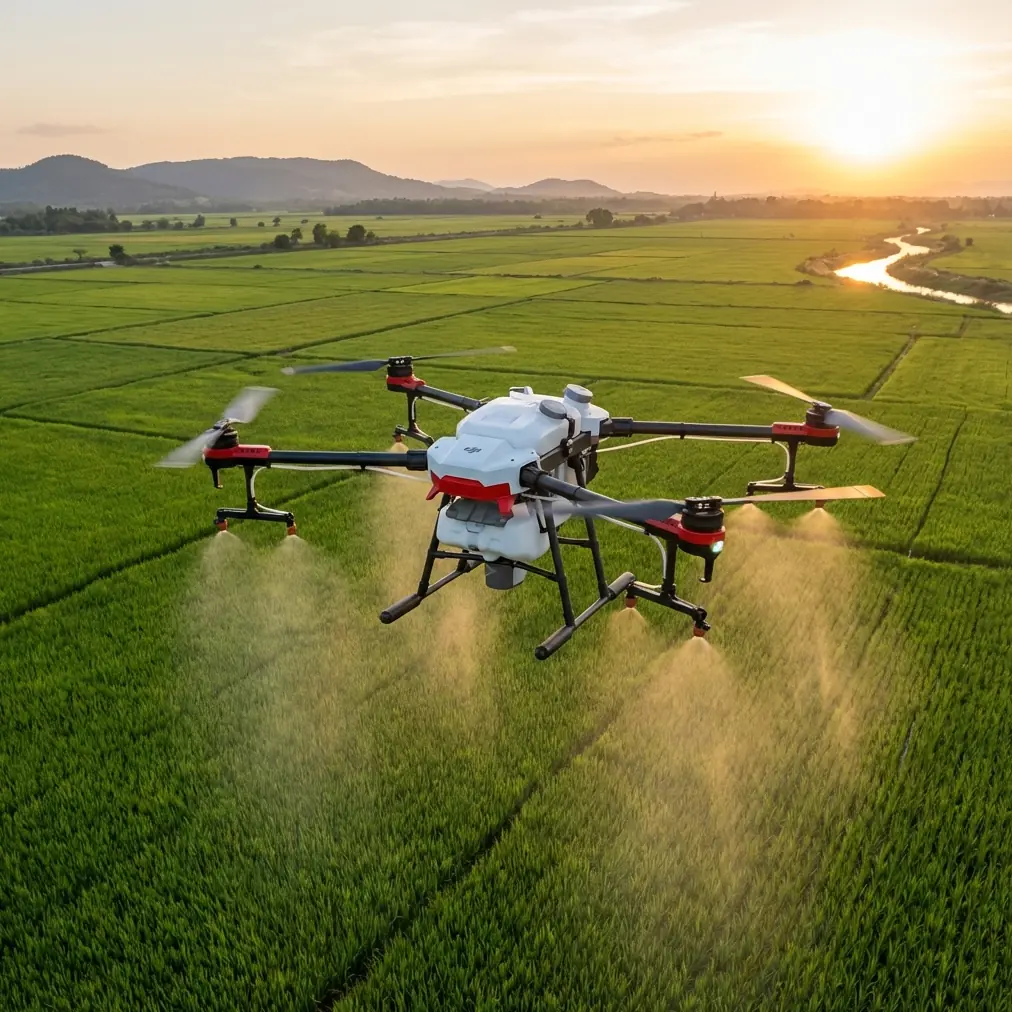
Wind moves differently over crop rows than it does over flat concrete. Tree lines create turbulence. Irrigation rigs, utility poles, shelterbelts, and scattered outbuildings interrupt otherwise simple flight paths. Even when the subject is “just a field,” the job may require clean tracking shots, repeatable mapping passes, stable hover performance, and footage that can survive color work afterward. That is where a platform like Flip enters the conversation—not just as a flying camera, but as part of a larger operational system that includes maintenance, training, and support.
That bigger picture became clearer on March 25, when Huitian signed a school-enterprise cooperation agreement with Guangzhou Civil Aviation College and jointly unveiled the “Huitian Industry Academy.” At first glance, that sounds like education news rather than something a field operator should care about. It is actually highly relevant. The partnership is centered on customized training for electric aviation maintenance personnel, shared practical training platforms, two-way exchange of instructors, and joint development of industry standards. In plain terms, it addresses one of the least glamorous and most decisive issues in real-world drone operations: whether the people servicing the aircraft actually know what they are doing.
For anyone flying Flip in windy agricultural environments, that matters more than most spec sheets.
The field report reality: wind punishes weak workflows
I’ve shot enough rural land to know that wind rarely ruins a session all at once. More often, it exposes every weak decision in sequence.
You launch a bit too late in the day. The gusts are manageable in one section, then rough near a hedgerow. Subject tracking seems fine until the aircraft crosses above an irrigation line and the background starts confusing the movement pattern. A QuickShots sequence that looked clever on paper becomes less usable because the horizon wanders more than expected. You switch to D-Log to preserve highlight detail on pale soil and reflective water, but now the clip needs steadier handling and cleaner exposure discipline if it is going to grade well.
This is why “capturing fields in windy conditions” is not really about one feature. It is about how obstacle avoidance, ActiveTrack-style subject following, camera profile decisions, and flight planning all hold together when the air is unsettled.
Flip’s appeal in this scenario is obvious. A compact platform with modern automation lowers the workload during repetitive rural capture. But automation alone does not create reliable output. Reliable output comes from a machine that remains airworthy over time, and from a service ecosystem that can support it after delivery. That exact point sits at the center of the Huitian–Guangzhou Civil Aviation College agreement.
The original report states that the two sides plan to build a full pathway spanning talent cultivation, practical training, and employment. Operationally, that is a serious development. It means support is being designed as a pipeline rather than treated as an afterthought. For operators, especially those working in commercial imaging, inspection, or agricultural documentation, post-delivery support is not abstract. It determines turnaround time, maintenance quality, and long-term fleet confidence.
Why a maintenance academy belongs in a conversation about Flip footage
Most buyers spend their time comparing camera features. Fair enough. If you are filming fields, image quality and flight intelligence are visible. Maintenance capacity is invisible—right until you need it.
The March 25 announcement is significant because it directly targets the shortage of specialized electric aviation maintenance talent, described in the report as a major constraint on high-quality industry development. That statement deserves attention. The commercial drone market has matured past the stage where hardware novelty alone drives value. The next bottleneck is support competence.
Here’s the practical significance for Flip users:
1. Better maintenance means more predictable flight behavior
In windy environments, minor issues become obvious quickly. Sensor calibration drift, battery performance inconsistencies, gimbal stabilization quirks, and airframe wear all show up faster when the aircraft is working harder to maintain position and heading. A workforce trained specifically around electric aviation maintenance is more likely to catch and correct these issues before they become field problems.
2. Shared training platforms improve troubleshooting quality
The partnership includes co-building practical training platforms. That matters because technicians trained only in theory often struggle with actual operational faults. A technician who has practiced on realistic systems is more likely to diagnose intermittent issues that affect capture quality—like stability problems during Hyperlapse runs or inconsistent obstacle avoidance behavior around narrow field boundaries.
3. Joint standard development can raise after-sales consistency
The agreement also mentions co-developing industry standards. This is one of the strongest signals in the entire news item. Standards reduce variability. For the end user, that can mean more consistent maintenance procedures, better documentation, and clearer expectations for service outcomes. In a field workflow, consistency is everything. You do not want one aircraft behaving differently from the last service cycle simply because practices vary from technician to technician.
What this means when you’re actually filming farmland
Let’s bring it back to the field.
A windy farmland shoot usually has one of three goals: visual storytelling, operational documentation, or repeatable monitoring. Each asks different things from Flip.
For visual storytelling, you may want low passes over rows, slow reveal shots above a tree line, and orbit-style moves around a farmhouse or equipment cluster. In that case, obstacle avoidance is not just a safety feature. It expands the range of usable moves near vertical elements that can surprise pilots when gusts push the aircraft off line. Subject tracking also becomes more valuable when following a moving tractor, utility vehicle, or walking presenter across uneven terrain.
For documentation, the priority shifts toward stable framing and repeatability. Wind forces extra corrections, and those corrections can degrade the clean geometry you want in footage. This is where a well-maintained aircraft pays off immediately. You feel it in hover stability, in the smoothness of starts and stops, and in how the gimbal settles after sudden directional inputs.
For monitoring or periodic capture, your challenge is consistency across sessions. Hyperlapse sequences over the same route or field edge can look excellent, but only if the aircraft behaves predictably and the operator trusts the platform enough to repeat a plan. Again, maintenance quality sits underneath the creative result.
My preferred Flip setup for windy fields
When I know the air will be unsettled, I simplify.
I do not chase every automated move available. I pick the ones that remain useful when the environment starts pushing back.
Obstacle avoidance: Leave it active unless the route is extremely open and you need precise manual control. Field work sounds obstacle-light until you remember power lines, isolated trees, weather stations, pumps, fencing, and machinery.
Subject tracking / ActiveTrack-style use: Best used with a strong contrast subject and a pre-visualized path. In wind, avoid long tracking sequences that cross mixed backgrounds too aggressively. A tractor moving parallel to crop rows is easier than a subject cutting diagonally past trees and reflective water.
QuickShots: Use them selectively. They are efficient for fast establishing material, but wind can make some automated motion profiles look less polished than expected. Shorter, simpler sequences usually survive best.
Hyperlapse: Excellent over broad agricultural landscapes if the route is conservative. Do not let ambition outrun conditions. A clean, modest Hyperlapse beats a heroic one with visible corrections.
D-Log: Worth using when the field has harsh midday contrast or bright reflective surfaces. But it rewards discipline. If the wind is forcing lots of reactive piloting, make sure your exposure choices stay practical for post.
One useful addition on a recent session was a third-party sun hood for the controller screen. It sounds minor. It was not. In bright, wind-shaken conditions, improved screen visibility helped with horizon checks, subject confirmation, and confidence in obstacle positioning near tree lines. Accessories like that do not change the aircraft, but they can improve the operator’s decision-making when conditions are less forgiving.
The hidden conversion point: buyers are starting to ask better questions
A few years ago, many drone buyers asked, “How good is the camera?”
Today, smarter buyers ask, “What happens after I receive it?”
That is why the Huitian partnership stands out. The report makes clear that this initiative is being built to reserve core technical capability in advance for continued airworthiness support and after-sales service assurance once products are delivered. That phrase is easy to skim past. Don’t. It tells you the company is thinking beyond launch-day excitement and into lifecycle support.
For Flip users in commercial settings, that is the difference between an appealing device and a dependable tool.
The most interesting detail in the news is not just that a partnership exists, but that Huitian is described as the first company in the electric aviation field to carry out this kind of deep, targeted training cooperation with a school. That first-mover status matters operationally because it suggests the company sees service capacity as strategic infrastructure. If that approach scales well, it could tighten the feedback loop between product design, technician training, field maintenance, and user experience.
That is exactly the kind of ecosystem commercial operators should want around a platform they depend on for recurring work.
How this changes the conversation around Flip
So if you are researching Flip for windy field capture, here is the sharper lens to use:
Yes, look at flight intelligence.
Yes, look at obstacle avoidance and tracking behavior.
Yes, assess whether QuickShots, Hyperlapse, and D-Log fit your workflow.
But also ask whether the company behind the aircraft is building the support foundation needed to keep those capabilities reliable over time.
The March 25 cooperation agreement offers a concrete signal. Customized maintenance talent development, practical platform building, instructor exchange, and shared standards work are not marketing ornaments. They are how a hardware category grows up. They are how a product remains useful after hundreds of flights rather than just impressive on day one.
If you are the person responsible for capturing fields week after week, that should get your attention.
A practical takeaway for field operators
When wind is part of the brief, your margin for error narrows. Good footage starts before takeoff and continues long after landing. It depends on aircraft condition, technician competence, and whether the support chain is built to handle real use rather than ideal conditions.
That is why this piece of industry news matters to a Flip audience. It is not just about a plaque unveiling for an “industry academy.” It is about whether the sector is serious about building the maintenance and training backbone that commercial aerial work requires.
And if you are comparing options, ask for specifics. Ask how maintenance training is handled. Ask how service standards are developed. Ask what support looks like after delivery. If you want to discuss Flip workflows or field-ready setup choices in more detail, you can message the team directly here.
For windy field capture, the best drone is not simply the one that flies well in the demo clip. It is the one backed by a system that helps it keep flying well in the real world.
Ready for your own Flip? Contact our team for expert consultation.