
Capturing Fields in Low Light with Flip: Practical Tips
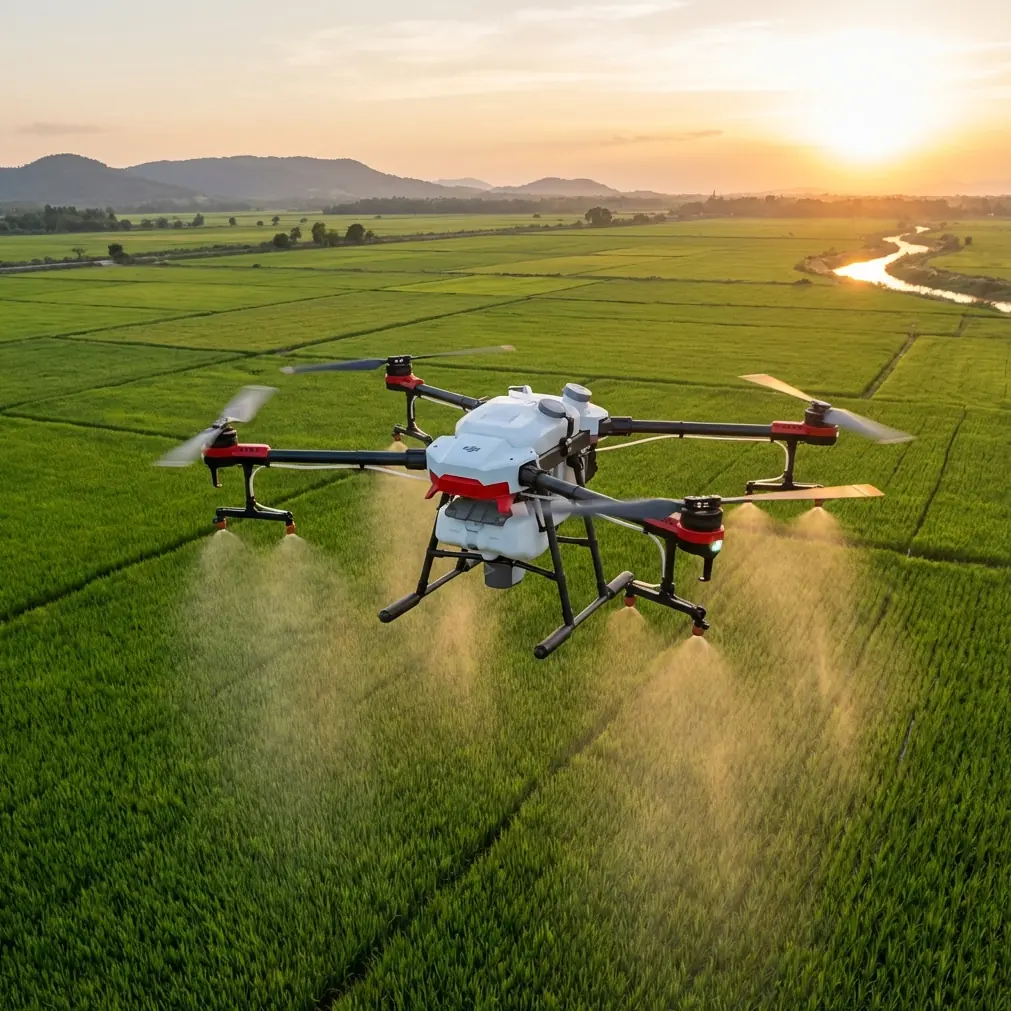
Capturing Fields in Low Light with Flip: Practical Tips That Actually Matter
META: Learn how to use Flip for low-light field photography with better safety, cleaner obstacle sensing, smarter subject tracking, D-Log workflow tips, and reliable pre-flight habits.
Low-light field work has a way of exposing every weak habit a drone pilot has.
A lens smudge that barely shows up at noon can soften an entire dusk sequence. Dust on an obstacle sensor can trigger hesitation right when you want a smooth pass over a hedgerow. Poor route planning becomes obvious fast when the field loses contrast and the horizon starts blending into the background.
If you’re flying Flip to capture fields at sunrise, sunset, or under heavy overcast, the difference between usable footage and frustrating footage usually comes down to preparation and restraint, not luck. I approach this as a photographer first. Low light is beautiful because it simplifies a scene, but it also reduces the margin for error. That’s why a good workflow with Flip matters more in dim conditions than it does in bright midday light.
This guide focuses on one specific job: filming or photographing fields in low light with Flip in a way that keeps footage clean, movement intentional, and safety systems working as expected.
Start with the part most pilots rush: cleaning before takeoff
The pre-flight cleaning step is not cosmetic. It directly affects safety and image quality.
Before I even power up Flip, I clean three areas:
- the front element of the camera
- the vision and obstacle avoidance sensors
- the underside surfaces where dust or fine pollen can collect around sensor openings
Field environments are messy by nature. Dry soil, seed dust, grass fragments, and moisture haze all gather quickly, especially if you’ve been launching from a farm track or near recently worked ground. In low light, Flip’s obstacle avoidance system is already dealing with less visual information. If the sensors are also carrying dust or fingerprints, performance can become less predictable. That matters operationally because obstacle sensing is there to help you maintain smooth flight near tree lines, fences, utility posts, or uneven field edges. It cannot do that well if visibility through the sensor surfaces is compromised.
The same goes for the camera glass. In dim conditions, any smear around a bright horizon or reflective patch of water in a field can bloom into a soft flare that ruins the shot. A clean lens gives you a more trustworthy view of contrast, which is critical when you’re trying to preserve detail in darker ground textures.
I keep a microfiber cloth in the case and check it before every dawn or dusk session. It takes less than a minute and has a bigger impact than most menu tweaks.
Why low-light field scenes are harder than they look
Fields seem open and simple, but that’s exactly why they can become tricky at dusk.
A broad agricultural scene often contains repeating textures: rows, grasses, soil bands, irrigation lines. As the light drops, those patterns flatten out. The drone camera sees less separation between foreground and background, and your own eyes may also struggle to judge distance. That can affect framing, route choice, and subject tracking.
This is where Flip’s obstacle avoidance and tracking features become less about convenience and more about discipline. The technology helps, but the pilot still has to adapt the shot design to the light.
A few practical examples:
- A field bordered by trees may look spacious from above, but the dark tree line can become a visual wall in low light.
- Utility poles at the edge of farmland can disappear against a gray-blue evening sky.
- A tractor, harvester, or walking subject may be easy to track in daylight, but much less distinct once the field tones and clothing tones converge.
So the goal isn’t to force the same aggressive moves you’d use at noon. The goal is to make Flip’s strengths work within the conditions.
Plan your flight path while contrast still exists
If I know I want a twilight sequence, I arrive early enough to study the field while contrast is still strong.
That lets me do three things:
- identify vertical hazards
- test my intended direction of travel
- decide where low-light compositions will still hold shape
This matters because once the light falls off, you won’t want to improvise around hidden wires, isolated trees, fence posts, or narrow access roads. Flip can assist with obstacle awareness, but a preplanned route reduces the need for sudden correction. And sudden correction is exactly what makes low-light footage look nervous.
I usually set up one wide establishing route, one lower forward glide along the field edge, and one slower lateral pass to reveal texture. Three planned paths are often more useful than ten half-formed ideas.
Use obstacle avoidance as a support system, not an excuse
Obstacle avoidance is one of the most valuable features for field work, especially when filming around shelterbelts, barns, treelines, and perimeter roads. But low light changes how you should think about it.
The mistake is assuming the system gives you permission to fly as close as possible to every object in dim conditions. That’s backwards. In low light, obstacle avoidance should encourage more conservative spacing, not tighter flying.
Operationally, that means:
- keep more distance from dark vertical objects
- avoid high-speed approaches near field boundaries
- use broader arcs instead of narrow threading lines
- give yourself room for a stop, even if the system detects an object
A smooth, slightly wider pass almost always looks better than a near-miss line that introduces braking or unwanted hesitation. Viewers don’t reward risk. They notice steadiness.
ActiveTrack and subject tracking: best used with clear separation
If your field shoot includes a person walking a boundary, a vehicle moving along a farm road, or farm activity at the edge of the frame, ActiveTrack and subject tracking can be genuinely useful. But in low light, the background matters as much as the subject.
Tracking works best when the subject is visually distinct from the field around it. A pale vehicle against dark soil, for example, is often easier to maintain than a dark subject moving through a shadowed green strip. That’s why I don’t just ask whether Flip can track the subject. I ask whether the scene gives the system enough separation to do it gracefully.
A few practical habits help:
- Start tracking before the light gets too flat.
- Choose movement paths with contrast behind the subject.
- Avoid crossing behind dense hedges or dark tree clusters if you want a clean sequence.
- Keep speed moderate so the footage feels deliberate and the tracking has room to stay stable.
If you’re unsure, do a short test pass. Ten seconds tells you a lot.
QuickShots work best when you simplify the environment
QuickShots can be helpful in field content because agricultural landscapes often benefit from geometry and scale. A preprogrammed movement can reveal crop lines, irrigation patterns, or the relationship between a lane and the surrounding land. But in low light, not every automated move earns its place.
The best candidates are the ones that keep the scene legible. Clean separation. Open space. Predictable movement.
What I avoid near dusk are complicated setups where multiple dark elements compete for attention. If a QuickShot is likely to pass close to a tree line, barn roof, or utility feature as the light fades, I’d rather fly manually and keep control over pace and distance.
Automation shines when the field itself is the subject. If the composition depends on precise timing around edge obstacles, manual input is usually safer and more elegant.
Hyperlapse can turn a dull evening into a strong visual sequence
Hyperlapse is one of the most underrated ways to capture fields in weak light. A scene that feels static in real time can become surprisingly rich when cloud movement, passing mist, or shifting shadow bands compress into a short sequence.
This is especially effective in large rural spaces where the visual story is atmospheric rather than action-driven. A still field with a glowing horizon can look quiet to the point of flatness. In Hyperlapse, it suddenly gains rhythm.
The key is stability and patience:
- launch from a spot with a clean horizon line
- avoid compositions cluttered by close foreground obstacles
- check the lens and sensor surfaces before starting
- let the movement in the sky and light do the work
If there’s any breeze carrying dust, I’ll often inspect the front element again before the capture run. That second check is not overkill. It’s the difference between a sequence you keep and one you discard.
D-Log is valuable in low light, but only if you expose with intention
For creators who plan to grade their footage, D-Log can be a strong choice in low-light field scenes because it preserves flexibility across subtle tonal transitions. Dawn skies, layered cloud cover, and dim earth textures often benefit from a flatter capture profile that protects highlight roll-off and leaves room for color shaping later.
But D-Log is not a magic fix for underexposure.
Low-light field footage falls apart quickly when you try to rescue shadows too aggressively in post. You’ll often see noise creep into soil texture, hedgerows, and soft gradient areas of the sky. So when I use D-Log with Flip, I’m aiming for a file that protects the scene without forcing heavy recovery later.
The operational significance here is simple: profile choice changes your margin for editing, but it does not replace disciplined capture. You still need to watch the scene, preserve important detail, and avoid trying to “save it later” if the original exposure is too thin.
Composition tips that work specifically for fields
Field content can become repetitive fast unless you make the light and structure work together.
A few low-light compositions consistently hold up well:
1. The edge reveal
Fly parallel to a field boundary so the viewer sees texture in the crop or ground on one side and depth from trees, a lane, or a hedgerow on the other. This gives the scene shape when the light is low.
2. The layered rise
Start lower and allow a gentle climb that reveals more of the field and horizon. This works best near sunrise or sunset when the sky carries most of the tonal separation.
3. The slow forward drift
A modest forward movement over rows or grass can be more effective than a dramatic push. In low light, subtle texture reads better than speed.
4. The subject-in-landscape pass
If using ActiveTrack, keep the subject small enough that the field still dominates. The person or vehicle provides scale; the land remains the story.
Don’t wait until you’re on location to troubleshoot
Low-light flying is a poor time to discover that your settings, tracking preferences, or QuickShot habits need work. Practice in better light first, then bring those routines into the field.
I recommend building a repeatable checklist:
- clean lens and sensors
- inspect props and body surfaces
- confirm obstacle avoidance status
- test tracking on a high-contrast subject
- choose one manual route and one automated option
- decide whether the session is standard color or D-Log
- review wind and visibility across the field
That kind of preparation protects your time on site. If you want help comparing route ideas or capture settings for a real location, you can message a drone specialist here.
The real trick with low-light field footage
Most people think the challenge is getting enough light.
Usually it’s getting enough clarity.
Clarity in the lens. Clarity in the route. Clarity in how you use features like obstacle avoidance, ActiveTrack, QuickShots, Hyperlapse, and D-Log. Flip gives you tools that are genuinely useful for field photography, but low light rewards pilots who simplify their decisions and respect the scene.
That starts with the smallest habit in this whole process: cleaning the aircraft before flight. If the obstacle sensors are dirty, your safety margin shrinks. If the lens is dirty, your image quality drops before takeoff. Those two details sound minor until you’re filming a dim field edge and wondering why the shot doesn’t look clean or why the aircraft hesitated near a dark boundary.
The best low-light field footage rarely comes from pushing harder. It comes from seeing earlier, preparing better, and flying with intent.
Ready for your own Flip? Contact our team for expert consultation.