
Delivering Coastal Highway Surveys with Flip
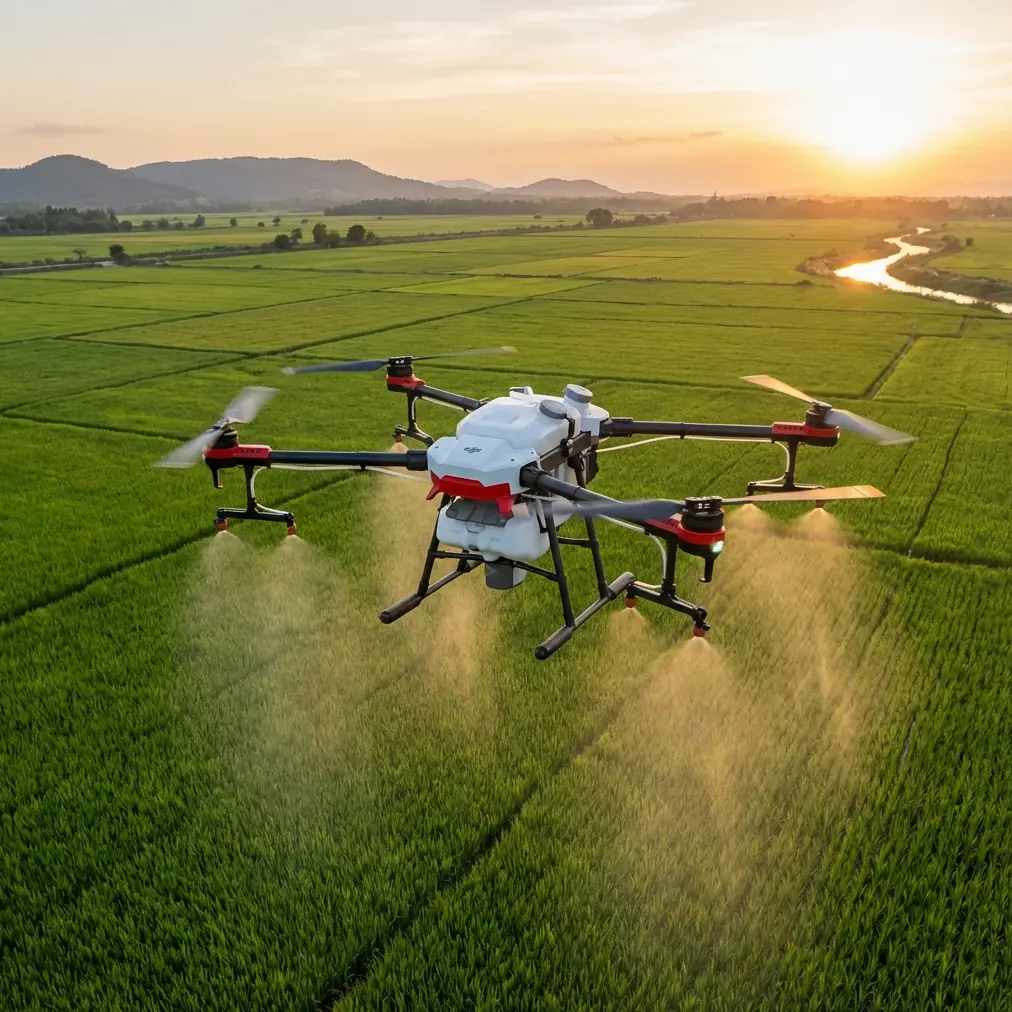
Delivering Coastal Highway Surveys with Flip: What Actually Matters in Aerial Photogrammetry
META: A practical expert article on using Flip for coastal highway photogrammetry, grounded in flight height, GSD, terrain light angles, control-point spacing, and real operational constraints.
Coastal highway work looks straightforward on a map. In the field, it rarely is.
You’re dealing with reflective water, shifting haze, embankments, bridges, slope changes, dense roadside structures, and long narrow corridors that punish sloppy flight planning. Add the pressure of producing mapping outputs that engineers can trust, and the job stops being about flying a drone for pretty footage. It becomes a discipline problem.
That’s where Flip becomes interesting.
Not because of buzzwords, and not because every flight mode on the spec sheet deserves attention. Flip matters for coastal highway delivery when its camera workflow, stabilization, and intelligent flight support are used inside a photogrammetric framework that respects hard survey rules. The real value shows up when the aircraft helps you hold the image quality and consistency required for corridor mapping, especially in difficult coastal light and mixed terrain.
I approach this as a photographer first, but highway jobs force you to think like a survey planner. The source material behind this discussion makes that clear. It doesn’t talk in abstractions. It gives the numbers that define whether your dataset is merely flyable or actually usable.
The real problem with coastal highway delivery
A coastal highway is a long, fragmented environment. One section may be flat reclaimed land. The next may cut through rolling ground. Then you hit bridge approaches, retaining walls, interchanges, or urban edges with taller structures. These changes matter because the photogrammetric tolerances change with terrain, lighting, and flight geometry.
One of the most useful reference points is the terrain-based guidance for solar elevation and shadow control:
- flat land with slope angle under 3° should be photographed with solar elevation above 20°, with shadow multiple kept at 3 or less
- hilly ground from 3° to under 10° needs sun above 30°, with shadow multiple at 2 or less
- mountainous terrain from 10° to under 25° needs sun above 45°, with shadow multiple at 1 or less
- dense high-rise urban areas or steeper terrain at 25° and above should be captured within roughly one hour before or after local noon, with shadow impact below 1
That isn’t academic. Along a coastal highway, shadows from barriers, bridge piers, sound walls, utility poles, and nearby buildings can wipe out surface detail fast. If you’re mapping drainage shoulders, pavement edges, guardrails, slope toes, or embankment transitions, a badly timed flight can compromise interpretation before processing even starts.
Flip’s practical advantage here is not simply “good video.” It’s repeatable image capture under changing environmental conditions. Features like obstacle avoidance and stable subject-aware flight behavior help the pilot maintain route continuity while staying focused on the survey objective rather than constant manual correction. On a linear infrastructure project, that mental bandwidth matters.
Why the camera numbers still decide the job
The reference data gives a very concrete camera model example using an α5100-class sensor at 23.4 × 15.6 mm with a 0.0039 mm pixel size and a 20 mm focal length. From there, the relationship between GSD, flight height, and output scale becomes clear:
- 5 cm GSD corresponds to about 256 m flight height, supporting 1:500 mapping, with elevation accuracy around 0.11 m
- 8 cm GSD corresponds to about 410 m flight height, supporting 1:1000 mapping, with elevation accuracy around 0.17 m
- 15 cm GSD corresponds to about 770 m flight height, supporting 1:2000 mapping, with elevation accuracy around 0.32 m
These figures matter because coastal highway projects often sit right on the boundary between corridor engineering needs and broader route planning needs. If the deliverable is detailed design support for interchange tie-ins, drainage, roadside assets, or retaining structures, a 1:500 target with roughly 5 cm GSD is a different mission from a wider route condition assessment at 1:2000.
This is where many operators waste time. They ask whether Flip can fly the route. The better question is whether the mission profile is matched to the required map scale and terrain accuracy.
If your engineering team needs curb lines, shoulder breaks, ditch geometry, and clear embankment modeling, pushing too high to cover ground faster can become a false economy. A dataset captured at a looser GSD may still look clean on screen, but it will not behave the same in extraction, QA, or civil design integration.
Flip, used correctly, helps bridge that gap by making lower-altitude, higher-consistency corridor capture more manageable. Obstacle avoidance becomes valuable near signage, poles, and overpass structures. ActiveTrack and subject-aware motion tools, though often discussed for creative work, also reveal something important operationally: the platform is built to maintain stable framing and directional discipline. That translates well to repeatable image runs over linear assets.
Flight consistency is where survey quality survives or fails
A beautiful camera means very little if the aircraft cannot maintain altitude discipline.
The source standards cited in the material show how strict this gets. For adjacent images on the same flight line, the allowed height difference is capped at 30 m under one standard and 20 m under another. The difference between the highest and lowest image on the same line is limited to 50 m or, in the stricter requirement, 30 m. The deviation between actual and designed flight height within a photography block is limited to 50 m, and when flight height exceeds 1000 m, the variation must remain within 5% of H.
For coastal highways, this is not trivial. Long corridors often cross reclaimed flats, low bluffs, seawalls, and approach ramps. If the pilot simply flies “visually level” rather than mission-controlled relative to terrain, image scale begins to drift. Once image scale drifts, tie point consistency and vertical reliability start to suffer.
This is where Flip earns its keep in a very unglamorous way. Reliable route execution, steady platform behavior, and obstacle awareness reduce the workload that causes human inconsistency. When the drone is helping manage the environment, the operator can pay closer attention to mission compliance: overlap, altitude, wind correction, and coverage margins.
I saw this first-hand on a coastal road section where a marsh edge ran parallel to the pavement. A flock of egrets lifted suddenly from the reeds just off the shoulder. It was one of those moments when a less stable workflow can turn into overcorrection, broken alignment, or an aborted line. Flip’s sensing and avoidance behavior helped the aircraft hold a safer, more controlled response while preserving the integrity of the pass. That matters. Wildlife encounters are not rare in coastal corridors, and survey quality is often lost in exactly these unscripted moments.
Control points are not optional just because the drone is smart
There’s a growing temptation to treat modern flight intelligence as a replacement for survey control. It isn’t.
The source material gives control point spacing guidance by map scale:
- for 1:500 mapping, control points should be spaced across 4 to 5 adjacent flight lines and 4 to 5 baselines along the flight direction
- for 1:1000, the spacing extends to 4 to 6 flight lines and 6 to 7 baselines
- for 1:2000, it drops to 2 to 4 flight lines and 2 to 4 baselines
Operationally, this tells you something important about coastal highway jobs. Corridor projects are not broad, square sites. They are elongated, often constrained, and full of repetitive surfaces. That geometry can hide weakness in adjustment until late in processing if control is sparse or poorly distributed.
Flip can give you clean, stable imagery. It cannot rescue a weak control network. For a highway in coastal conditions, where sections may include seawalls, interchanges, ramps, and structures casting directional shadows, a thoughtful control layout is often the difference between confidence and rework.
If your field team is trying to minimize time on active road margins, that pressure should be solved through better planning, not by pretending control no longer matters. Smart operators coordinate control placement with safe access windows, traffic management, and the most distortion-sensitive segments of the corridor.
Rotation tolerance sounds minor until it ruins your block
Another underappreciated detail in the reference data is allowable image rotation. The guidance states:
- for photography scales greater than 1:4000, allowable rotation is 10°
- from 1:4000 to 1:8000, it is 8°
- below 1:8000, it is 6°
There are also practical notes: if relative flight height is below 700 m, individual images may be relaxed to 1.2 times the limit; in low-altitude photography, rotation may be relaxed to 1.5 times; images at or near maximum rotation must not continue for more than three consecutive frames; and image tilt and rotation must not both reach maximum values at the same time.
Why does this matter for Flip users? Because corridor work in coastal wind can push aircraft yaw and crab angle behavior more than people expect. A pilot may return with imagery that “looks fine,” but repeated rotational stress in a narrow linear block can weaken matching and force more cleanup. Flip’s flight support systems help reduce those accumulations, but only if the mission is designed around prevailing wind direction and the pilot respects the photogrammetric objective.
That means choosing line orientation intelligently, avoiding lazy crosswind compromises, and reviewing image attitude trends during the mission instead of discovering the issue during processing.
Creative features still have a place, just not the way people think
Some readers will come to Flip because they know terms like QuickShots, Hyperlapse, D-Log, and ActiveTrack. In a highway survey context, these features are secondary, but not irrelevant.
D-Log, for example, is not about cinematic flair in this use case. In coastal environments with bright water, pale concrete, asphalt, and reflective barriers in the same frame, tonal control matters. Better dynamic range handling can help maintain visible detail across harsh lighting transitions, especially when documenting assets or supplementing mapping with interpretive inspection visuals.
Hyperlapse and QuickShots are not survey tools, but they can support stakeholder communication. A project manager or client often needs more than orthomosaics and surface models. They need a concise visual explanation of corridor conditions, staging constraints, or shoreline adjacency. Flip can collect that layer without requiring a separate creative platform.
And ActiveTrack, while usually marketed around moving subjects, points to the aircraft’s broader capacity for maintaining coherent framing and motion control. In field operations, that kind of intelligence helps when documenting moving support vehicles, temporary access routes, or progress conditions along a linear site.
The smarter way to use Flip on coastal highway work
If I were building a Flip workflow for this exact scenario, I would not begin with the drone. I would begin with the output scale, terrain class, expected sun angle window, and corridor geometry.
Then I would set the image plan around the actual mapping need:
- if the project demands 1:500-level detail, I would treat the approximate 256 m height and 5 cm GSD relationship as the benchmark and build overlap, control, and timing around that
- if it is a broader 1:1000 or 1:2000 corridor deliverable, I would weigh the gains in coverage against the losses in feature certainty very carefully
- I would schedule the flight according to the most shadow-sensitive section, not the most convenient launch time
- I would watch wind and yaw behavior as closely as battery status
- and I would keep manual awareness high even with obstacle avoidance enabled
That last point matters. Smart sensing is there to support judgment, not replace it.
For teams trying to refine a real corridor workflow around these constraints, I’d suggest sending the route details here so the flight plan, control strategy, and output scale can be matched before anyone goes into the field.
What makes Flip useful is not hype, but discipline
Coastal highway photogrammetry is unforgiving because the environment exposes every weak assumption. Wrong sun angle, too much shadow. Too much altitude variation, unstable scale. Too little control, weak adjustment. Too much rotational drift, fragile block geometry.
Flip fits this space when it is used as part of a disciplined capture system. Its obstacle avoidance, stable route execution, and intelligent tracking behavior reduce operational friction. Its imaging capabilities support both survey capture and project communication. But the decisive factor remains the same one survey professionals have always known: quality starts in mission design.
The reference data makes that plain with numbers, not slogans. A 5 cm GSD tied to roughly 256 m height for 1:500 work. Solar angle thresholds that tighten as terrain gets steeper. Control-point spacing that changes with scale. Height-difference limits measured in tens of meters, not vague intentions.
That is the level at which Flip should be judged for highway delivery in coastal settings. Not by whether it can fly. By whether it can help you deliver data that stands up to engineering use.
Ready for your own Flip? Contact our team for expert consultation.