
Flip for Power Line Delivery in Complex Terrain
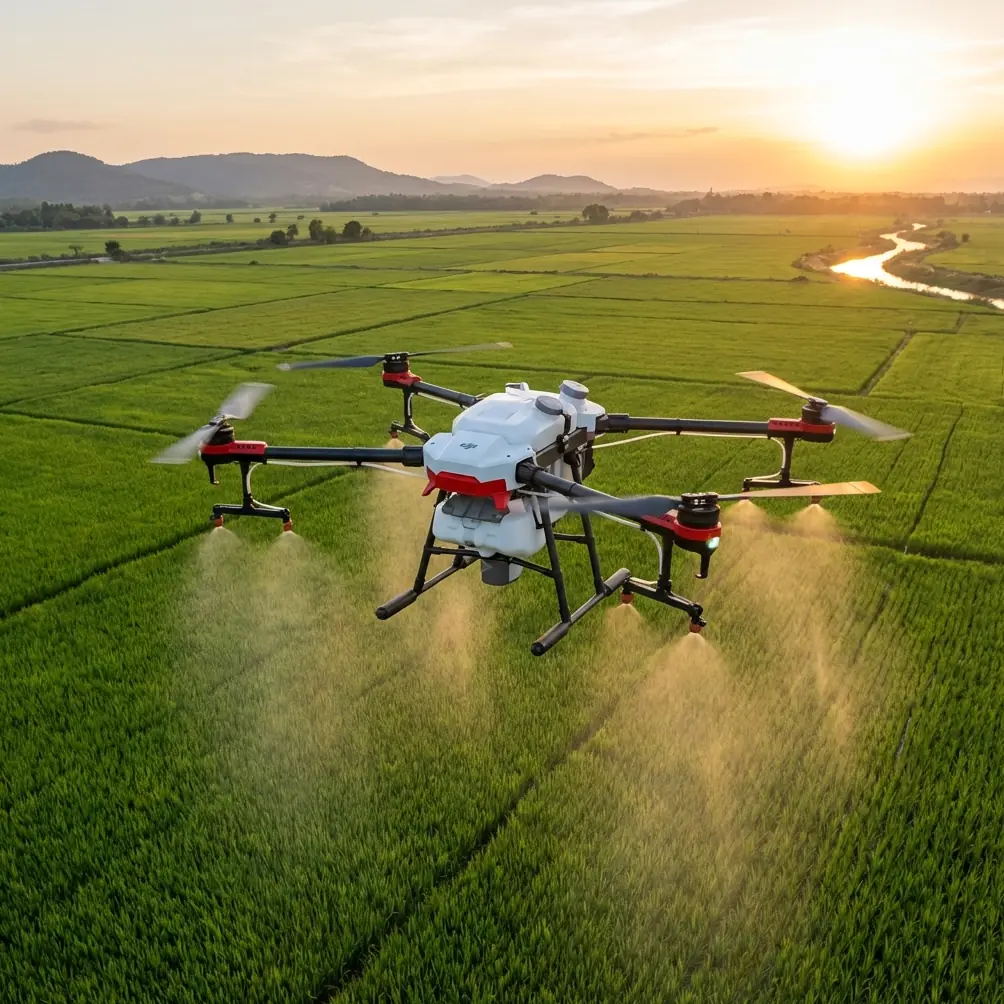
Flip for Power Line Delivery in Complex Terrain: A Practical Field Workflow That Reduces Surprises
META: A field-tested guide to using Flip around power lines in complex terrain, with practical planning steps tied to UAV classification, airspace needs, GSD targets, and obstacle-aware flying.
I still remember one of the more frustrating jobs I took on as a photographer-turned-UAV operator: documenting a power line corridor that cut through broken hills, farm edges, and narrow access roads. On paper, it looked simple. In reality, the terrain kept changing faster than the flight plan, visibility shifted by the minute, and every extra repositioning cost time.
That kind of assignment is exactly where Flip starts to make sense.
Not because a single aircraft magically solves every field problem. It does not. Flip matters because it simplifies a messy civilian workflow: getting useful visual coverage and repeatable line-follow documentation in places where terrain, access, and route geometry work against you. If your goal is power line delivery support, corridor inspection imagery, training runs, or terrain-aware visual documentation, the aircraft is only one part of the equation. The real difference comes from pairing a capable platform with disciplined operating rules.
That is where the reference material becomes unusually useful. It is not glamorous, but it tells you what separates a smooth mission from a preventable failure.
Start with the constraint that most crews ignore
When operators talk about complex terrain, they often jump straight to obstacle avoidance or camera modes. Those matter, especially with line work. But the first question should be simpler:
What class of UAV operation are you actually planning?
The source document lays out a classification system by weight, speed, altitude, and airspace handling. That is not just regulatory trivia. It directly shapes how practical Flip is for a power line mission.
For example, the document states that a micro UAV with empty weight under 0.25 kg is limited to under 50 meters true flight height and under 40 km/h, and in designated flyable areas it does not require airspace application, while operating outside those areas is prohibited. By contrast, a light UAV with empty weight under 4 kg and maximum takeoff weight under 7 kg can operate up to under 100 km/h, but it must have compliant airspace-keeping capability and reliable surveillance capability, and outside approved fly zones it may require airspace application.
Why does that matter for Flip in a power corridor?
Because terrain-following around poles, spans, ridgelines, and access tracks is rarely a “just launch and go” job. If you are working along an extended route outside a simple recreational area, the airspace and operational category shape your legal envelope before your sensors ever leave the ground. In practical terms, it changes your launch points, your speed discipline, your route segmentation, and whether you can adapt in the field without creating planning problems.
That is the operational significance of the classification table: it forces you to design the mission around what is allowed, not just what is physically possible.
Why complex terrain exposes weak workflows
Power lines in steep or irregular terrain create three recurring problems:
- Vertical relief changes faster than expected
- Sight lines disappear behind terrain and vegetation
- The route is long, narrow, and repetitive, which invites complacency
Flip helps most when you treat it as a corridor tool rather than a generic camera drone.
Obstacle avoidance becomes more than a convenience in this context. Around transmission or distribution routes, the pilot is often managing uneven ground clearance, lateral drift risk, and shifting visual perspective at the same time. A compact platform that is easy to reposition and relaunch can save more time over a day than a bigger aircraft that is theoretically stronger but harder to deploy repeatedly.
That was the lesson I learned the hard way. On earlier jobs, I used too much energy trying to force one long perfect flight. In hilly line corridors, that is usually the wrong instinct. Flip makes a segmented method easier: short sectors, clear visual objectives, quick repositioning, and immediate review before moving to the next span group.
A better how-to workflow for Flip along power lines
Here is the method I now recommend for civilian corridor imaging and delivery-support documentation in complex terrain.
1. Break the line into terrain-defined sections, not map-defined sections
Do not divide the route by equal distance alone. Divide it by:
- ridge transitions
- sharp elevation changes
- vegetation density
- access road availability
- visibility of structures and conductors
This matters because terrain, not spreadsheet logic, determines where your aircraft will face the highest workload. A short difficult segment is often riskier than a long easy one.
If Flip includes obstacle avoidance and tracking tools such as ActiveTrack or subject-tracking functions in your operating setup, use them selectively. They can help keep motion smooth during corridor-follow visuals, but they should not replace manual judgment when poles, wires, and slope breaks are tightly packed.
2. Set image goals before launch
The reference document gives a hard planning anchor that many operators skip: mapping scale should drive ground resolution.
It lists:
- 1:500 scale requiring ≤5 cm ground resolution
- 1:1000 scale requiring 8–10 cm
- 1:2000 scale requiring 15–20 cm
That is not just for formal photogrammetry teams. Even if your mission is not producing a final survey-grade map, those numbers tell you how to think about altitude and detail.
If your customer needs close visual confirmation of corridor conditions, attachment states, vegetation encroachment context, or terrain access routes, a looser “good enough” flight height can leave you with footage that looks nice but cannot answer practical questions. On the other hand, flying lower than needed increases route complexity and battery pressure.
Operationally, this is huge. If you know the documentation target resembles a 1:1000 mapping task, then aiming for roughly 8 to 10 cm GSD gives you a rational altitude band. You stop guessing. You fly for usable detail instead of aesthetic habit.
3. Match corridor altitude to terrain, not just line height
The source also notes a general area requirement where 1:500 mapping corresponds to GSD ≤0.05 m, with a base-height ratio of at least 0.3. While Flip users working on line corridors may not run full traditional aerial photogrammetry every time, the planning principle still applies: image overlap geometry and relative height matter.
In plain field language, if your terrain drops away suddenly, your effective imaging geometry changes even when the aircraft’s displayed altitude seems stable. That affects scale consistency, overlap, and interpretability of the route imagery.
So instead of locking one static height, create altitude bands for each terrain section:
- slope approach
- pole crossing
- valley transition
- ridge exit
That keeps your image set more consistent and reduces the need for reshoots.
4. Keep speed conservative in wire-dense areas
The source document ties categories to speed thresholds such as under 40 km/h for micro operations and under 100 km/h for light UAVs. Even when your platform and classification allow more speed, line environments usually punish aggressive forward movement.
Near poles, spans, and terrain breaks, slower flight does three things:
- gives obstacle systems more margin
- preserves framing for later review
- makes manual correction far cleaner if wind spills over a ridge
This is one reason Flip is useful in complex terrain: compact aircraft workflows often encourage deliberate flight rather than brute-force coverage. That is exactly what line work needs.
Using Flip’s intelligent modes without letting them use you
There is a temptation to over-automate once a platform offers modes like QuickShots, Hyperlapse, subject tracking, or ActiveTrack. These tools have real value, but only when assigned the right job.
ActiveTrack and subject tracking
For access-vehicle follow shots, route-introduction footage, and visual progress updates, tracking modes can reduce pilot workload and help produce stable documentation sequences. In corridor work, though, wires and poles are not forgiving. Tracking should be reserved for clear, open sections where line geometry and terrain are easy to read.
QuickShots
QuickShots are useful when you need a concise visual summary of a site approach, tower position, or surrounding terrain context for stakeholders who are not field operators. They can compress orientation data into a short visual package. Just avoid using them close to wire environments where predictability matters more than cinematic movement.
Hyperlapse
Hyperlapse can help show route progression, weather shifts, or access complexity over time. For project communication, that can be more revealing than a static map. But for decision-grade line review, it should supplement, not replace, standard imagery.
D-Log
D-Log matters when lighting is uneven, which is common in mountain shadows and bright open corridors. Keeping more flexibility in highlights and shadow detail can improve post-flight interpretation, especially when you need to see structure context across changing exposure zones.
The hidden technical detail that affects mission quality
One of the more overlooked sections in the reference material is the sensor performance benchmark. It specifies, among other things:
- dual-frequency GNSS
- positioning methods including RTK/PPK/PPP
- sampling interval ≥4 Hz
- IMU roll and pitch accuracy around ≤0.010°
- yaw accuracy around ≤0.020°
- IMU sampling interval up to ≤0.016 s under one requirement set
Even if Flip is being used in a practical corridor workflow rather than a formal survey contract, this tells you something essential: stable, high-frequency positioning and orientation data are not luxury features. They are what make repeatable route capture possible.
Why is that operationally significant?
Because line work often requires comparison:
- before and after vegetation clearing
- access route changes after weather events
- recurring documentation of difficult spans
- repeat training flights through the same terrain section
Without reliable orientation and positioning behavior, your footage becomes harder to compare over time. Consistency is where professional UAV work earns trust.
My preferred field routine with Flip
If I were planning a civilian power line delivery-support mission in broken terrain today, this is the checklist I would follow.
Pre-field
- Confirm the UAV class and whether the route stays within a suitable flyable area.
- Verify whether airspace application is required for the planned corridor.
- Define the image purpose: inspection context, route documentation, access planning, or training archive.
- Convert that purpose into a GSD target using the source values as a planning baseline.
On site
- Walk the first launch area before takeoff.
- Mark terrain choke points, especially where slope and poles visually compress together.
- Run the first sector short. Review footage immediately.
- Adjust altitude and speed based on actual terrain reveal, not assumptions.
In flight
- Use obstacle avoidance as a buffer, not a substitute for route reading.
- Keep lateral offsets clean and intentional.
- Avoid rushing valley transitions.
- In changing light, capture critical sections in D-Log if your post workflow supports it.
After each sector
- Review for conductor visibility, pole framing, and terrain context.
- Check whether your image detail actually matches the intended use.
- Relaunch from the next terrain-appropriate point instead of stretching battery margin.
If you are trying to refine this kind of corridor workflow around Flip, it helps to compare route specifics with someone who understands both aircraft behavior and civilian mission planning. A quick field-use discussion can be arranged through this WhatsApp contact for operational questions.
The real advantage of Flip here
The strongest case for Flip in complex power line terrain is not that it turns a difficult job into an easy one. That is marketing language, and the field never works that way.
Its value is more practical.
It reduces setup friction. It supports repeatable short-sector flying. It pairs well with obstacle-aware, visually disciplined route work. And when you anchor the mission to real planning numbers—like ≤5 cm GSD for 1:500 mapping intent, or the weight-and-airspace distinctions between micro and light UAV classes—you stop treating the flight as an improvised camera outing.
You start treating it like a professional corridor operation.
That change in mindset is what made the biggest difference for me. Years ago, I thought the hard part was flying near difficult terrain. It was not. The hard part was building a method that stayed reliable when terrain, access, and visibility kept shifting. Flip made that method easier to execute, but only once I respected the underlying rules: classification, airspace, image resolution, and disciplined route segmentation.
That is the version of drone work that holds up in the real world.
Ready for your own Flip? Contact our team for expert consultation.