
DJI Flip for Coastal Solar Farm Delivery Work
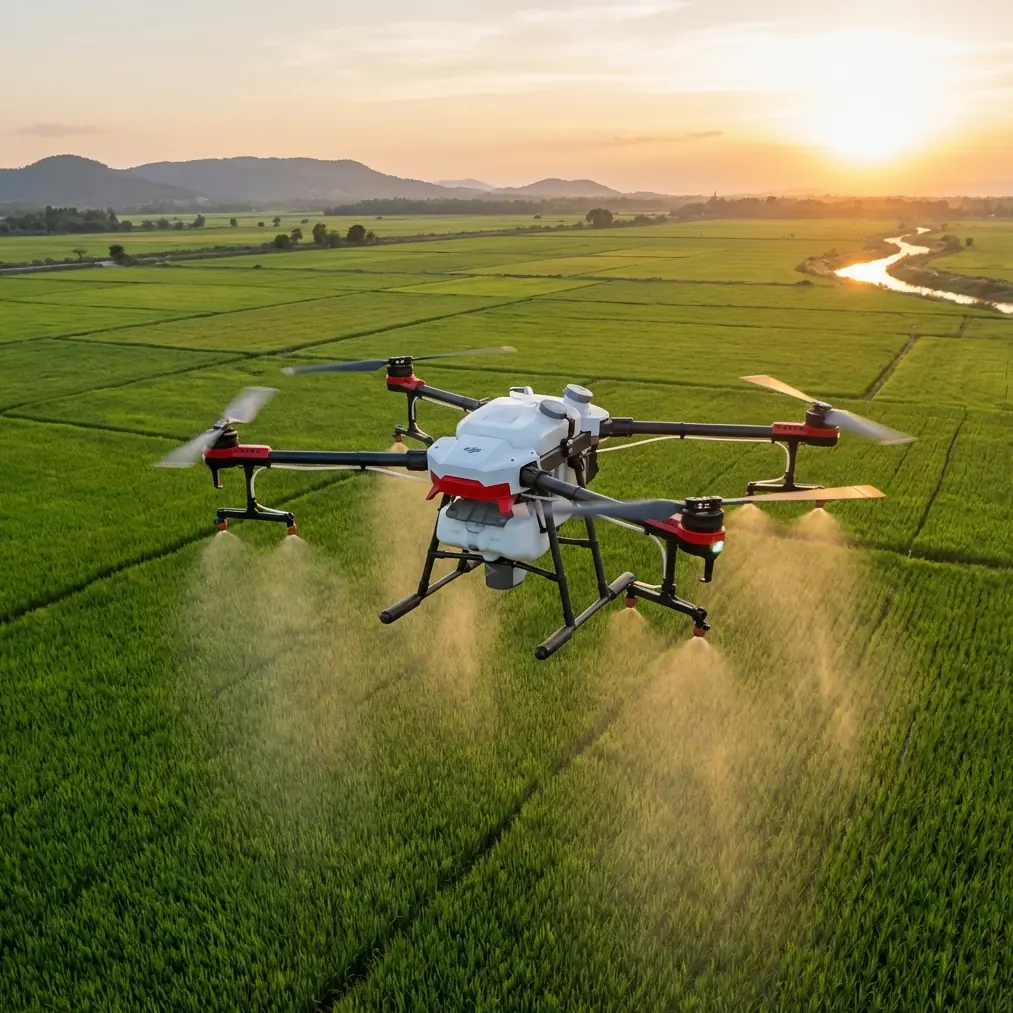
DJI Flip for Coastal Solar Farm Delivery Work: What Actually Matters in the Field
META: Expert technical review of DJI Flip for coastal solar farm delivery and inspection work, with practical battery management, obstacle avoidance, tracking, D-Log, and wind-exposure tips.
Flip is an unusual aircraft to evaluate for coastal solar farm work because the mission profile exposes every small design choice. Salt air punishes connectors. Wind rolls across panel rows in uneven bands. Reflective surfaces confuse less mature vision systems. And the pilot rarely has the luxury of flying for pure aesthetics; every sortie has to produce usable footage, useful situational awareness, or a fast answer for the site team.
That is why Flip deserves a more technical look than the usual beginner-drone framing.
On paper, the conversation around Flip usually centers on its approachable design, automated capture modes, and ease of deployment. In practice, for teams supporting solar farms near the coast, the real question is narrower: can it deliver reliable, repeatable short-range aerial support when the environment is visually complex, windy, and operationally unforgiving?
My answer is yes—with boundaries. And those boundaries matter more than the marketing summary.
Why Flip fits a coastal solar farm workflow
A coastal solar farm creates a strange visual environment for a small UAV. You have long, repeating geometry, low-contrast service roads, glint from panel surfaces, perimeter fencing, scattered junction boxes, and occasional moving maintenance vehicles. Add sea breeze and airborne moisture, and flight discipline becomes more important than outright aircraft speed.
Flip works best here when used as a rapid-response aerial tool rather than an all-day heavy mission platform. That means:
- quick launch for panel-row overviews
- short visual checks on hard-to-reach sections
- progress documentation for maintenance teams
- perimeter awareness after weather events
- close-range media capture for engineering reports or stakeholder updates
Its strength is not brute endurance. Its strength is reducing setup friction so the aircraft gets airborne before a ground team wastes half an hour walking a site segment.
That sounds simple, but on a large solar installation, shaving even 15 to 20 minutes off inspection cycles can change how often aerial checks actually happen. A drone that is easy to deploy tends to get used. A drone that feels cumbersome often stays in the vehicle until the problem has already escalated.
Obstacle avoidance matters differently around panel arrays
The phrase “obstacle avoidance” gets thrown around casually, but coastal solar work gives it a very specific meaning. On these sites, the obvious hazards are not skyscrapers or dense forest. They are repetitive low-height structures, cable runs, mounting hardware, fence lines, maintenance sheds, and sudden elevation changes along access roads.
For Flip, obstacle avoidance is most valuable at low to moderate altitude during repositioning, especially when the pilot is moving laterally along panel corridors or transitioning from open perimeter airspace into tighter work zones. That is where a small error becomes expensive fast.
The operational significance is straightforward:
- low-profile obstacles are easier to underestimate than tall ones
- repeating rows can distort a pilot’s depth perception
- reflective surfaces can tempt overconfidence in visual spacing
- gusts near row ends can push a lightweight aircraft off line
In this setting, obstacle avoidance is not a substitute for piloting skill. It is a buffer against momentary misjudgment while managing framing, telemetry, wind, and site awareness at the same time.
I would still advise conservative route planning. Do not skim panel edges for dramatic footage unless the shot serves a purpose. On solar farms, the best pilots are usually the least theatrical ones.
ActiveTrack and subject tracking: useful, but only if you define the subject correctly
The most underrated use of ActiveTrack and subject tracking on a solar site is not following a person for cinematic footage. It is maintaining visual continuity on a moving maintenance vehicle, a technician walking a fault corridor, or a utility path inspection where the pilot needs hands free for route supervision and airspace awareness.
That said, solar farms introduce a common tracking problem: visual repetition. The aircraft may have to distinguish a moving subject against dozens of nearly identical visual patterns. If glare is high or shadows are sharp, tracking confidence can degrade.
So the question is not whether ActiveTrack works. The better question is when it improves mission quality.
In my experience, it helps most when:
- the subject is isolated against a service road or open gravel
- lighting is even rather than harshly reflective
- the aircraft remains above the panel line instead of threading through infrastructure
- the pilot uses tracking as assistance, not autonomy
Operationally, that can reduce rework. Instead of manually correcting framing every few seconds, the pilot can focus on wind drift, standoff distance, and hazard scanning. For a site manager who needs a clean visual record of a technician’s route to a damaged string or inverter location, that efficiency matters more than the novelty of the feature.
QuickShots and Hyperlapse are not just creative modes
Many pilots dismiss QuickShots and Hyperlapse as social-media extras. On coastal solar projects, that is a mistake.
QuickShots can be useful for producing consistent, repeatable short clips that document a fixed asset from similar angles over time. If a team is monitoring shoreline exposure, drainage changes, vegetation encroachment, or access-road condition after storms, repeatable motion patterns help create a more legible visual record.
Hyperlapse has a different value. It compresses site activity and environmental change into something decision-makers will actually watch. On a sprawling solar installation, one short time-compressed sequence can reveal cloud-shadow movement, equipment traffic patterns, crew deployment timing, and changing glare conditions across panel blocks in a way static photos never will.
The trap is using these modes casually. They only become professionally useful when the pilot treats them as documentation tools, not tricks.
That means setting a repeatable takeoff point, holding consistent altitude bands, and recording the same route under comparable lighting when the objective is change detection. If you do that, automated flight patterns become a field-reporting asset.
D-Log is valuable on reflective sites
If you are flying over solar panels near the coast, high-contrast scenes are guaranteed. Bright sky, dark hardware, mirror-like panel reflections, pale gravel, and sea haze can all appear in one frame. That is where D-Log starts earning its place.
A flatter profile preserves more flexibility when the site needs footage for engineering review, client reporting, or edited project updates. Not because every flight needs a cinematic grade, but because reflective infrastructure often forces hard compromises in standard color profiles. Either you protect highlights and lose shadow detail, or you expose for darker components and risk clipping reflections.
D-Log gives you more room to recover a balanced image later.
Operationally, that matters when the footage has to show actual condition, not just look attractive. If corrosion staining, cable routing, panel contamination, fence damage, or pooling water is relevant, tonal latitude helps keep those details visible.
For solar work, I generally suggest this rule: use standard color when the goal is quick same-day viewing; use D-Log when the footage may feed reports, edits, or side-by-side condition comparisons later.
Battery management in coastal wind: the field lesson too many pilots learn late
Here is the battery tip I wish more new operators heard before their first coastal assignment with a lightweight drone: do not plan your return around percentage alone. Plan around resistance.
On inland sites with calm conditions, a battery reading can feel comfortably predictable. On a coastal solar farm, headwind on the way back changes everything. A battery that looked healthy while drifting downwind over panel rows can drain much faster once the aircraft turns into sustained wind and starts making repeated micro-corrections to hold position.
My field habit is simple: if the outbound leg benefits from the wind, I mentally reduce the usable battery margin before the aircraft even reaches the midpoint. I also avoid lingering at the far edge of the site for “one more shot” once battery percentage enters the caution zone.
A practical workflow looks like this:
- launch into the wind when possible
- take the longest transit leg first
- capture essential footage before secondary angles
- monitor return speed, not just remaining percentage
- land with a buffer large enough for a second approach if gusts destabilize descent
This matters even more near panel fields because landing zones are not always forgiving. Dust, narrow service lanes, vehicles, workers, and thermal shimmer can complicate the final minute of flight. A rushed recovery is where preventable mistakes happen.
And one more coastal note: after operations near salt-laden air, do not toss the drone back into the case and forget it. Give the aircraft and battery contacts a careful inspection as part of your post-flight routine. Corrosive environments are slow liars. They do not always show damage immediately.
Where Flip sits in a professional toolkit
For a coastal solar farm operator, Flip should be viewed as a nimble utility aircraft for rapid visual tasks, not as the only aircraft you will ever need. That distinction is healthy.
It is excellent when the job calls for:
- fast deployment
- close-range visual documentation
- short inspection passes
- training newer pilots on structured site workflows
- lightweight content capture for reports and updates
It is less ideal when the mission depends on long-duration mapping, high-wind persistence, or carrying the burden of every site task alone.
That is not a weakness unique to Flip. It is simply what happens when a compact drone meets an industrial environment. The right evaluation is whether it solves the tasks you actually perform most often.
For many solar teams, the answer will be yes. The majority of urgent UAV jobs on these sites are not massive survey missions. They are focused questions:
- Did the storm damage the perimeter on the east edge?
- Can we inspect the blocked access section without sending a vehicle first?
- Can we document technician progress across three rows before light shifts?
- Can we verify standing water around the inverter pad?
- Can we capture a clean overview for the operations update?
Flip is well suited to those moments.
A realistic capture setup for this environment
If I were setting up Flip for a coastal solar farm day, I would prioritize clean execution over complicated ambition.
My checklist would look like this:
- start early, before heat shimmer builds over the panels
- choose a launch area with clear vertical separation from fencing and vehicles
- use obstacle avoidance as a safety layer, not a dare
- reserve ActiveTrack for clear subjects on service roads
- use QuickShots only when repeatability supports documentation
- switch to D-Log when contrast is severe or the footage will be graded later
- keep flights shorter than inland expectations when wind is building
- inspect aircraft surfaces and battery interfaces after the session
That last point rarely makes it into glossy reviews, but it should. Coastal operations punish neglect. The pilots who keep aircraft reliable are usually the ones who treat post-flight care as part of the mission, not an afterthought.
If your team is refining site workflows and wants a practical outside view, you can message us here to compare operating approaches for coastal infrastructure work.
Final verdict
Flip makes sense for coastal solar farm delivery and inspection support when you use it with professional restraint. Its appeal is not that it turns a difficult environment into an easy one. It does something more useful: it lowers the friction between identifying a site question and getting airborne to answer it.
That is why features like obstacle avoidance, ActiveTrack, QuickShots, Hyperlapse, and D-Log should not be judged in isolation. Their value comes from how they behave around reflective panel arrays, repetitive geometry, and wind-exposed return legs. Those are operational realities, not spec-sheet decorations.
If you respect those realities, Flip becomes a very efficient field tool. If you ignore them, the same compactness that makes it convenient can lead to shallow planning and avoidable errors.
For coastal solar work, that is the real review.
Ready for your own Flip? Contact our team for expert consultation.