
Delivering in Dusty Venues With DJI Flip
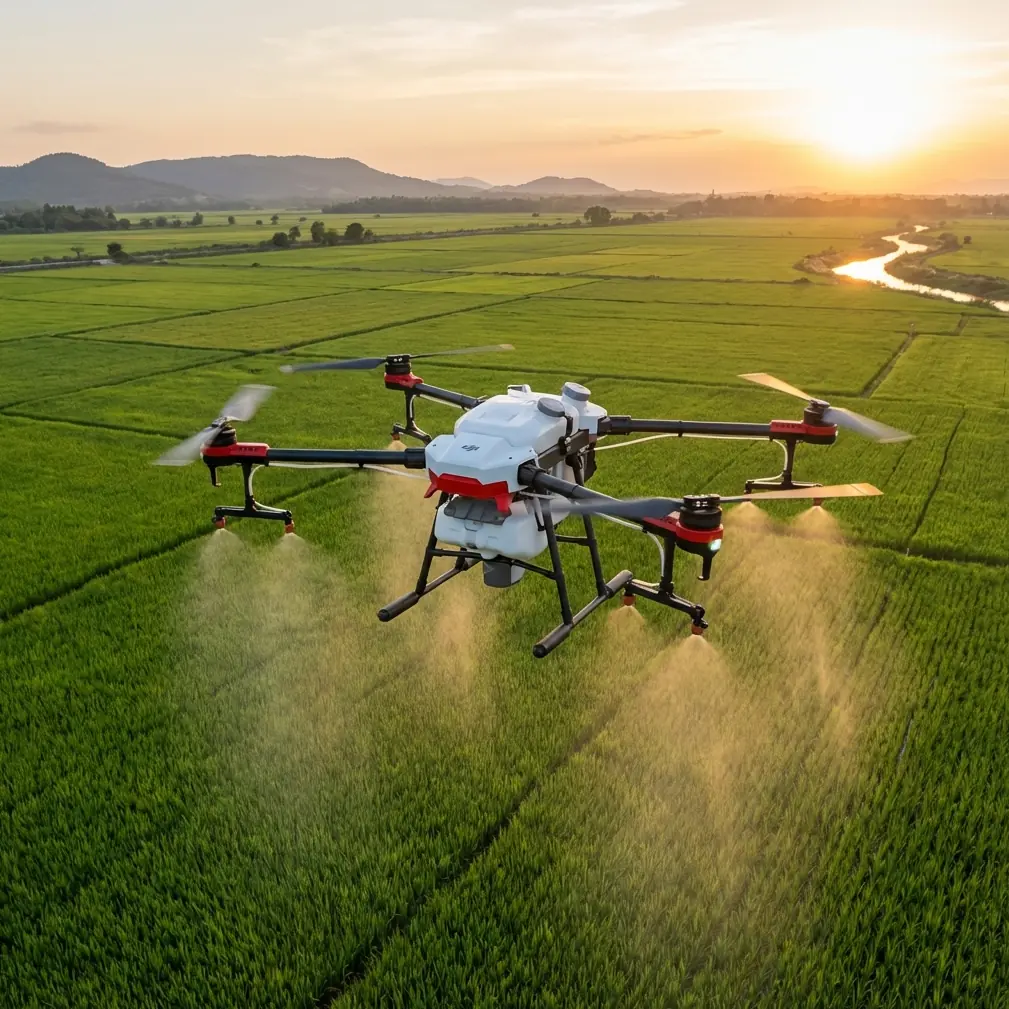
Delivering in Dusty Venues With DJI Flip: The Flight Setup That Actually Works
META: Expert guidance for flying DJI Flip in dusty venues, with practical altitude, obstacle avoidance, tracking, and camera settings that improve reliability and footage quality.
Dust changes everything.
A venue that looks simple on paper can become unpredictable the moment fine particles start hanging in the air. Contrast drops. Visibility shifts from one pass to the next. Ground effect gets messier during low hover work. Prop wash kicks loose debris back into the aircraft’s path. If you are trying to deliver usable footage with the DJI Flip in that kind of environment, the usual “just fly lower for more drama” advice stops being helpful very quickly.
The Flip is attractive for this kind of work because it is small, fast to deploy, and friendly to creators who need clean results without carrying a larger kit. But dusty venues expose the gap between what a drone can do in a spec sheet and what it can do consistently on location. That is where setup matters more than ambition.
For this scenario, the smartest approach is not to push the aircraft to the edge of the environment. It is to build a flight profile that protects image quality, preserves obstacle sensing reliability, and reduces the amount of dust your own aircraft throws into the scene. The best results usually come from flying slightly higher than instinct suggests, planning smoother tracking lines, and choosing camera modes that hold up when airborne particles flatten the image.
The Real Problem at Dusty Venues
Dust creates three separate operational problems, and they often show up at the same time.
First, it affects the aircraft’s immediate airspace. A compact drone such as the Flip can work in tighter areas than many larger platforms, but low-altitude flight in dusty terrain stirs up loose material. That matters most on takeoff, landing, and any slow pass near the ground. Even when the aircraft remains stable, the shot can suffer because debris enters frame or creates a haze layer between the camera and the subject.
Second, dust interferes with perception. Readers looking at Flip for venue delivery work often focus on obstacle avoidance and subject tracking, and rightly so. But airborne particles, uneven light, and low-contrast surfaces can make the environment less readable to both pilot and aircraft. Features like obstacle avoidance and ActiveTrack are useful tools, not magic. In a dusty venue, they perform best when you give them cleaner sightlines and simpler motion paths.
Third, dust makes footage look thinner than the eye remembers. If you are shooting a wide establishing move or following a person through an open venue, suspended particles can wash out detail and compress tonal separation. That is where recording options such as D-Log become operationally meaningful rather than just nice-to-have features. They give you more room to shape footage that would otherwise look flat and chalky.
The Altitude Insight Most Pilots Learn the Hard Way
The optimal flight altitude in dusty venues is usually not ultra-low. For most Flip flights in this environment, a working band of roughly 4 to 8 meters above ground is the sweet spot for standard passes, with occasional climbs higher for wide reveals.
That range is practical for a few reasons.
At under 2 to 3 meters, prop wash is much more likely to disturb loose dust, especially on dry dirt, powdery gravel, construction edges, event grounds, or indoor-outdoor transitional venues with debris on the floor. Low flight can look cinematic for a second or two, but it also increases the chance that your drone creates the exact atmospheric problem you are trying to avoid.
At 4 to 8 meters, you usually get enough separation from the surface to reduce dust disturbance while still maintaining strong subject presence in frame. This altitude also helps obstacle avoidance systems by giving the aircraft a cleaner geometric relationship with fences, poles, seating structures, and temporary venue hardware. Instead of threading through clutter at knee height, you are flying above the worst of the dust layer and below the kind of height where the subject becomes visually disconnected.
For wider tracking or establishing work, moving up to around 10 to 15 meters can be the better play when the venue layout allows it. That added height can smooth the image, reduce the visual impact of airborne particles near the ground, and create more dependable ActiveTrack behavior because the aircraft has more room to predict motion without abrupt corrections.
The point is not that low flight is always wrong. It is that in dusty conditions, low flight should be treated as a short, deliberate accent rather than your default operating mode.
Why Obstacle Avoidance Needs Better Geometry, Not Blind Trust
The Flip’s appeal for venue creators is tied in part to intelligent support features. Obstacle avoidance is especially valuable when working around event structures, pathways, pillars, fencing, lighting stands, or uneven architectural features. But dusty venues make those systems work harder.
Fine particles can reduce scene clarity. Bright backlight can make dusty air look denser than it is. Temporary venue infrastructure often includes thin elements that are difficult to read consistently from every angle. That means your job as pilot is to simplify the problem for the drone.
Altitude is the first part of that simplification. Smooth, mid-level flight gives obstacle sensing a better chance to interpret the scene than a low, aggressive line through debris and clutter. Speed is the second part. A slightly slower forward pace often produces cleaner results than rapid corrections, especially when the aircraft is alternating between tracking a subject and evaluating a messy background.
The third part is route selection. In dusty venues, the best route is often the one with fewer dramatic obstacles, not the one that hugs every structure for visual tension. If you are delivering content for a venue, reliability is worth more than a near miss.
Subject Tracking in Dust Requires a Different Mindset
ActiveTrack and subject tracking modes can be extremely effective on the Flip, but dusty conditions reward moderation. A subject moving through haze, changing light, and uneven backgrounds can become harder to isolate. Add drifting particles and the visual field becomes more chaotic than it appears to the naked eye.
There are two practical adjustments that improve results.
One is framing discipline. Give the subject a little more space in frame than you would in perfectly clear air. That buffer helps preserve a stable composition when tracking makes small corrections. It also reduces the need for last-second inputs that may pull the aircraft into dustier low zones.
The other is path predictability. Straight or gently curving movement is your friend. If your subject is walking, biking, or touring through a venue, build the shot around the route they are already taking. Dusty environments are not the place to force erratic, highly reactive tracking lines just because the mode allows it.
If you need a natural way to plan a route or discuss a venue layout before the flight, send a quick note through our WhatsApp planning line. In difficult environments, five minutes of preflight discussion often saves an hour of compromised shooting.
Camera Settings That Matter More Than Usual
Dust makes mediocre footage look worse. It lowers perceived sharpness and compresses contrast, so your recording setup carries more weight than it might on a clear day.
This is where D-Log earns its place. In dusty scenes, highlight roll-off and tonal recovery matter because the air itself acts like a low-grade diffusion layer. Shooting in D-Log gives you more flexibility to restore separation between the subject, the venue, and the background during grading. That can be the difference between footage that feels intentional and footage that simply looks faded.
Hyperlapse can also work well in dusty venues, but only if the atmospheric conditions are stable enough to make the motion feel deliberate. When dust is swirling unpredictably, a hyperlapse may exaggerate visual noise rather than enhance scene scale. The better use case is a controlled reveal of the venue when the haze is light and the route is clean.
QuickShots are useful too, but they need restraint. Automated moves are attractive because they speed up production, yet dusty venues punish generic presets when the environment is cluttered or visibility is inconsistent. The safer approach is to use QuickShots only after you verify the space at a conservative altitude. Treat them as a finishing tool, not as the first flight after unpacking.
A Practical Problem-Solution Workflow for the Flip
If your assignment is to deliver venue footage in dust, here is the workflow that tends to hold up.
Start with a takeoff zone that is cleaner and firmer than the surrounding surface. Even a short relocation can reduce how much debris the aircraft stirs at launch. Then make your first pass a scouting pass, not a hero shot. Climb into that 4 to 8 meter band and look for where the dust is actually moving, where light is cutting through the air, and which paths give obstacle avoidance the clearest read.
Next, decide which mode the scene really supports. If the subject path is predictable and the background is not too chaotic, ActiveTrack can save time and produce a polished result. If dust is shifting heavily or structures are close, manual flight may be the smarter option. There is no prize for using automation when manual control would be cleaner.
Then capture your essential footage first. In dusty venues, conditions often degrade rather than improve as activity increases. Get the dependable tracking pass, the medium-altitude reveal, and the wide safety shot before experimenting with lower or more stylized moves.
Finally, reserve low-altitude footage for very short sequences and only where the surface is not likely to erupt under prop wash. That might mean a clean paved strip, a compacted path, or an indoor segment with less loose particulate matter. Even then, keep it intentional. One strong low pass is worth more than six ruined ones.
What This Means for Venue Deliverables
Clients and audiences rarely describe a flight as “too low.” They describe the end result as messy, unstable, or hard to see. Dusty venues are where operational discipline directly shapes perceived production value.
A Flip pilot who understands altitude management, uses obstacle avoidance intelligently, and treats tracking as a tool rather than a crutch will usually deliver better footage than someone chasing flashy moves at ground level. That is especially true when the venue needs multiple usable clips, not just one social-media-friendly moment.
For this use case, the Flip’s strengths are clear: fast deployment, approachable intelligent features, and creative modes like QuickShots, Hyperlapse, and D-Log that can support efficient production. But those strengths pay off only when the flight plan respects the environment. Dust rewards clean geometry, smooth trajectories, and moderate altitude.
That is the operational truth behind good dusty-venue footage. Fly a bit higher. Track a bit calmer. Let the drone breathe above the debris instead of inside it.
The result is safer flying, more dependable obstacle sensing, stronger subject separation, and footage that looks like it came from someone who understood the venue before takeoff.
Ready for your own Flip? Contact our team for expert consultation.