
Flip Field Report: What a 5,380-Meter Heavy
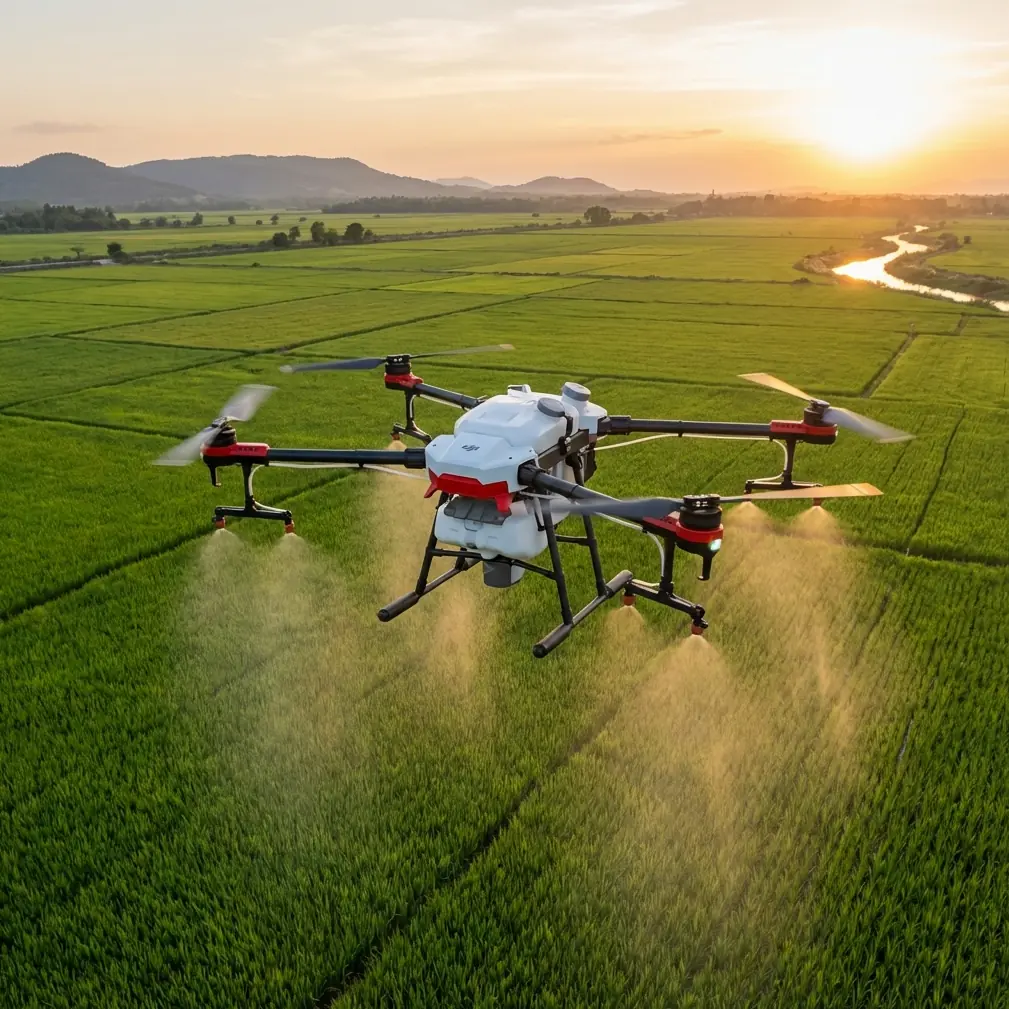
Flip Field Report: What a 5,380-Meter Heavy-Lift Drone Record Means for Remote Construction Filming
META: A field report on China’s 5,380-meter heavy-lift drone record and what it reveals for Flip users filming remote construction sites, from thin-air flight limits to sensor-led obstacle avoidance.
When a heavy-lift multirotor can hover at 5,380 meters with a 30-kilogram suspended load, hold that stability for 15 minutes, and set down precisely in air with only about 60% of the density found at sea level, it tells us something far more useful than “a record was broken.” It tells us where the new operational edge is.
For anyone planning to use Flip to film construction sites in remote, elevated terrain, this matters immediately. Not because Flip is a cargo drone. It is not. And not because your job is to replicate a test built around a machine with a maximum takeoff weight of 221 kilograms and an effective payload potential of 100 kilograms. Your mission is different. You are there to document progress, inspect access routes, capture terrain context, and come home with usable footage. But the physics punishing that Xi’an test team on the Qinghai-Tibet Plateau are the same physics shaping every flight you make in thin air, shifting wind, and sparse infrastructure.
That is why this latest report out of China deserves a closer look from the construction filming side.
The headline detail is striking: Xi’an Tianyi Technology Group’s JDY-100B heavy-lift drone reportedly completed a stable hover and transport demonstration at 5,380 meters in Tibet’s Nagqu Amdo County, Domar Township. The aircraft carried a 30-kilogram load beneath a sling, flew for 15 minutes, and landed with precision. According to the report, that performance reset the benchmark for plateau transport capability in the multirotor category.
There is another detail that deserves equal attention. The test did not happen in a neat lab environment. A four-person flight team drove more than 11,078 kilometers from Xi’an, passing through Lanzhou, Qinghai, and Xinjiang, crossing a 600-kilometer uninhabited stretch before reaching the test site. That journey is operationally significant. It reminds us that remote aerial work is rarely decided by the aircraft alone. Logistics, recovery options, battery planning, weather windows, road access, and crew resilience still decide whether the job is achievable.
For Flip operators filming construction in isolated regions, those two facts, the altitude performance and the brutal overland deployment, frame the real conversation.
Thin air changes everything
At 5,380 meters, the report states air density is only 60% of that on the plains. For rotorcraft, that is not a small reduction. Lift becomes harder to generate. Motors must work differently. Control authority can feel softer. Battery behavior, already sensitive to temperature and discharge rates, becomes more consequential. Suspended loads introduce pendulum forces. Even a steady hover is an engineering statement at that point.
Now translate that into the world of a compact filming platform like Flip.
If you are documenting a remote construction site, perhaps a mountain road cut, a telecom tower foundation, a hydro-related structure, or a logistics corridor in elevated terrain, you are not lifting cargo. But you are still asking the aircraft to maintain position accurately, return consistent gimbal behavior, and preserve image quality while flying where rotor efficiency drops and terrain complexity increases.
That is where pilot assumptions get people into trouble. A drone that feels planted at low elevation may behave very differently when launched near ridgelines, excavation edges, or temporary site roads at altitude. Climb performance can soften. Braking distances can stretch. Return paths that look simple on a map become more complex when the aircraft must fight localized gusts and terrain-induced airflow.
The JDY-100B record is useful because it compresses that reality into one vivid example: if a purpose-built heavy-lift multirotor needs that level of engineering margin to move 30 kilograms for 15 minutes in plateau conditions, then filming drones in similar regions need disciplined flight planning, not casual confidence.
Why this matters specifically for Flip users
Flip sits in a different class, but remote construction filming is about reliability, repeatability, and intelligent automation more than brute force. The practical lesson is not to compare payload charts. It is to understand where smart flight features become operational tools instead of convenience features.
Obstacle avoidance is a clear example. On an active construction site in remote terrain, hazards are often irregular and temporary: lattice materials stacked near haul roads, cable runs, survey poles, rebar clusters, mobile machinery, scaffold extensions, or newly placed barriers that were not there the previous day. In mountain or plateau settings, the visual background can also be deceptive. Dust, rock faces, harsh midday contrast, and low-angle light all challenge depth perception, both for the pilot and for onboard systems.
That is why reliable sensing matters. During one remote shoot, we had a herd of blue sheep break across the edge of a service track below the flight path while the drone was framing an earthworks sequence near a retaining structure. The key point was not drama. It was how the aircraft’s sensors responded when the scene changed quickly and unpredictably. A drone that can recognize a changing foreground, slow down, and preserve controllability gives the pilot time to recompose or abort cleanly. In real fieldwork, that margin is worth more than any spec-sheet boast.
Subject tracking and ActiveTrack also become more useful in construction documentation than many people realize. Not because you want flashy movement for its own sake, but because repetitive site progress capture often depends on consistent framing around moving assets: trucks entering a cut, material handlers transferring loads, inspection crews walking a corridor, or compactors working a graded segment. When those features behave well, they reduce pilot workload and improve shot repeatability. In demanding terrain, that is not a luxury. It is a way to reserve attention for wind shifts, signal integrity, and terrain separation.
Records are built on logistics, and so is good footage
The Chinese test team’s 11,078-kilometer road deployment may be the most underrated part of the story. A lot of drone coverage talks as if the aircraft is the mission. In remote construction work, the aircraft is only one node in a chain.
A four-person team driving a boxed truck across provinces, then through a 600-kilometer no-man’s-land route, tells you the real challenge: every remote operation is constrained by what you can carry in, power, repair, protect from weather, and extract safely if something changes.
This applies directly to Flip projects. If you are filming construction sites far from reliable infrastructure, your deliverables depend on systems thinking:
- Batteries must be managed around temperature, charging availability, and turnaround time.
- Launch zones must account for dust, loose aggregate, vehicle movement, and changing site geometry.
- File handling must be secure enough that one failed storage device does not erase a travel day.
- Shot lists must prioritize mission-critical documentation before cinematic extras.
- Recovery options must be realistic if weather closes in or access roads degrade.
That is the operational meaning behind the record. The airframe got the attention. The expedition made the result possible.
I would go further. For content teams supporting remote construction clients, this kind of story is a reminder to design flights backward from the final reporting need. Start with the imagery that site managers, engineers, and external stakeholders actually require. Then sequence the mission to secure those essentials early. Hero shots come last.
What the record says about stability
The report emphasizes that the 30-kilogram load remained steady beneath the sling and that the aircraft returned precisely after 15 minutes. That stability is not just about power. It is about control, tuning, and confidence under degraded atmospheric conditions.
Construction filming has its own version of the same requirement. Your gimbal does not carry cargo, but it carries decision-making weight. If your footage is unstable, if horizon consistency drifts, if braking introduces framing jolts, or if tracking becomes hesitant when terrain relief increases, the resulting media stops being dependable documentation and starts becoming visual evidence of uncertainty.
That is why modes like QuickShots and Hyperlapse should be used carefully on remote sites. They are excellent tools when conditions are controlled and paths are predictable. A repeating orbit around a bridge abutment or a Hyperlapse showing a day’s staging movement can be genuinely valuable. But these modes only shine when the pilot has first validated clearance, wind behavior, and sensor confidence in that exact environment. Thin air and mountain winds punish assumptions.
D-Log also deserves a serious mention here. Remote construction environments often mix bright sky, pale soil, dark machinery, and reflective surfaces in the same frame. Shooting in D-Log can preserve more grading flexibility when the visual range gets difficult, particularly if you need to deliver both cinematic edits and neutral progress-report visuals from the same flight day. The trick, of course, is discipline in exposure and enough post-production consistency to keep weekly reporting comparable.
China’s heavy-lift lead has a downstream effect
The report describes the JDY-100B achievement as evidence of Chinese leadership in heavy-lift drones. Whether you approach that as an industrial policy story, a manufacturing story, or a flight capability story, the downstream implication is straightforward: more demanding environments are becoming test beds for real drone utility, not edge-case demonstrations.
That matters even for lighter platforms like Flip. As high-altitude, remote-area drone operations become more mature, expectations rise across the board. Clients begin to assume that difficult access no longer excuses poor visual coverage. They expect sharper progress records, safer inspection angles, and more frequent updates from places that were once expensive to document consistently.
For creators and field teams, that means the bar is moving. Good enough is disappearing. If a heavy-lift multirotor can prove precise suspended transport at 5,380 meters, then a filming crew showing up to a remote construction site needs a much tighter answer to a basic question: how will your workflow stay reliable when the environment is not?
The answer is rarely found in a single feature. It lives in the combination of route planning, obstacle avoidance, controlled tracking, disciplined battery rotation, image profile choices, and a realistic understanding of what the terrain will do to your aircraft.
A field takeaway for remote site crews
Here is the simplest way I would frame this news for Flip users: the record is not mainly about spectacle. It is about margin.
Margin in lift. Margin in control. Margin in logistics. Margin in planning.
Those margins are what separate a successful remote construction shoot from a long drive that ends with partial footage and a compromised safety envelope.
If you are preparing to film in isolated terrain, build your operation around known constraints before you think about creative flourishes. Scout the access route. Walk the launch area. Identify line-of-sight interruptions. Pre-plan conservative return paths. Test obstacle avoidance responses at low-risk distances. Use ActiveTrack only where movement patterns are predictable. Save QuickShots and Hyperlapse for windows where site activity and airflow are fully understood. Capture your essential documentation passes first, then layer in the cinematic material.
And if the site includes wildlife corridors, grazing routes, or unmanaged road edges, assume the scene can change without warning. Sensors help. Judgment matters more.
That is the real connection between a record-setting plateau cargo flight and a Flip mission over a remote construction site. Different aircraft, different payload, same unforgiving environment.
If you are mapping out a remote filming workflow and want a second set of eyes on the mission profile, you can reach me through this quick field contact channel: message me here.
The drone industry likes bold milestones, and this one earns the attention. A silver-gray aircraft, a 30-kilogram hanging load, 15 minutes in the air, and a successful demonstration at 5,380 meters where the atmosphere offers only 60% of the density available on the plains. Those are not abstract numbers. They define the conditions under which aerial work becomes real engineering.
For construction filmmakers using Flip, the lesson is not to chase records. It is to respect environments that expose weak planning instantly. The crews who perform best in those places are not the ones who talk most about adventure. They are the ones who understand that every remote flight is a systems problem first and a camera problem second.
Ready for your own Flip? Contact our team for expert consultation.