
Flip in Dusty Highway Filming: What a Hexacopter Control
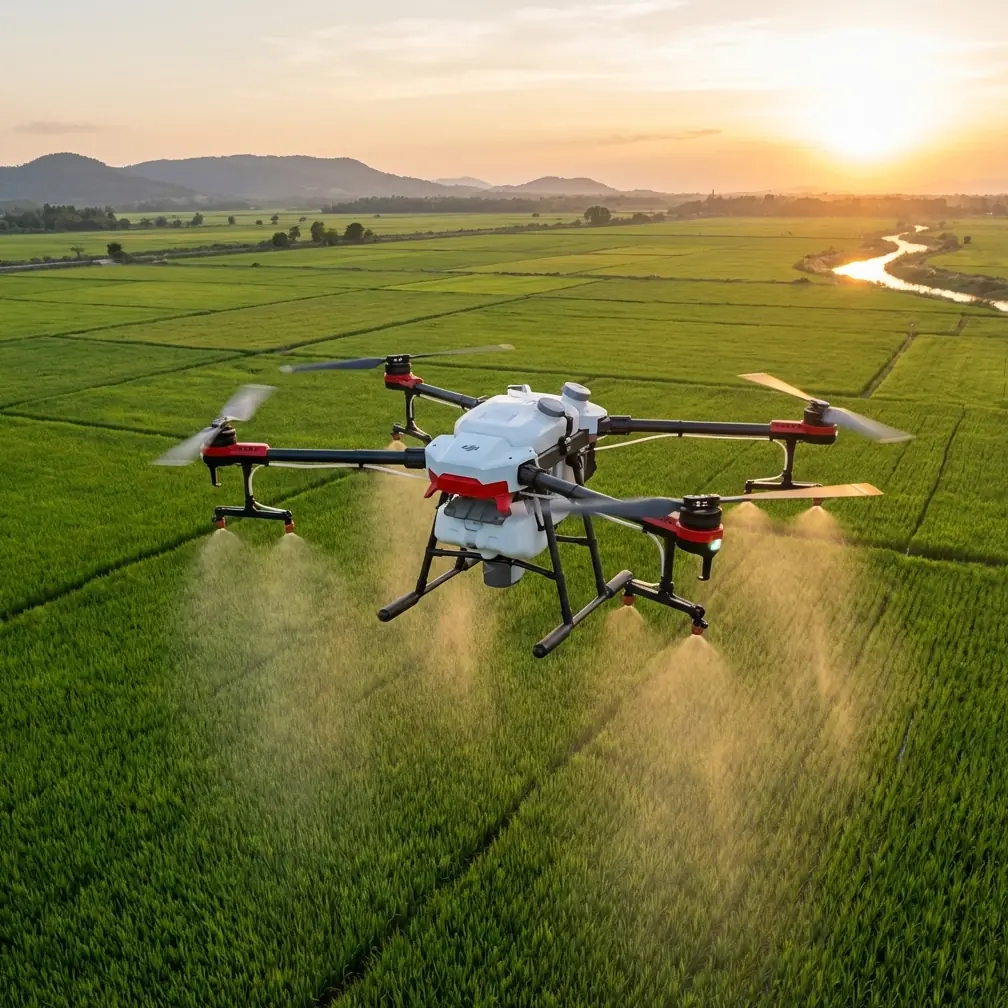
Flip in Dusty Highway Filming: What a Hexacopter Control Architecture Teaches Us About Real-World Reliability
META: A field-focused case study on filming highways in dusty conditions with Flip, using hexacopter control-system principles to explain sensor reliability, link stability, obstacle avoidance, tracking, and antenna positioning for stronger range.
Dust changes everything.
On paper, filming a highway sounds straightforward: long sightlines, predictable vehicle motion, plenty of room to work. In practice, dust strips away that comfort fast. Contrast falls off. Fine particles soften the scene and confuse visual cues. Heat shimmer creeps in off the pavement. Vehicles throw debris into the air at exactly the moment you need the cleanest tracking and the most stable control response.
That is why the most useful way to think about Flip in this environment is not as a camera that flies, but as a control system that happens to carry a camera.
A hardware design study from Harbin Institute of Technology makes that point clearly through a six-rotor aircraft architecture. The aircraft is described as a statically unstable platform, which means it cannot simply be pointed and left alone the way a fixed-wing aircraft can. It requires continuous attitude stabilization. Operationally, that matters a lot for dusty highway shoots. The pilot is not just asking the aircraft to move from A to B. Every second, the flight controller is collecting sensor data, reconciling it, generating correction commands, and pushing those commands to the motor speed controllers so the aircraft can hold attitude, altitude, and position.
That loop is the hidden reason some flights feel locked-in and others feel nervous.
Why this matters for Flip on a highway corridor
If you are filming along a road in dusty conditions, Flip’s visible features—subject tracking, obstacle avoidance, QuickShots, Hyperlapse, D-Log capture—only work as well as the platform under them. The underlying lesson from the hexacopter design is that multi-sensor feedback is not optional. It is the core of stable flight.
The reference design combines multiple sensing inputs: a three-axis MEMS gyroscope, a three-axis MEMS accelerometer, a three-axis magnetic sensor, an attitude module, ultrasonic ranging, a barometer, GPS, and an optical flow sensor. That is a lot of redundancy and cross-checking, and there is a reason for it. No single sensor stays perfect in every environment.
Dusty highways are exactly the kind of environment where sensor diversity becomes operationally significant:
- GPS can remain useful for broad positional awareness across long road sections.
- A barometer helps smooth altitude control when visual conditions degrade.
- Optical flow may become less dependable when dust clouds obscure the surface texture below.
- Magnetometer readings can be less trustworthy around guardrails, bridges, heavy vehicles, or roadside infrastructure.
- Ultrasonic inputs may behave differently depending on height, surface reflectivity, and airflow disturbances.
For a Flip operator, that translates into one practical truth: if tracking quality or positioning confidence starts to feel inconsistent in dust, do not treat it as a camera problem first. Treat it as an environmental load on the aircraft’s sensing stack.
The two-part system mindset: aircraft and ground side
Another detail from the reference is just as relevant: the control system is split into two major sections, the ground station and the airborne section. The ground side sends commands and receives, displays, analyzes, and stores aircraft information. The airborne side gathers motion data and executes control.
That division sounds basic, but it changes how experienced operators approach a highway filming day with Flip.
Too many pilots focus only on the drone and neglect the human-machine side of the loop: controller orientation, antenna position, screen readability, monitoring discipline, and route planning. Yet the reference architecture explicitly frames the operation as a combined system. The airframe is only half of it.
On a dusty roadside, this becomes especially important because the environment attacks both sides at once. Airborne sensors are dealing with low-contrast visuals and turbulence from passing traffic. On the ground, your control station may be fighting glare, intermittent line-of-sight blockage from trucks, and weak body positioning that quietly reduces link performance.
The best Flip footage from these jobs usually comes from crews who think like system designers, not just pilots.
Antenna positioning advice for maximum range
This is where many highway shoots are won or lost.
The reference design uses an Xbee wireless communication link as one of its primary command uplink paths, with command data flowing from a control handle through a computer and ground station software before being transmitted to the aircraft and unpacked by the onboard controller. The exact hardware is different from Flip, of course, but the design lesson is universal: command and telemetry quality depend on a clean, intentional radio path between ground and aircraft.
For maximum range and the most stable signal during dusty highway filming, antenna positioning deserves as much attention as exposure settings.
Here is the field rule I give people:
Aim for clear line of sight, broad antenna face alignment, and body separation from the controller.
In plain language:
- Do not point the antenna tips directly at the aircraft if your controller design uses broadside radiation. In many systems, the stronger zone is off the face or side, not off the tip.
- Keep the controller high enough that parked vehicles, barriers, and your own torso are not shielding the signal.
- If you are shooting parallel to a road, move yourself to the outside edge of the corridor where possible so trucks are less likely to repeatedly block the path.
- Avoid standing immediately beside large metal guardrails or utility cabinets.
- Reposition proactively as the vehicle subject moves, rather than waiting for signal quality to fall.
- If one operator is piloting and another is managing framing, agree in advance who is responsible for controller orientation.
Dust itself is not always the direct radio problem. Highway geometry is. Bridges, slope changes, traffic, sound walls, and metallic roadside structures can degrade a link more than the airborne particles do. The reference’s two-link mindset is a reminder that communications resilience is an engineered outcome, not luck.
If you are planning a more demanding corridor shoot and want a second opinion on setup, flight path, or controller placement, you can message the team here.
What obstacle avoidance can and cannot solve in dust
Flip users often assume obstacle avoidance is the safety net that covers everything ugly about a difficult location. It does not.
On a highway shoot, obstacle avoidance is valuable near sign gantries, overpasses, light poles, barriers, and roadside trees. It can reduce workload when you are executing low lateral passes or revealing movement from behind structures. But the reference hardware logic reminds us that flight control is a fusion problem. The aircraft is making decisions from multiple information sources, and some sources become less clean in suspended dust or low-contrast light.
That means obstacle avoidance may remain helpful while still becoming more conservative, slower to interpret, or more hesitant in visually messy air. The operator’s job is not to “trust the sensors” in a vague sense. The job is to understand that sensor confidence changes with the scene.
A practical workflow is to keep your path design simple in dusty segments:
- Favor clean lateral movement over complex arcing close passes.
- Build more vertical margin than you would on a clear day.
- Avoid asking ActiveTrack or subject tracking to perform through thick dust plumes kicked up by large vehicles.
- Reset the shot after the plume clears rather than forcing the aircraft through weak visual conditions.
This is especially true when shooting Hyperlapse sequences. Hyperlapse magnifies inconsistency. Tiny positioning corrections that would look invisible in normal video can become obvious as jitter or drift when time compression is applied.
Tracking vehicles on highways: where ActiveTrack helps and where pilot judgment wins
Subject tracking on a highway can be excellent with Flip because the subject motion is usually directional and predictable. Cars and trucks move within a constrained path. That makes the job easier than following a cyclist through trees or a runner across mixed terrain.
But dust introduces interruptions in visual continuity.
The takeaway from the hexacopter reference is that motion control depends on continuous feedback, not one-time lock-on. If the scene quality degrades, tracking quality may degrade with it. In real operation, that means you should not think of ActiveTrack as a “set and forget” mode during dusty roadside work. Think of it as an assistant that reduces workload while you remain fully responsible for trajectory and signal discipline.
The strongest highway tracking shots with Flip usually follow one of three patterns:
Offset follow The aircraft tracks from a safe lateral distance with the vehicle occupying a stable frame position. This is forgiving when dust trails are light to moderate.
Lead reveal Flip moves ahead of the subject and opens the scene, showing the road context. Good for dawn or late-day light when dust becomes atmospheric rather than opaque.
High trailing top-angle This reduces the chance that the subject’s own dust plume fully obscures the frame. It also tends to be easier on obstacle sensing and visual stabilization.
QuickShots can work in roadside locations, but they are often less useful than a carefully rehearsed manual move because highways are linear spaces with hidden hazards and changing traffic patterns. The automation may be elegant. The corridor may not be.
Image strategy: D-Log and dust are a strong pairing
Dust flattens contrast and pushes highlights in strange ways, especially around windshields, painted lane markings, and sunlit hoods. That makes D-Log particularly useful with Flip in this scenario.
Not because it magically fixes bad light, but because it gives you more room to separate the dust atmosphere from the hard surfaces in grading. Road scenes often contain both muted haze and harsh reflective detail in the same frame. A flatter capture profile lets you recover shape in the haze without making the pavement clip into a brittle, over-processed look.
The trick is to expose for retention, not for punch. Highway dust footage often looks disappointing on the controller screen because it appears washed. Later, in post, that restrained capture can be the difference between a believable industrial mood and a noisy, overcooked image.
Why six PWM motor outputs still teach a Flip operator something
The reference diagram shows six PWM outputs driving six ESCs and six motors in the hexacopter layout. Flip is not that aircraft, but the principle matters. Multi-rotor flight quality is the product of rapid, repeated micro-corrections passed from controller to propulsion system.
That is the invisible foundation under every smooth roadside dolly, every stable reveal over an interchange, every tracking pass beside moving traffic. When dust, turbulence, and link quality all add stress, the aircraft is surviving on the speed and coherence of those correction loops.
For the operator, the lesson is simple: smooth footage in harsh conditions starts before takeoff. It starts with a conservative route, a stable radio path, realistic sensor expectations, and enough altitude and lateral spacing to let the control system breathe.
A practical case workflow for dusty highway filming with Flip
If I were building a Flip shoot plan around the logic in this reference, it would look like this:
Preflight
- Walk the corridor for metal structures, overpasses, sign supports, and traffic patterns.
- Pick pilot positions with uninterrupted line of sight.
- Check antenna orientation before launch, not after signal warnings.
- Plan alternate subject reacquisition points if dust plumes become too dense.
Flight design
- Start with a high-confidence manual pass before using tracking modes.
- Use obstacle avoidance as a layer, not as the primary safety plan.
- Keep enough stand-off distance that visual tracking is not constantly fighting airborne debris.
Capture
- Use D-Log for scenes with bright pavement and dusty atmosphere.
- Reserve Hyperlapse for periods of lighter traffic and more stable air.
- Treat QuickShots selectively; not every automated move fits a linear transport corridor.
Control discipline
- Monitor signal path continuously as vehicles pass between you and the aircraft.
- Reposition the ground station early if traffic or terrain begins interrupting line of sight.
- Remember the aircraft is continuously stabilizing a statically unstable platform; abrupt stick inputs only increase workload when conditions are already messy.
That last point may be the most overlooked of all. The drone is already working hard. Dust, turbulence, and visual clutter are not abstract environmental notes. They are control inputs by another name.
A good Flip operator respects that and flies accordingly.
Ready for your own Flip? Contact our team for expert consultation.