
Flip for Wildlife in Dusty Conditions: A Field Tutorial
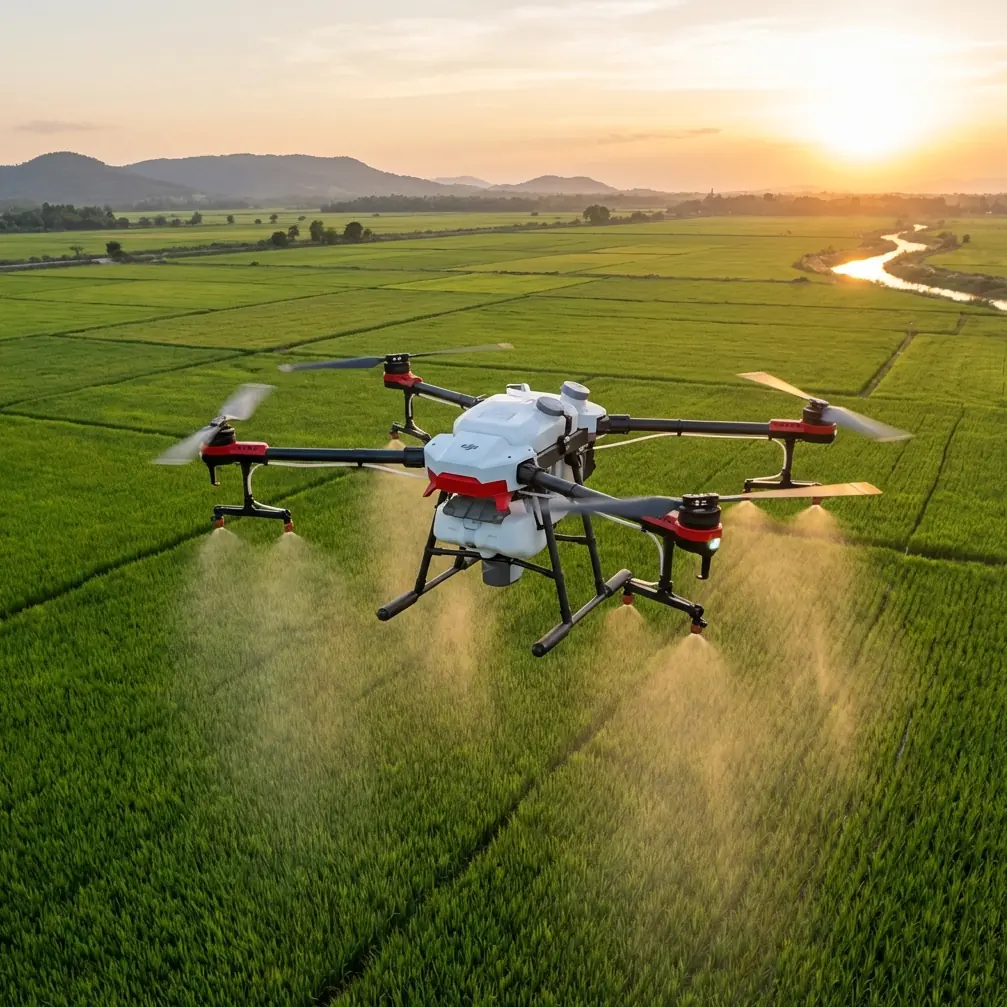
Flip for Wildlife in Dusty Conditions: A Field Tutorial Built on Sensor Reality
META: Learn how to use Flip for wildlife inspection in dusty terrain, with practical guidance on obstacle avoidance, subject tracking, barometric altitude stability, and smooth cinematic capture.
Dust changes everything.
It softens contrast, hides branches, unsettles altitude hold, and turns a simple wildlife inspection flight into a test of sensor trust. If you are using Flip to inspect animals in dry grassland, scrub country, quarry edges, or dusty reserve roads, the real challenge is not only getting beautiful footage. It is maintaining stable height, clean tracking, and predictable movement when the environment is working against your aircraft.
That is where the underlying sensor logic matters.
A reference study on hexacopter design and height sensing highlights a problem every serious drone operator eventually meets in the field: altitude estimation is never based on a single perfect input. The paper discusses how GPS altitude or updates from other sources can be used to correct drift, and it also calls out a barometric reference altimeter as a practical way to monitor height changes caused by atmospheric pressure variation. One detail stands out because it is so operationally relevant in dusty wildlife work: atmospheric pressure fluctuations can produce drift measuring a few meters per hour. That may sound small in theory. In practice, when you are inspecting nesting birds near brush or tracking deer along uneven ground, a few meters of unintended vertical error can be the difference between a smooth, respectful pass and a flight path that feels intrusive or unsafe.
So this guide is not a generic “how to fly wildlife” article. It is a field tutorial shaped around one truth: if you understand how Flip’s stabilization and sensing should be managed in unstable, dusty conditions, you will get better footage and better inspection outcomes.
Start with altitude discipline, not camera settings
Most wildlife operators think first about focal length, frame rate, or subject tracking mode. In dust, I start with height control.
The reference material points to a two-state Kalman filter approach for fusing measurements such as height and vertical speed. You do not need to build a filter yourself to benefit from the idea. What matters is understanding what your drone is trying to do in flight: combine imperfect signals into one usable estimate of where it is vertically. In a clean environment, this mostly happens in the background. In a dusty one, every weakness gets exposed.
Here is why.
Barometric sensing is useful because it helps maintain fine altitude resolution, but the study also notes that a second barometric sensor can be left stationary as a reference to monitor drift from atmospheric pressure changes. That is a powerful concept for wildlife crews working from a base vehicle or field station. Even if Flip handles its own stabilization internally, you should think like the researcher: compare what the aircraft “believes” about altitude with what the site conditions are doing around you.
Operationally, that means three habits:
Launch from a stable, repeatable point.
Dusty soil berms, hot vehicle roofs, and sloped rocks can all distort your visual sense of takeoff height and worsen calibration discipline.Pause at low hover before beginning the inspection run.
Give Flip a moment to settle. Watch for micro-bobbing or unexplained vertical creep. That is your early warning.Recheck hover behavior after every major movement through sun-heated air or wind-blown dust.
Even small pressure and airflow differences can affect how stable the aircraft feels near terrain.
If you ignore this and jump straight into ActiveTrack on moving wildlife, the drone may still follow the subject laterally while slowly drifting in height. The footage looks “fine” until the path crosses scrub, fence wire, or uneven ground.
A real wildlife moment: tracking through a dust plume
One of the clearest examples I’ve seen came during a late-afternoon inspection of antelope moving along a dry service track. A lead animal broke into a short run, and the herd kicked up a suspended dust plume that hung low over thorn brush. Flip was set to track from behind and above, with obstacle avoidance active.
This was the critical moment.
The subject tracking held, but the real success came from how the drone handled vertical uncertainty. Dust reduced scene clarity and made the terrain harder to read visually from the pilot’s perspective. The drone’s ability to maintain a measured, stable path mattered more than speed. Instead of forcing a dramatic closing shot, I let Flip maintain conservative height and used a gentle diagonal offset. The obstacle avoidance system reacted to the brush line while tracking stayed locked on the lead animal’s movement. That combination prevented a risky dip into the dust layer where branch detection and visual confidence could have degraded.
The lesson is simple: in dusty wildlife inspection, the smartest flight is often the least aggressive one.
How the sensor findings change the way you use Flip
The reference text mentions that integrating vertical acceleration from an IMU can become drift-prone, especially when dealing with noise and low update constraints. It also notes that orientation error influences height estimation. This is not just engineering trivia. It directly affects how you fly Flip around wildlife.
If the drone’s orientation estimate is slightly off, its understanding of “vertical” acceleration can also be skewed. That can show up as subtle altitude inconsistency during forward tracking, orbiting, or terrain-adjacent movement.
For Flip users, that means:
1. Keep pitch transitions smooth
When you punch forward abruptly to keep up with an animal, the aircraft pitches harder, and any sensor fusion system has to work more aggressively to maintain the right vertical solution. In dust, where visual references may already be reduced, smooth throttle and pitch inputs give the system less chaos to solve.
2. Avoid low passes over featureless dusty ground
Uniform terrain gives visual systems less texture. Add blowing dust and the challenge increases. If you need detail, use the camera intelligently rather than forcing the aircraft lower than necessary.
3. Use subject tracking as an assistant, not a substitute for judgment
ActiveTrack is valuable, especially when wildlife movement is unpredictable. But tracking a subject does not guarantee that vertical spacing from terrain or brush remains ideal at every moment. Watch the environment, not only the subject box on screen.
Best Flip setup for dusty wildlife inspections
The right settings depend on species, habitat, and inspection goal, but this is the setup logic I recommend.
Obstacle avoidance: leave it on
This should not be controversial in dusty habitat. Wildlife work often happens around scrub, isolated branches, deadwood, fence posts, and uneven ridgelines. Dust already reduces certainty. Obstacle avoidance gives you a buffer against the things that appear too late to correct manually.
That said, avoid assuming obstacle sensing can see everything equally well in every dust condition. Give it room to work. Wider margins produce better outcomes than heroic close-in moves.
ActiveTrack or subject tracking: use medium ambition
Tracking is useful when animals move irregularly, but choose a tracking style that does not force the drone into constant acceleration. A calm trailing angle is usually better than a tight cinematic pursuit. For inspection, continuity matters more than drama.
QuickShots: rarely the first choice
QuickShots can produce elegant reveals or short establishing clips, but wildlife inspection in dust is not the place to let automation dictate path complexity. Use these only when the area is open, the animals are settled, and your launch/return corridor is clear.
Hyperlapse: good for habitat context, not active tracking
If your purpose includes documenting habitat conditions—dust movement, migration corridors, water access changes—Hyperlapse can be useful from a higher, safer hold. It is less suitable when animals are moving unpredictably below.
D-Log: yes, when light is harsh
Dusty wildlife environments are often bright, flat, and contrast-heavy at the same time. D-Log helps preserve highlight and shadow information, especially when pale soil reflects light into the frame while darker animals move through brush. If you plan to grade footage later, this gives you more flexibility without needing to fly closer.
A practical flight routine that reduces sensor stress
Here is the field routine I teach for Flip in these conditions.
Step 1: Read the air before you read the animals
Watch the dust itself. Is it lifting vertically in thermals? Sliding laterally with gusts? Hanging low in bands? This tells you where visual quality and altitude stability may become less reliable.
Step 2: Climb, hold, verify
After takeoff, hold at a safe low altitude and watch for drift. Then climb to your working altitude and repeat the hover check. If the aircraft is not settled here, it will not behave better once the subject starts moving.
Step 3: Build the first pass around distance
Start farther than you think you need. Wildlife behavior changes fast when a drone appears too suddenly overhead. You can crop later. You cannot redo a calm natural sequence once the animals become alert.
Step 4: Track from offset, not directly above
An offset angle usually gives stronger depth cues, cleaner subject separation, and a safer obstacle picture. It also reduces the tendency to descend too low while trying to maintain visual drama.
Step 5: Break the shot before the dust gets thick
If the subject enters denser suspended dust, resist the urge to push through for a “better” clip. Pull up, widen, and re-establish. Data quality matters in inspection. So does aircraft margin.
Why a reference-barometer mindset matters even if you fly a compact drone
The study’s mention of a stationary second barometric altimeter is one of those details that sounds academic until you spend enough time in the field. Its significance is not that every Flip operator needs a separate instrument at camp. The significance is the mindset behind it: environmental drift is real, measurable, and operationally meaningful.
Wildlife crews often blame pilot error for every rough altitude correction. Sometimes the environment is the real culprit. Dust, heat, pressure change, and terrain-induced airflow create layered uncertainty. If you approach the mission knowing that even a few meters per hour of altitude drift can occur under changing atmospheric conditions, you become more disciplined about hover checks, path spacing, and shot duration.
That discipline protects three things at once:
- the aircraft
- the wildlife
- the usefulness of the footage
When to stop the mission
This is the part many tutorials skip.
If dust is thick enough that you are losing confidence in obstacle spacing, or if the drone begins showing inconsistent altitude behavior near terrain, stop. Wildlife inspection rewards restraint. The best operators are not the ones who force a sortie to continue. They are the ones who know when the sensing environment no longer supports a clean, ethical flight.
If you’re planning a workflow for field inspections and want a second opinion on settings or mission structure, you can message our drone team here.
The bigger takeaway for Flip users
Flip is at its best in wildlife work when you treat it as a sensing platform first and a camera second. The camera features—D-Log, ActiveTrack, QuickShots, Hyperlapse—are useful. But in dusty environments, the quality of your result depends on how well you manage the invisible layer beneath them: altitude confidence, orientation stability, obstacle margin, and disciplined movement.
The reference material on hexacopter design makes that point indirectly but clearly. Height estimation benefits from fused inputs. Barometric drift is not theoretical. Orientation error can affect vertical accuracy. Those are not lab-only concerns. They show up in the field when a herd turns, a dust plume lifts, or a branch line appears exactly where your footage looked clean on the screen a second earlier.
Fly with that awareness, and Flip becomes much more than a convenient wildlife camera. It becomes a reliable observation tool in conditions that punish casual flying.
Ready for your own Flip? Contact our team for expert consultation.