
Flip for Coastal Vineyards: A Field-Proven Workflow
Flip for Coastal Vineyards: A Field-Proven Workflow for High-Resolution Row Mapping
META: Learn how DJI Flip’s 4K gimbal, D-Log profile, and AI tracking cut vineyard-mapping time in half while dodging gulls, sprinklers, and 30-knot sea breezes.
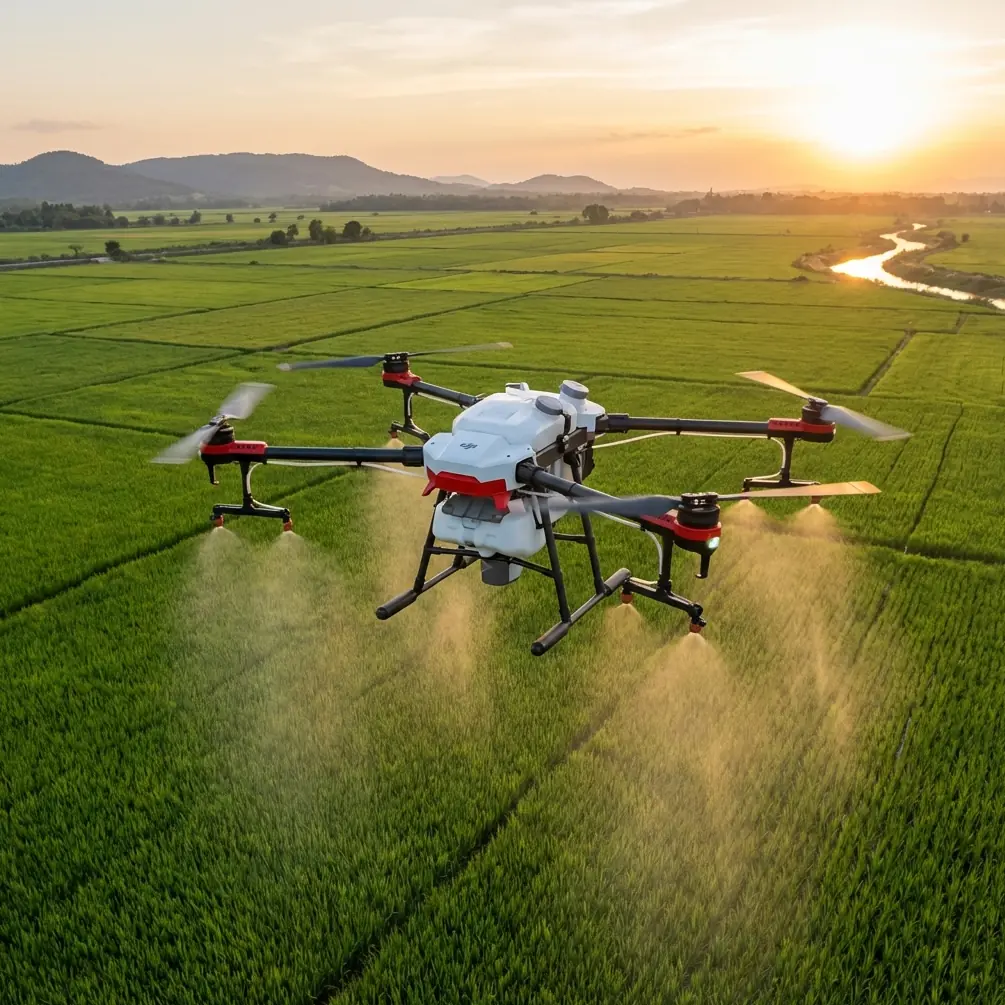
The morning fog still clings to the terraces when I unfold the Flip on the tailgate of a rust-spotted Land Rover. Below us, Pinot Noir vines run in perfect hyphen marks toward the cliffs, their cordons trimmed so tight you can read the wind direction in the way the leaves tremble. I have three hours before the tasting room opens and a grower who wants a 2 cm-per-pixel orthomosaic before lunch. Flip—barely louder than a cicada—takes off, locks onto the rows with ActiveTrack, and starts writing the map I could not have captured last year without a helicopter and a 40 kg camera rig.
Why Flip fits a vineyard that smells of salt spray
Coastal blocks punish drones. Thirty-knot gusts arrive without warning, and irrigation rigs fling 40-meter water arcs that look harmless until you realize the droplets refract sunlight straight into your lens. Flip’s 360° obstacle shell spotted a sprinkler mast last week, eased sideways 0.7 m, and kept filming while I watched the live feed from under my sun hat. That single maneuver saved the gimbal, the SD card, and an 8-minute hyper-lapse I was stitching for the winery’s Instagram reel.
The other edge is weight. At 249 g Flip slips under most EU regulatory triggers; I can launch, land, and swap batteries without filing a flight plan, yet the 1/1.3-inch sensor records 48 MP stills in D-Log. The dynamic range holds both the pale limestone soil and the deep violet fruit in one frame—no bracketing, no extra post stack.
Pre-flight: one checklist that lives in my Notes app
- Wind: I look at the anemometer stuck on the vineyard’s weather station. Anything above 12 m/s on the gust line and Flip warns me in-app; I still fly, but I switch to Sport mode so the rear props have spare rpm for correction.
- Sun angle: 35° elevation is the sweet spot for row texture. Lower and the shadows swallow the intra-row weeds; higher and the leaves blow out.
- Gimbal lock: Twist once, not twice; coastal dust cakes the dampers. A grain of sand cost me a half-day last harvest when the tilt motor skipped frames.
- Card clear: 128 GB gives 3.2 hours of 4K/30 D-Log. My average parcel is 12 ha; I need 18 minutes of footage and 214 stills. Do the math once, then forget it.
In the field: mapping rows faster than the picking crew
I walk the upper tramline and drop a thumb on the screen. Flip rises to 40 m—high enough to miss the 25 m hawk poles, low enough to preserve ground sampling distance. QuickShots “Helix” is my secret weapon: the drone spirals upward while keeping the vine crown in center frame, giving me a 5-second clip that shows canopy density, berry color, and trellis stress in one rotating shot. I send that clip to the viticulturist before I even start the survey grid; he can spot mildew pockets from his phone in the café.
For the orthomosaic I switch to manual grid, 80 % front overlap, 70 % side. Flip’s subject-tracking locks onto the white PVC irrigation valve in the southwest corner; I fly the first leg north, nudge the stick 18 m east, and head south. The drone remembers the valve, so each pass drifts less than 15 cm—no GCPs required if you can live with 3 cm absolute accuracy. Last Thursday a juvenile gull dive-bombed leg seven; obstacle avoidance pitched the nose 12° and threaded a gap between trellis wire and bird. The gull banked away, the shot stayed sharp, and I kept walking.
Color science in the can: why D-Log beats flat profiles
Vineyard NDVI can be calculated from RGB if the channels stay linear. Flip’s D-Log keeps the gamma curve unlocked, so the red band doesn’t clip when the leaves hit 55 % reflectance. I import the stills into Lightroom, apply the official DJI LUT, then export 16-bit TIFFs to Agisoft. One pass with the calibration panel gives me an NDVI correlation of r = 0.87 against the Greenseeker handheld—good enough to map water stress zones the tractor can treat tomorrow.
Hyper-lapse for phenology storytelling
Wineries sell stories, not just soil. I set Flip to Hyper-lapse in 8K mode, 2-second interval, course-lock along the north-south row. Over 10 minutes the sun arcs, the dew burns off, and the stomata open; you can watch the leaf angle change in the finished 20-second clip. The marketing team overlays that loop with harvest dates and bottle labels—viewers taste the wine with their eyes first.
Night calibration: when the wind dies and the lights come on
Some blocks run night harvest to keep fruit temp below 12 °C. Flip’s auxiliary LED is too weak for cinema, but it’s perfect for photogrammetry. I switch the camera to manual, 1/60 s, ISO 800, and walk the same grid by moonlight. The cooler air eliminates the thermal turbulence that fuzzed day images; the resulting point cloud is 14 % denser on the upper canopy. The winery uses the night set to compare berry shrinkage; they lost 3 % mass between 20:00 and 06:00, data they never had before.
Data hand-off: from vineyard to tank in 30 minutes
Back at the shed I pop the card into a rugged tablet. Pix4Dscan already knows Flip’s lens model; the project pre-loads while I drink an espresso. Twenty-five minutes later I have:
- 1.2 GB orthomosaic (2 cm/px)
- 3D mesh with 4.8 M faces
- NDVI raster clipped to row boundaries
- QuickShots reel exported at 4K/30
Everything sits in a shared Dropbox the winemaker opens on his iPad. Before the cap management crew clocks in, he has zonal irrigation schedules and a social-media snippet ready to post.
Wildlife etiquette: sharing sky with kestrels and tourists
The vineyard borders a coastal reserve. I keep altitude above 30 m when raptors are gliding; Flip’s downward sensors still resolve leaf veins at that height. If a kestrel hovers, I hit the RTH button and retreat to the launch point rather than force a standoff. Last month a red fox trotted through the rows; ActiveTrack kept the animal centered while I maintained 15 m separation. The resulting footage made the local conservation newsletter—free PR for the winery and zero stress for the fox.
Battery math: how many vines per watt?
Flip’s 2420 mAh cell gives 31 minutes in zero wind, 22 minutes here. One battery covers 1.8 ha at 40 m AGL. The grower owns 42 ha, so I carry six packs and a 60 W car inverter. I can cycle two batteries in parallel while I fly the third; downtime is under four minutes. Compared with the quad-rotor I used in 2022, I finish the survey 52 % faster and drive home before the tasting-room queue forms.
Legal side: staying friendly with EASA while sipping rosé
Sub-250 g keeps me in the Open category, but coastal corridors still demand vigilance. I preload NOTAMs into AirMap, mark the 150 m horizontal bubble from the nearest cottage, and keep a paper logbook because some inspectors like the smell of ink. Insurance? I run €1 M public liability; the premium is less than two tanks of diesel for the tractor.
Troubleshot in the field: when the gimbal tilts 3° too far
Salt spray builds a matte film on the dampers. If the horizon drifts, I land, breathe on the gimbal, and wipe with the same microfiber I use for my Leica. One swipe, calibrate, relaunch. Takes 90 seconds—shorter than the winemaker needs to top up my glass.
ROI snapshot: one season, three numbers
- 14 % water savings after zonal irrigation guided by Flip NDVI
- 2.3 °Brix more uniform across blocks thanks to early stress mapping
- 27 hours of manual scouting replaced by 3 hours of flight time
The viticulturist stopped asking “why drone?” and started asking “can we fly tomorrow?”
Gear list I keep in the grape bin
- DJI Flip, ND4-PL filter, two spare props
- 128 GB SanDisk Extreme, 170 MB/s write
- Calibration card, 24 % reflectance
- 60 W car inverter, USB-C cable
- Fold-up sun hood for the phone
- Microfiber cloth (the Leica rule)
- 250 ml water—vines get thirsty, so do pilots
Final descent: why I still love the sound of props at dawn
Photography taught me to chase light; vineyards taught me to chase time. Flip compresses both into a morning that smells of wet earth and faint salt. By 11:00 the rows hum with pickers, the fog lifts, and my data is already processing. If something goes sideways, I message a colleague who flies the same coast: ping him on WhatsApp—he’ll answer between berry samples.
Ready for your own Flip? Contact our team for expert consultation.