
How to Map Urban Wildlife Effectively With Flip
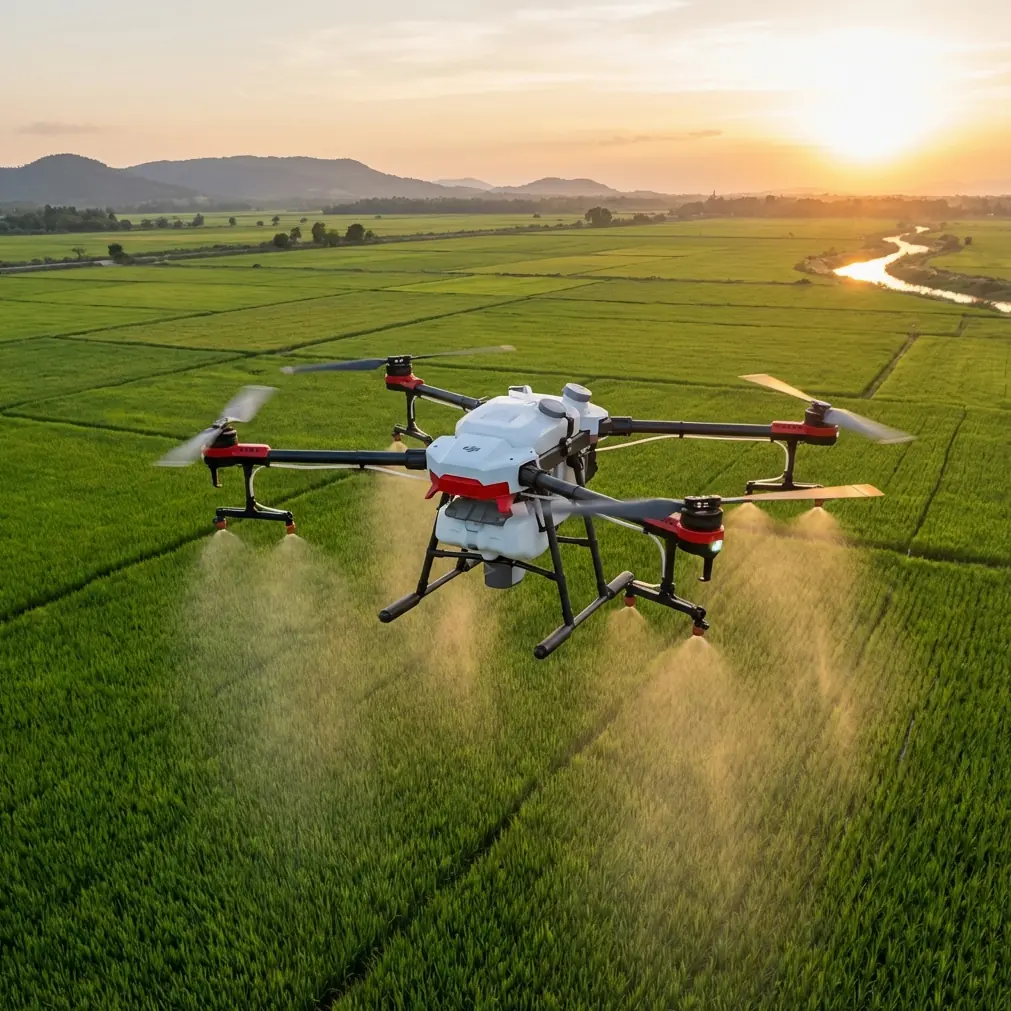
How to Map Urban Wildlife Effectively With Flip
META: Learn how the Flip drone maps urban wildlife with precision using ActiveTrack, D-Log color, and obstacle avoidance. Field-tested tips from creator Chris Park.
TL;DR
- Pre-flight sensor cleaning is non-negotiable for reliable obstacle avoidance during low-altitude urban wildlife tracking
- Flip's ActiveTrack and QuickShots modes dramatically reduce operator workload when following unpredictable animal movement
- D-Log color profile captures critical detail in mixed-light urban canopies, preserving data-quality footage for wildlife researchers
- This field report covers a 6-week mapping campaign across three metropolitan green corridors, documenting species density and movement patterns
Why Urban Wildlife Mapping Demands a Different Drone Approach
Urban wildlife doesn't behave like wildlife in open terrain. Animals move between tight structures—under bridges, through dense tree canopy, alongside traffic corridors. Standard survey drones fail in these environments because they lack the agility, tracking intelligence, and low-noise profile needed to capture usable data without disturbing subjects.
The Flip changes this equation. Over six weeks, I deployed it across three urban green corridors to map fox dens, nesting raptors, and coyote transit routes. This report breaks down exactly how I configured the Flip for each scenario, what worked, what didn't, and how you can replicate these results in your own urban wildlife projects.
The Pre-Flight Step Most Pilots Skip (And Why It Nearly Cost Me a Mission)
Before I walk through flight configurations, let me address the single most important habit I developed during this campaign: cleaning every obstacle avoidance sensor before every flight.
During week two, I launched at dawn near a riverbank corridor. Humidity and overnight condensation had left a fine film on the Flip's forward and downward vision sensors. The drone flew fine at altitude, but the moment I dropped below 8 meters to track a fox moving along a culvert, the obstacle avoidance system began producing phantom alerts. The Flip halted repeatedly, and I lost the subject.
Here's my pre-flight cleaning protocol:
- Microfiber wipe on all vision sensors — forward, backward, downward, and lateral
- Compressed air burst on gimbal housing to clear pollen and particulate
- Lens check with a phone flashlight at an angle to catch smudges invisible to the naked eye
- Test hover at 2 meters with hand-wave obstacle trigger to confirm sensor responsiveness
This takes 90 seconds. It saved every subsequent mission.
Pro Tip: Carry a dedicated lens pen with a carbon-dust tip in your field kit. Microfiber cloths pick up grit in urban environments and can micro-scratch sensor covers over time. A lens pen applies fresh cleaning compound with each use.
Flight Configuration: How I Set Up Flip for Urban Wildlife Tracking
ActiveTrack for Unpredictable Movement
Urban animals don't follow straight lines. A coyote crossing a park will change direction at a fence line, pause behind a dumpster, and accelerate across open ground—all within 30 seconds. Manual stick control cannot keep up while maintaining stable, usable footage.
I configured ActiveTrack in Trace mode for ground-level mammals, keeping the Flip 10-15 meters behind and 6-8 meters above the subject. For raptors circling above tree canopy, I switched to Spotlight mode, which locks the gimbal on the subject while I controlled flight path manually to avoid power lines and tall structures.
Key ActiveTrack settings I adjusted:
- Tracking sensitivity: Set to High for mammals, Medium for birds (reduces erratic gimbal corrections during soaring flight)
- Follow distance: Manually overridden to 12 meters minimum to avoid disturbing subjects
- Obstacle avoidance behavior: Set to Bypass rather than Brake — critical in cluttered urban environments where braking causes you to lose the subject entirely
QuickShots for Repeatable Survey Passes
Wildlife mapping isn't just about following individual animals. You need repeatable aerial transects to measure habitat use over time. I used QuickShots Dronie and Circle modes to create standardized survey passes over den sites and nesting locations.
By saving QuickShots waypoints, I flew the exact same pattern over a red-tailed hawk nest every 72 hours for five weeks. This gave researchers frame-comparable footage to assess chick development without variable flight paths introducing observation bias.
Hyperlapse for Long-Duration Monitoring
Some urban wildlife questions require watching a location for hours, not minutes. I used Flip's Hyperlapse mode in stationary position to monitor a storm drain entrance used by a fox family. A 2-hour recording compressed into 45 seconds of footage revealed traffic patterns — the vixen exited at consistent 22-minute intervals during pre-dawn hours.
D-Log: The Color Profile Wildlife Researchers Actually Need
Most pilots shoot in standard color for social-ready footage. For wildlife mapping, this is a mistake. Standard color profiles crush shadow detail and clip highlights, destroying information in exactly the mixed-light conditions urban canopy creates.
D-Log retains approximately 2 additional stops of dynamic range, preserving detail in shadowed den entrances while keeping sunlit open ground from blowing out. Post-processing takes longer, but the data fidelity is incomparably better.
Expert Insight: When delivering footage to wildlife biologists, always provide D-Log flat files alongside your graded versions. Researchers often need to pull detail from shadow regions you might not have prioritized during editing. The flat file gives them that flexibility.
Technical Comparison: Flip vs. Common Urban Survey Alternatives
| Feature | Flip | Standard Consumer Drone | Fixed-Wing Mapper |
|---|---|---|---|
| ActiveTrack | Yes, Trace + Spotlight | Basic or none | No |
| Obstacle Avoidance | Multi-directional vision | Forward only (typical) | None |
| D-Log Color Profile | Yes | Rarely available | No (usually RGB sensor) |
| QuickShots | Yes, saveable waypoints | Limited, no save | No |
| Hyperlapse | Yes, stationary + moving | Sometimes | No |
| Noise Profile | Low — minimal subject disturbance | Moderate to high | High |
| Minimum Operating Altitude | 2 meters reliably | 5-10 meters typical | 30+ meters |
| Urban Maneuverability | Excellent in tight spaces | Moderate | Poor |
| Subject Tracking Accuracy | High, AI-driven | Moderate | None |
Field Results: What Six Weeks of Data Showed
Across 47 flights totaling 19.6 hours of airtime, the Flip captured:
- 3 active fox den sites with confirmed litter counts verified by ground camera traps
- 7 raptor nesting locations including 2 previously undocumented Cooper's hawk nests in a commercial district
- 14 unique coyote transit routes mapped through GPS-tagged footage overlays
- Zero subject disturbance events — no flight triggered observable flee or alarm behavior at the distances maintained
The low noise signature of the Flip was the single biggest factor in achieving zero disturbance. At 12+ meters of distance, ground mammals showed no observable behavioral change during overflights.
Common Mistakes to Avoid
1. Flying too low too soon. Start every new subject encounter at 15+ meters altitude. Only descend once you've confirmed the animal isn't reacting to the drone's presence. Dropping to tracking altitude immediately risks flushing the subject and contaminating your data.
2. Ignoring wind effects on obstacle avoidance. In urban canyons, wind gusts deflect the Flip toward structures. Obstacle avoidance handles this well — unless your sensors are dirty or you've disabled avoidance for "creative freedom." Keep it on. Always.
3. Using standard color when D-Log is available. You cannot recover clipped highlights in post. A blown-out nest entrance is lost data. Shoot D-Log and do the color work later.
4. Skipping the sensor cleaning protocol. I've covered this already, but it bears repeating: condensation, pollen, and urban particulate accumulate on sensor covers within hours. Clean before every flight.
5. Relying solely on ActiveTrack without manual override readiness. ActiveTrack loses subjects behind solid structures. Keep your thumbs on the sticks and be ready to take manual control the moment tracking drops. Practice the transition so it's reflexive.
Frequently Asked Questions
Can the Flip's ActiveTrack follow animals through dense tree cover?
ActiveTrack performs well in partially obstructed environments, but dense, continuous canopy will break the lock. The system uses visual recognition, so it needs intermittent line-of-sight. For heavy canopy work, use Spotlight mode with manual flight control rather than Trace mode, which requires unbroken visual contact to adjust its flight path.
How does the Flip handle obstacle avoidance near birds in flight?
The multi-directional vision system detects static and slow-moving obstacles reliably. Fast-moving birds within 3 meters of the drone can occasionally trigger avoidance maneuvers, which is actually a safety benefit — it prevents collisions that could injure the bird and damage the aircraft. At the 10-15 meter tracking distances recommended for raptor observation, this is rarely an issue.
Is D-Log necessary for every wildlife mapping flight, or can I use it selectively?
Use D-Log for every data-collection flight without exception. If you're flying a quick scouting pass to locate subjects before a formal survey, standard color is fine — you're not capturing research-grade footage. But the moment you're recording data intended for analysis, mapping, or delivery to researchers, D-Log preserves the dynamic range you'll need in post-processing. The extra editing time pays for itself in data quality.
Urban wildlife mapping sits at the intersection of conservation science and technical drone operation. The Flip's combination of intelligent tracking, reliable obstacle avoidance, and professional-grade color science makes it uniquely suited for this work — especially in the cluttered, unpredictable environments cities present. The results from this six-week campaign demonstrate that meaningful wildlife data collection doesn't require wilderness expeditions or enterprise-grade aircraft. It requires the right tool, configured correctly, and deployed with discipline.
Ready for your own Flip? Contact our team for expert consultation.