
Flip for Mountain Field Monitoring: Flight Altitude
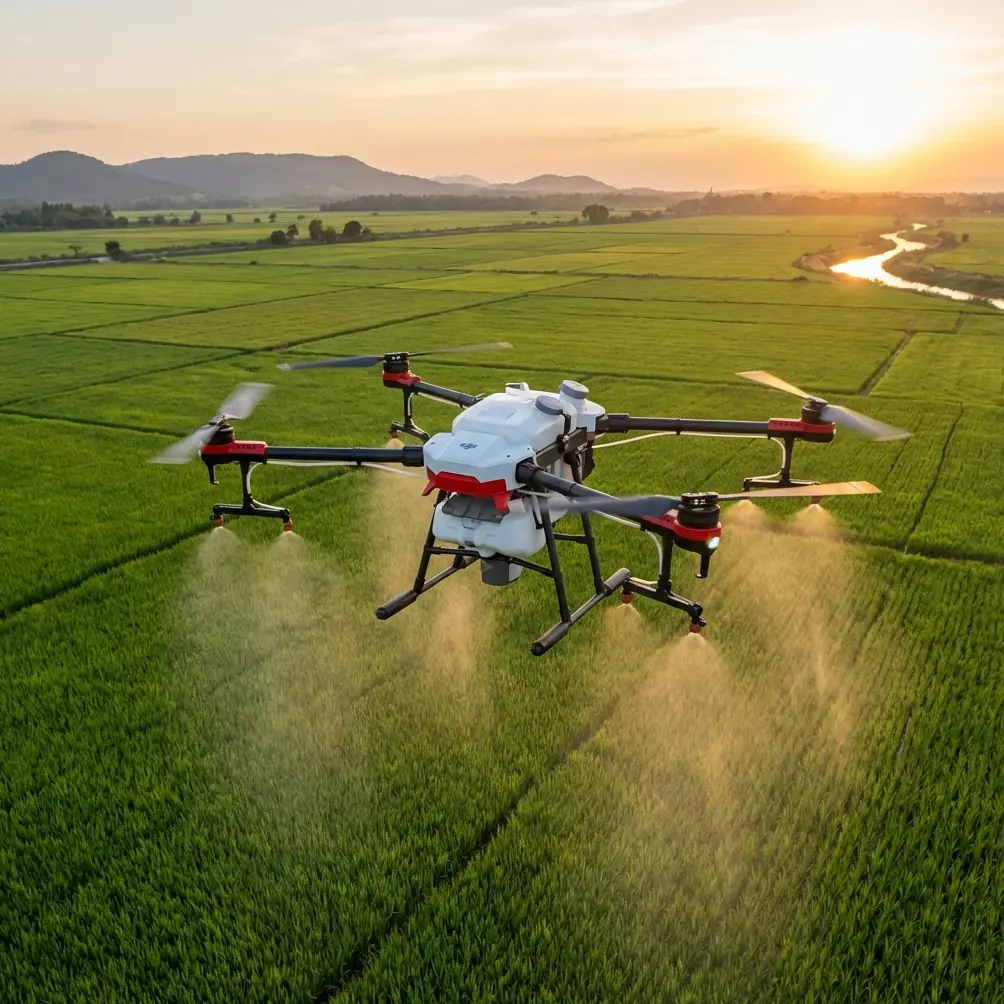
Flip for Mountain Field Monitoring: Flight Altitude, Data Consistency, and Why Small-Aircraft Workflows Matter
META: A technical review of Flip best practices for monitoring fields in mountain terrain, with practical flight altitude guidance, obstacle avoidance considerations, and lessons drawn from a DroneDeploy survey case.
Mountain field monitoring punishes sloppy flight planning.
Elevation changes distort your sense of clearance. Slopes compress your margin for error. Tree lines appear farther away than they are. Even a short mission can produce uneven image overlap if the aircraft holds a constant height from takeoff point instead of a consistent height over ground. For anyone using Flip in upland agriculture, terraced plots, hillside orchards, or rugged environmental monitoring work, the real question is not simply whether the drone can fly the route. It is whether the flight can produce repeatable, useful data every time.
That is where a small but revealing detail from the reference case matters. In the DroneDeploy environmental survey example, the operator expected nine additional flights after the initial work, and he emphasized the value of using the same data format on later flights to save time and keep the project on schedule. That point is easy to overlook, but operationally it is the whole story. Mountain monitoring is rarely a one-off outing. It is recurring measurement. If your field images from this week cannot be aligned with next week’s or next month’s, then trend analysis becomes messy and confidence drops.
A second detail from that same case is just as relevant for Flip users: the operator judged his drone workflow capable of saving 5,000 compared with a large helicopter approach, while also delivering richer data. Strip away the original site context and the lesson remains strong for civilian field work in mountains. Smaller aircraft are not just cheaper platforms. They change the quality of observation because they can fly lower, revisit more often, and keep image geometry more consistent.
That is exactly why Flip belongs in this conversation.
Why Flip makes sense for mountain monitoring
Flip is not interesting because it replaces larger aviation assets in a dramatic way. It is interesting because it makes short, repeatable, terrain-aware flights practical for ordinary operators. In mountain fields, that matters more than headline performance specs.
When you are monitoring hillside crops or remote plots, you usually need four things at once:
- Safe clearance around uneven terrain and obstacles
- Stable framing for repeat visits
- Image quality that holds up under changing light
- Fast deployment before weather shifts
This is where features such as obstacle avoidance, ActiveTrack, subject tracking, QuickShots, Hyperlapse, and D-Log become more than marketing labels. Not all of them are equally important for every mission, but together they define how flexible Flip can be when the ground below refuses to stay level.
Obstacle avoidance is the first line of practicality in mountain work. On paper, a field may look open. In reality, access roads, utility poles, treetops, irrigation structures, and abrupt rises in the slope can compress your safe corridor. A platform that helps the pilot maintain spatial awareness reduces the risk of flying with excessive caution at the wrong moment and excessive confidence at another.
ActiveTrack and subject tracking matter in a different way. They are not substitutes for planned survey routes, but they are useful when monitoring moving farm equipment, checking vehicle paths between plots, or documenting runoff patterns and access conditions along mountain lanes. In a technical review, I would not treat tracking modes as the core survey tool. I would treat them as supporting tools that help capture contextual footage around the main mapping pass.
D-Log earns its place for another reason: mountain light is brutal. Bright sky, dark ridge shadows, reflective water channels, and patchy cloud cover can wreck consistency if you rely only on baked-in contrast. When your goal is to compare crop color, soil exposure, drainage scars, or vegetation stress across repeated flights, flatter color data gives you more room to normalize footage later.
The most useful altitude rule for Flip in mountain fields
Here is the practical insight that most pilots need first: in mountain monitoring, your optimal flight altitude is usually best defined above the crop canopy or terrain directly beneath the drone, not above the takeoff point.
That sounds obvious. It often gets ignored.
If you launch from a track at the foot of a slope and fly a constant relative altitude based on that home point, the drone may end up too low as it climbs toward upper terraces, orchard rows, or ridgelines. Just as bad, if you launch from high ground and descend along a mountainside, the aircraft may end up much higher above the field than you intended, reducing ground detail and weakening overlap for mapping.
For Flip, a strong working range for mountain field observation is often:
- 30 to 50 meters above ground for close visual crop inspection, drainage lines, erosion checks, and row condition review
- 50 to 80 meters above ground for broader field monitoring when you want cleaner area coverage and safer clearance over fragmented terrain
- Higher only when local conditions, regulations, and obstacle geometry justify it, and when your data needs do not require finer detail
The key phrase is “above ground,” not “from takeoff.” In rugged terrain, the mission becomes more reliable when the aircraft’s height is planned in relation to the surface it is crossing.
Why this range? Because it balances three pressures.
First, lower altitudes usually deliver better visible detail on crop condition and surface change. Second, mountain fields often include sudden vertical features, so flying too low leaves little time to react. Third, image overlap can collapse if altitude changes too sharply during a pass. Keeping a moderate, terrain-conscious height helps preserve consistency.
If I were advising a Flip operator monitoring fields in mountains, I would start near 60 meters above local terrain for a first broad pass, then adjust downward in sections where more detail is needed and obstacle density is manageable. That midpoint often provides a good compromise between detail, safety, and stable image capture.
Data consistency matters more than cinematic perfection
The reference case highlighted something many pilots learn late: repeated flights become efficient only when the data structure stays consistent.
The operator in that project specifically noted that future flights could use the same data format, which would save time and support timely completion. For mountain agriculture and land monitoring, this principle is gold. Your Flip footage has the most value when each mission can be compared with previous ones without guesswork.
That means locking down a repeatable method:
- Launch from the same or equivalent point when practical
- Fly the same route direction when wind permits
- Keep similar altitude bands over each section of terrain
- Use comparable camera settings between visits
- Shoot at roughly the same time of day if the analysis depends on shadows or color
This is why QuickShots are useful but secondary. They can provide excellent visual summaries for a landowner, project manager, or agronomist. But the backbone of mountain monitoring is disciplined repetition, not visual flair.
Hyperlapse can also be helpful, especially for showing weather movement, access changes, or seasonal progression across a valley or terrace system. Yet again, the analytical value comes from controlled repetition. A beautiful time-compressed sequence is impressive. A sequence captured from the same corridor at the same altitude over several weeks is useful.
Why small drones beat large-aircraft thinking in this scenario
The original case compared drone service with a large helicopter workflow and estimated a 5,000 cost advantage, while also claiming better data richness. That idea translates well to mountain field monitoring, even if your operation is far smaller.
Large-aircraft logic tends to emphasize broad coverage from farther away. Small-drone logic emphasizes localized precision and frequent return visits. In mountain agriculture, the second model is usually superior. Conditions change by section, slope face, water exposure, and elevation band. A single high-level overview can miss what repeated lower-altitude observation catches.
There is another practical angle. Mountain weather windows are narrow. Wind can rise quickly, cloud shadows can alter image interpretation, and access can be difficult. A compact system like Flip can be deployed in short intervals when the light and air are right, instead of forcing the operator into a big, infrequent collection event.
That is how small drones generate richer data in real terms. Not because every frame is magically better, but because the operator can collect the right frames more often, at more useful angles, with less logistical friction.
Obstacle avoidance is not permission to cut clearance too tightly
Flip’s obstacle avoidance is a genuine asset in mountain work, but smart operators treat it as a buffer, not a strategy.
Branches, thin wires, irregular terrain edges, and changing light can still create difficult conditions. On sloped farmland, I recommend building extra lateral spacing into route design near trees and retaining walls, and adding vertical margin when crossing convex terrain where the ground rises toward the aircraft faster than it appears on screen.
A good discipline is to separate missions into two modes:
- Structured observation passes for repeatable field data
- Manual or assisted contextual flights for checking boundaries, access roads, water channels, and problem spots
That separation helps you avoid trying to make one flight style do everything.
Camera profile choices for better mountain comparisons
D-Log is worth using when your post-production workflow can handle it. In mountain environments, the gap between bright sky and shaded field edge can be severe. A flatter profile preserves more flexibility for balancing these extremes later.
If your workflow is lighter and you need quick operational review, standard color may be enough. But if the mission is meant to track subtle changes in vegetation condition or terrain disturbance over a season, D-Log gives you more control over consistency from flight to flight.
This matters because “richer data” is not only about resolution. It is also about how much usable information survives difficult lighting.
A practical Flip workflow for mountain fields
Here is the workflow I would recommend for a civilian field-monitoring mission in mountainous terrain:
1. Start with a high-level reconnaissance pass
Fly around 60 meters above local terrain where possible. Use this to identify slope transitions, tree lines, poles, and wind behavior.
2. Break the field into elevation zones
Do not treat the whole mountain plot as one flat survey block. Upper terraces, mid-slope rows, and lower drainage areas often need slightly different altitude handling.
3. Standardize your repeat mission settings
This is where the reference case is so instructive. If you expect multiple return flights, define one repeatable data structure now rather than improvising each visit.
4. Use obstacle avoidance conservatively
Let it support awareness, but maintain your own buffers near terrain edges and vegetation.
5. Capture one contextual sequence
A short ActiveTrack or manual pass along an access road, terrace edge, or irrigation line can add operational context that still images miss.
6. Preserve a comparison-friendly archive
Store missions by date, route, altitude band, weather notes, and camera profile. That becomes valuable surprisingly fast.
If you want to compare your route concept or altitude plan with someone experienced in small-drone field workflows, this direct WhatsApp line for flight planning questions is a sensible place to start.
Final assessment
Flip is well suited to mountain field monitoring when the operator understands one central truth: terrain changes the meaning of altitude.
The DroneDeploy case behind this discussion was not about mountain farming specifically, yet it offered two operational lessons that fit the scenario perfectly. First, repeated flights gain real value when they preserve the same data structure across missions. Second, small drone workflows can outperform larger airborne methods not just in cost terms, but in the quality and frequency of usable observation.
For mountain users, that translates into a clear best practice. Fly with terrain awareness. Aim for consistent height over the ground below. Start around 60 meters above local terrain for broad monitoring, then refine lower where detail demands it and obstacles allow. Use obstacle avoidance as insurance, not as a shortcut. Prioritize repeatability over spectacle.
That is how Flip becomes more than a camera in the air. It becomes a reliable measurement tool for hillsides, terraces, orchards, and upland fields where the ground itself is the biggest variable.
Ready for your own Flip? Contact our team for expert consultation.