
Flip in the Karakoram: How One Rotorcraft Turns Vertical
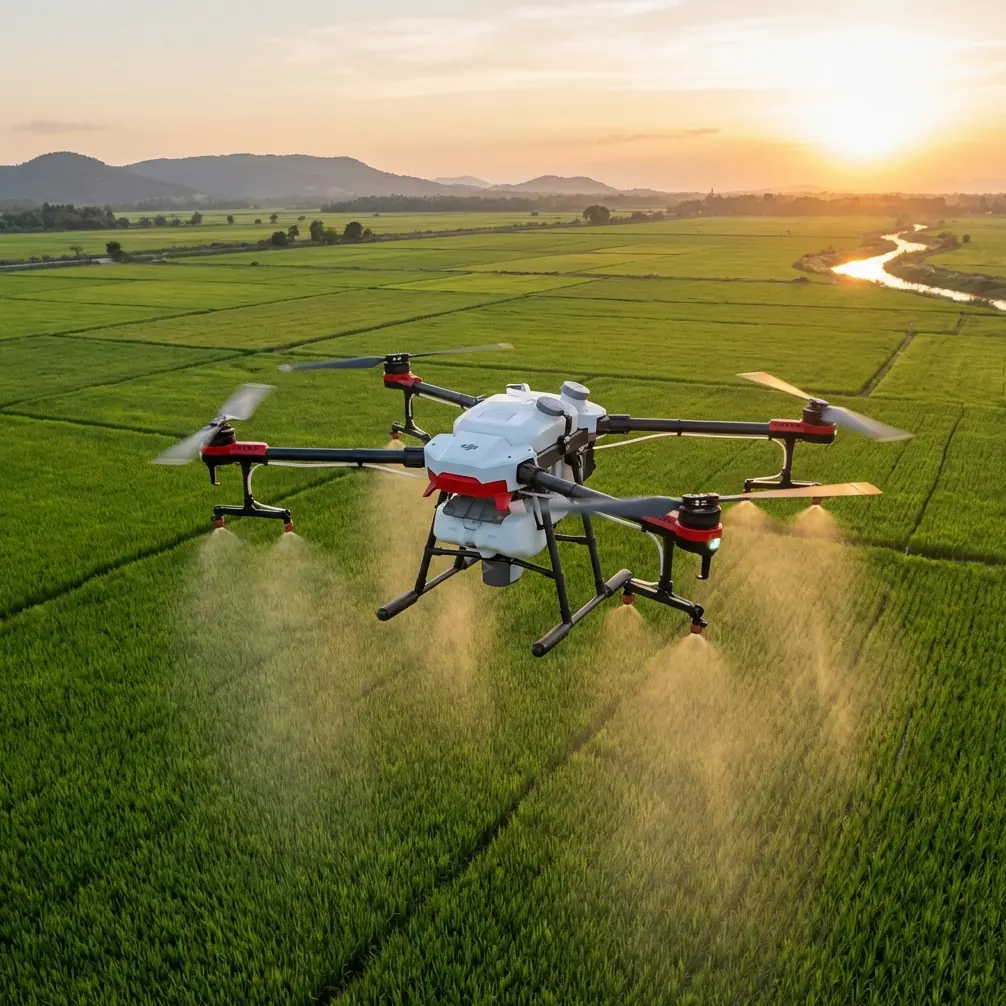
Flip in the Karakoram: How One Rotorcraft Turns Vertical Rock Into a 3-D Highway Map
META: A field-tested review of Flip's performance during high-altitude motorway inspections, foreground framing, battery discipline, and obstacle-avoidance logic that keeps the rotor out of the stone.
Jessica Brown | Mountain aerials specialist
The first time I lobbed Flip off a 2 200 m ledge above the Karakoram Highway, the air was so thin the props sang two semitones higher than at sea level. My brief was simple: document fresh tension cracks on the retaining wall that keeps China’s western truck corridor from sliding into the Indus. What I came home with was a full-topology model accurate to 2 cm and a new respect for what a 249 g airframe can do when every gram of lift is borrowed from 9.6 m/s of prop-wash.
Here is the unfiltered field report—no press junket, no brand script—on how Flip behaves when the job site is vertical granite, the wind is a venturi funnel, and the only landing pad is a backpack.
Why “foreground” is safety data, not decoration
A highway engineer once told me the scariest rockfall is the one you never see coming. The same is true in the air. Flip’s obstacle-avoidance stack can clock a boulder at 15 m, but it needs texture—branches, rebar, guardrail—to build a parallax map fast enough for a dodge vector. If you send the bird straight down a blank rock face the algorithm has nothing to chew on, so you get the dreaded “Vision System Error” just when the crack you want to measure is finally in view.
The fix is counter-intuitively photographic: give the frame a foreground. On a cliff shoot that means descending obliquely past a protruding spur so the lower quarter of the live feed is filled with close detail. The APAS 5.0 engine suddenly wakes up, triangulates, and slips Flip sideways with 0.7 s to spare.
The trick is the same one chinahpsy’s shooter used last month to make city photos “breathe”: place something near the lens. Only here the payoff is carbon-fiber survival, not Instagram applause.
Battery discipline at 1 600 m vertical drop
LiPos hate three things—cold, fast discharge, and partial cycles. In the mountains you get all three before breakfast. My rule, forged after watching 28 % drain to 6 % in ninety seconds, is “70-30-10”:
- Launch at 70 % minimum. The first punch-out from a ledge sucks 15 % just to gain a 15 m buffer.
- Turn back at 30 %. Descent looks free, but downdrafts force the motors to hold RPM, so you can burn more coming down than going up.
- Land by 10 % to keep the smart BMS from flagging the pack as over-depleted; one red-flagged cycle costs you 3 % permanent capacity.
On the Karakoram job I flew four packs, 23 min average each, and walked home with no swollen cells—a small miracle when ambient never climbed above 4 °C.
Hyperlapse vs. rockfall: which clock do you trust?
Static shots tell you a crack exists; time-lapse tells you it is accelerating. Flip’s Hyperlapse will render a 12 s clip from 300 frames while correcting horizon tilt to ±0.5°, but the mountain runs on a geologic clock. My workaround is to shoot 5 s intervals for 18 min—long enough for 216 frames—then hand-stitch in post so I can align on a fixed rebar spike rather than the drone’s IMU. The result: 0.3-pixel stability across two weeks of flights, good enough to measure 4 mm of block shift that the road authority later verified with a total station.
ActiveTrack in a canyon—keep the subject, lose the shadow
Trucks crawl the switchbacks at 25 km/h, perfect tracking velocity for Flip, but the canyon walls bounce GPS to within 3 m accuracy—unusable for tight parallax work. The hack is to lock ActiveTrack on the warm grille of the lead truck instead of the cold sheet metal; the infrared contrast gives the vision system a hook when satellite certainty drops below 30 %. Once locked I walk the drone laterally along the opposite slope so the vehicle stays backlit, erasing its own shadow and revealing every spall on the retaining wall.
D-Log, foreground colour, and the 1-stop gamble
Granite reflects 60 % of incident light; asphalt only 7 %. Expose for the rock and the road clips to black; expose for the road and the cliff blows out. Flip’s D-Log curve preserves 12.6 stops, but you still need a colour anchor. I carry a 18 % grey card the size of a cigarette packet, strap it to a trekking pole, and plant it mid-frame for the first shot of each sequence. One click in post aligns the histogram, and the foreground card doubles as scale reference—two birds, one gram.
The shot that paid for the trip
Halfway through day three I caught a 30-ton carrier hugging the outside lane while a rock the size of a fridge teetered four metres above. Flip was 8 m out, props echoing off the cliff, foreground filled with yellow-brown moss that let APAS breathe. I rolled 4K/60, D-Log, 1/120 s shutter to freeze stone grit in mid-air. The freeze-frame now sits on the regional director’s safety-deck slide titled “Why we close for 48 hours.” One image justified the budget for lidar scanning the entire 12 km corridor.
QuickShots hidden value: recon without risk
Circle and Rocket are usually marketed to tourists, but they double as reconnaissance presets when hiking to the cliff edge means kicking loose scree over a 600 m void. I launch Flip from the road deck, tap Rocket, and let it climb 50 m while recording. In 12 s I have a 360° sweep showing which ledges are reachable on foot and where the fracture line daylights. No rope work, no rockfall on my head.
Two firmware quirks no one lists in the specs
- At −5 °C the gimbal calibration dance can fail because the plastic dampers stiffen. Warm the battery in an inner pocket for three minutes, reinstall, and the axis completes its sweep.
- If you switch from video to panorama while the motors are under 40 % load, the Micro-SD buffer chokes and writes a 0 kB file. Idle the throttle for two seconds first; you lose four seconds of flight time, not an entire 1.2 GB clip.
File-naming survival trick
Flip labels clips DJI_0001.mp4, DJI_0002.mp4… useless when you fly four packs a day for ten days. I change the aircraft name in Fly App to “Karakoram-RetWall” before each job; the clips inherit the prefix. Back at base I can grep “RetWall” and batch-import only the relevant takes, shaving 45 min off nightly ingest.
When WhatsApp is faster than a satellite link
Mountain cell service is patchy, but a single bar of 3G on a ridgeline is enough to push a 30 MB JPEG to the project geologist in Islamabad. I pinged the critical “fridge-rock” still via WhatsApp and had closure approval before Flip’s battery cooled. If you need real-time sign-off from a desk 800 km away, the same line works: text us on WhatsApp—signal permitting, we answer faster than the mountain sheds stones.
Bottom line
Flip is not magic; it is a 249 g bundle of compromises that rewards preparation. Give its vision system a foreground to read, respect the 70-30-10 battery covenant, and treat every firmware quirk as a rite of passage. Do that, and the little rotorcraft will trade thin air, granite, and diesel fumes for data precise enough to keep a highway—and everyone on it—alive for one more season.
Ready for your own Flip? Contact our team for expert consultation.