
Expert Scouting with Flip: What Actually Changes
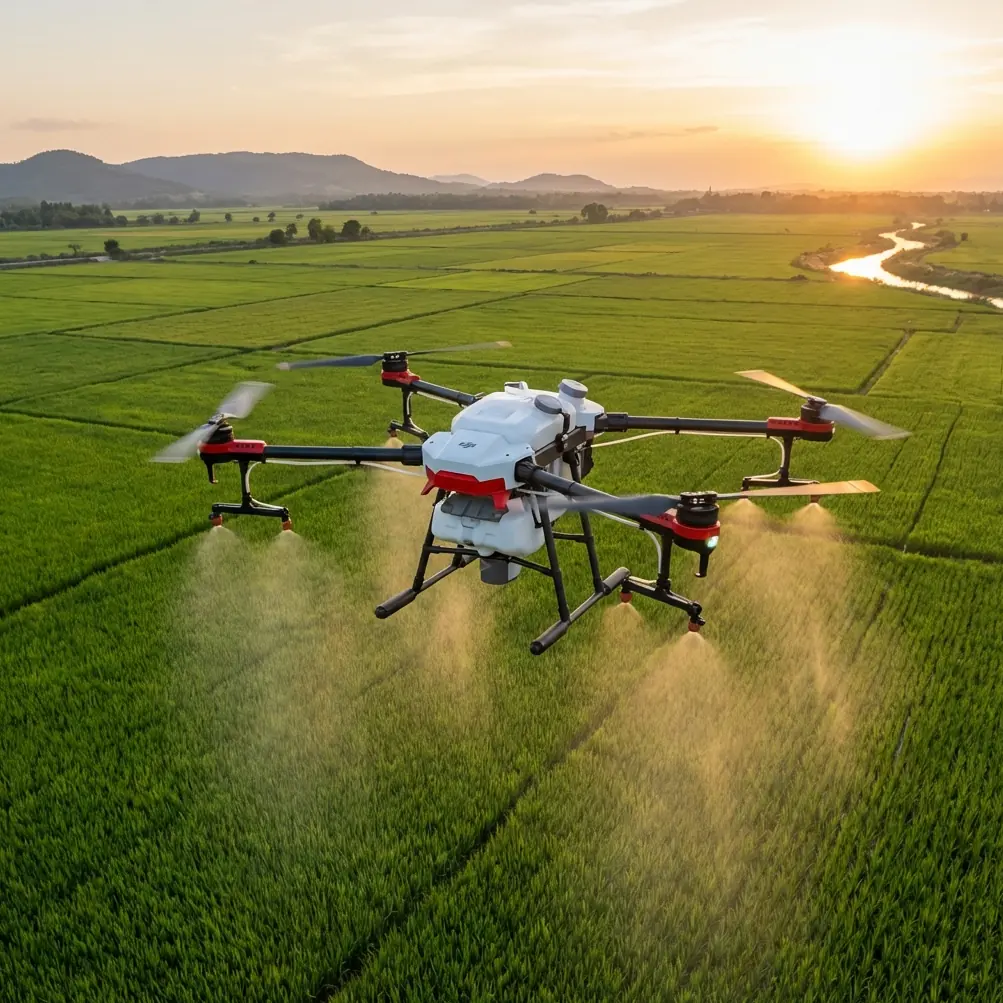
Expert Scouting with Flip: What Actually Changes on Mountain Solar Farm Surveys
META: A technical review of using Flip for mountain solar farm scouting, with photogrammetry context from CH/Z 3004—2010, camera baseline implications, and real workflow gains in obstacle-rich terrain.
I’ve had days on mountain solar sites where the drone was the least difficult part of the job. The real problem was geometry.
Not battery life. Not wind. Geometry.
When you scout a solar farm spread across uneven ridgelines, terraces, access roads, drainage cuts, and irregular panel blocks, you are constantly making tradeoffs between coverage, image overlap, terrain clearance, and the level of detail needed for decisions that happen later. Can the EPC team verify slope transitions? Are there shadow-risk zones behind terrain breaks? Is the service road actually drivable for equipment movement? Where are the risky tree edges, rock outcrops, and retaining walls?
That’s why a compact platform like Flip becomes interesting only when it reduces the friction in that full workflow. A small drone is easy to like. A small drone that helps you collect more usable information in steep, obstacle-heavy solar terrain is worth a closer look.
What changed for me was not one headline feature, but the way several practical flight tools started solving old field problems at once: obstacle avoidance when contour-following along mountain edges, subject tracking for moving inspection targets, QuickShots and Hyperlapse for stakeholder communication, and D-Log when the lighting across reflective panel rows gets ugly. In a mountain solar context, those are not lifestyle extras. They are time savers and error reducers.
Why mountain solar scouting punishes weak workflows
Flat utility-scale sites are straightforward by comparison. In the mountains, each flight line has consequences.
A route that looks efficient on a map can become inefficient in the air because the site rises underneath you, tree crowns intrude into the corridor, or a ridge blocks visual continuity. If your drone forces you to fly overly cautious, fragmented missions, you lose consistency. If it tempts you to fly too aggressively, you introduce risk and image quality problems.
This is where the old photogrammetry discipline still matters. One reference that remains surprisingly relevant is CH/Z 3004—2010, the Chinese low-altitude digital aerial photogrammetry fieldwork standard. Even though the document predates many current compact UAV workflows, its Appendix A focuses on something operators still live with every day: estimating the span of photo control points along the flight direction using baseline geometry, relative flight height, image scale enlargement factor, and measurement error.
That sounds abstract until you are standing on a mountain access track trying to decide whether one more pass is necessary.
The standard explicitly frames the relationship among relative flight height, photo baseline length, and accuracy behavior in aerial survey control. Operationally, that matters because mountain solar scouting often sits in the gray zone between “just get visuals” and “collect imagery good enough to support reliable interpretation.” If your baseline spacing and flight geometry are sloppy, the site may still look well covered on screen while hiding subtle terrain and alignment issues that become expensive later.
The camera details in the standard tell a bigger story
Appendix A also lists several digital camera configurations used in low-altitude aerial work. Among the examples in the extracted table are:
- Rollei DB45 with 4080 × 5440 pixels and a 50 mm lens
- Rollei DB57 with 5428 × 7228 pixels and a 50 mm lens
- Canon EOS 5D Mark II with 3744 × 5616 pixels and a 35 mm lens
- another Mark II 24 mm configuration shown with 3744 × 5616 pixels
Those numbers are more than archival trivia. They remind us that aerial work has always been governed by a simple reality: image usefulness is tied to the interaction between sensor output, lens choice, flight height, and baseline spacing. In other words, resolution alone does not rescue a bad mission design.
That is exactly why Flip is most useful on mountain solar scouting when treated as a field intelligence platform, not a magic camera.
On a difficult site, I’m not expecting a small folding aircraft to replace every formal mapping stack. I’m expecting it to make the early and mid-stage scouting loop faster, safer, and more consistent. If it helps me preserve line of sight, navigate around terrain breaks, and capture imagery that can actually answer engineering questions, it earns its place.
Where Flip changes the field experience
The first practical difference is obstacle management.
Mountain solar farms are cluttered in a very specific way. The obstacles are rarely random. They are patterned: rows of panel tables, perimeter fencing, cut slopes, utility poles, isolated trees, temporary site cabins, switchgear pads, and steep drop-offs that distort pilot depth perception. A drone with obstacle avoidance gives you more confidence when repositioning near these features, especially during low-altitude visual passes used to verify clearances and drainage paths.
I learned this the hard way on a ridge project where I used to stop and reset constantly near terraced sections because the approach angles were awkward. The result was fragmented footage and too many micro-decisions. Flip made those sections easier because obstacle awareness reduced the mental load during short, precise transitions. You still fly responsibly. You still leave margins. But you waste less attention on avoiding avoidable mistakes.
Then there’s ActiveTrack and subject tracking. On paper, that sounds more relevant to creators than solar professionals. In practice, it is handy when your “subject” is a moving inspection vehicle, a surveyor traversing access roads, or a maintenance team walking a cable route. Tracking lets you gather contextual footage of route conditions without manually juggling aircraft positioning every second. It is not a replacement for structured inspection. It is a fast way to document movement through terrain.
That matters because mountain solar access is often one of the hidden stories of the site. If a service route is narrow, eroded, or exposed at a bend, that can affect future maintenance planning just as much as a panel block issue. A tracked sequence gives stakeholders a cleaner understanding of route reality than stills alone.
QuickShots and Hyperlapse are not fluff on this kind of site
I know the usual reaction. QuickShots? Hyperlapse? Nice for marketing.
Not only for marketing.
On mountain solar projects, communication failures happen when technical teams, asset owners, contractors, and off-site decision-makers are not seeing the same terrain logic. A concise automated orbit, reveal, or pullback can explain site relationships in seconds: how close a block sits to a ridgeline, how a drainage channel cuts below inverter stations, or how vegetation encroaches from the uphill side.
Hyperlapse is even more useful than people expect. If cloud movement and ridge shadows are affecting array exposure across the day, a short, stabilized time-compressed sequence can illustrate shadow progression and weather behavior in a way static imagery cannot. For mountain sites, this is often more persuasive than a folder full of disconnected clips.
The key is restraint. These modes are valuable when they answer a site question. They become noise when flown just because the feature exists.
D-Log solves a real visual problem around solar arrays
Solar panels create one of the least forgiving lighting environments for small aerial cameras. You get high contrast, specular reflections, dark structural shadows beneath tables, bright sky, and often haze if the site is at elevation.
That’s where D-Log starts pulling its weight.
A flatter profile preserves more grading flexibility when the scene includes reflective panel faces and deep terrain shadow in the same frame. If you’ve ever tried to evaluate edge conditions on a sunny mountain site from overly baked footage, you know the problem. Blacks block up. Highlights clip. Fine context disappears.
D-Log does not make a small sensor into a cinema monster. What it does do is hold more image latitude so your footage survives post-processing with enough detail to support practical review. On mountain solar jobs, that can mean the difference between “looks okay” and “I can actually inspect the erosion line, fence condition, and table alignment in one pass.”
Flip works best when you respect the photogrammetry mindset
This is where the CH/Z 3004—2010 reference becomes useful again.
Appendix A’s emphasis on relative flight height and photo baseline length is a reminder that even a smart, modern drone cannot free the operator from planning image geometry. If the site requires coherent visual documentation across long, sloped corridors, you still need to think carefully about altitude relative to terrain, overlap consistency, and viewing angle.
In mountainous solar fields, “same altitude” and “same relative height above ground” are not the same thing. That distinction is operationally significant.
If you fly a constant altitude while the land rises sharply, your relative height shrinks, coverage narrows, and obstacle risk increases. If the land falls away, the opposite happens: apparent detail changes, image scale shifts, and visual comparison across rows gets less reliable. The older standard’s treatment of relative flight height may come from a more formal survey context, but the lesson transfers directly to Flip users in the field. Terrain-aware planning is not optional if you want useful, interpretable imagery.
Likewise, baseline thinking still matters during repeated oblique passes. The standard links control span estimation to baseline count along the route direction. Practically, that means your spacing between useful image positions influences how well downstream reviewers can understand continuity across the site. Fly too sparsely and transitions become ambiguous. Fly too densely without discipline and you create bloated datasets that waste review time. Flip helps, but the operator still has to build a coherent capture rhythm.
My preferred Flip workflow for mountain solar scouting
This is the pattern I’ve settled into.
I begin with a high-level perimeter and ridge relationship pass to understand the terrain envelope. Then I use obstacle-aware, lower-altitude flights to inspect transitions: cut-and-fill zones, steep road turns, drainage exits, panel block edges, and vegetation encroachment. If a team member is traversing a route on foot or by vehicle, I’ll use ActiveTrack selectively to document the journey through difficult sections. After that, I capture a few short explanatory sequences with QuickShots or a controlled pullback that clarifies the geometry of the site for non-field stakeholders.
If lighting is harsh, I stay in D-Log so the footage remains gradeable later.
What Flip improved in this routine was tempo. I spend less time fighting the aircraft and more time interpreting the site. That sounds simple, but on a mountain property with limited access windows and changing weather, tempo is everything. The faster you can move from broad situational awareness to targeted verification, the more useful your flight time becomes.
A note on expectations
Flip is not a substitute for a full survey stack when the deliverable demands formal mapping accuracy, rigorous control networks, or engineering-grade reconstruction. The photogrammetry standard makes clear that control logic, baseline relationships, and measurement error are part of a disciplined system. That discipline still belongs in serious projects.
But many real-world solar scouting tasks happen before that stage or between formal survey campaigns. Teams need quick, intelligent, terrain-aware aerial visibility. They need to inspect what changed after weather. They need to verify whether a route is usable. They need concise footage that explains a mountain site to someone who has never stood on it.
That is where Flip fits.
It closes the gap between casual flight and genuinely useful field documentation.
If you’re evaluating whether it suits your own mountain solar workflow, the right discussion is not “Can it fly?” Of course it can. The better question is whether it helps you preserve spatial understanding under the messy constraints of elevation, obstacles, glare, and time pressure.
For me, the answer became yes the first time it turned a stop-start ridge inspection into a smooth, readable sequence that the whole project team could act on. If you want to compare notes on setup and site workflow, you can message me here.
Ready for your own Flip? Contact our team for expert consultation.