
Expert Scouting With Flip in Dense Urban Spaces
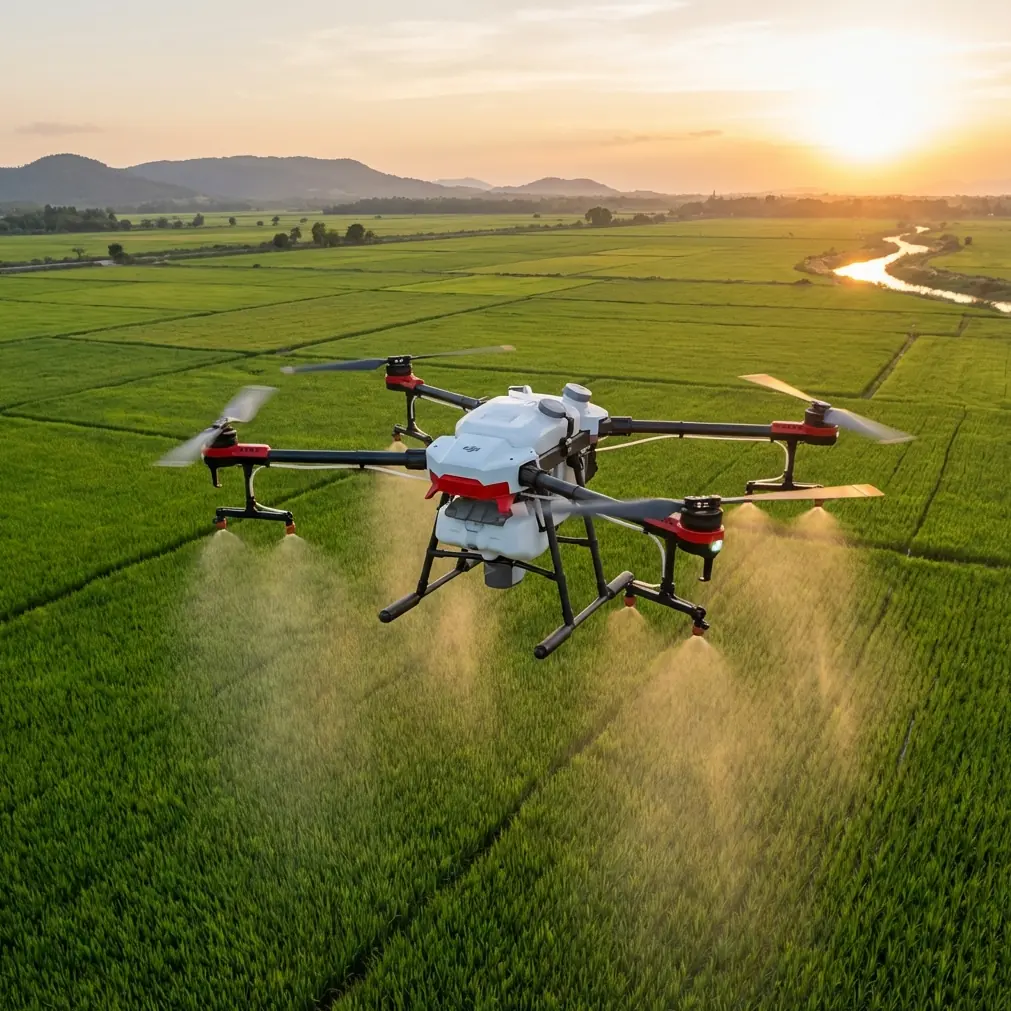
Expert Scouting With Flip in Dense Urban Spaces
META: A technical review of Flip for urban venue scouting, covering obstacle avoidance, subject tracking, QuickShots, Hyperlapse, D-Log, and ActiveTrack from a working photographer’s perspective.
Urban venue scouting is where small drone design gets exposed. Tight setbacks, reflective glass, rooftop furniture, trees tucked between buildings, sudden gusts coming off a corner—none of that cares about marketing language. What matters is whether the aircraft helps you work faster without turning every short flight into a risk calculation.
That is the lens I use for Flip.
I scout venues as a photographer, which means I am rarely flying for spectacle. I am trying to answer practical questions before a shoot day: Where does the light break first on the facade? Can the client get a clean reveal of the courtyard entrance? Is the rooftop actually usable for an evening sequence, or does the surrounding skyline choke the composition? Can guests move through the space without visual clutter dominating every frame? A drone that supports that process needs to be quick, deliberate, and forgiving in close quarters.
Flip stands out most when you treat it as a technical scouting tool rather than a toy. Its value shows up in the details: obstacle avoidance when the route tightens unexpectedly, subject tracking when a coordinator wants a walk-through captured in one pass, QuickShots for immediate concept previews, Hyperlapse for mapping motion around a site, D-Log for preserving grading flexibility, and ActiveTrack when you need repeatable movement around a person or vehicle.
That combination matters in cities because urban scouting is rarely linear. You arrive with a shot list, then reality starts negotiating with you. A loading zone is occupied. A neighboring building throws a shadow two hours earlier than expected. A narrow service lane becomes the best visual access point. The right aircraft is the one that adapts without consuming your attention.
Why Flip makes sense for venue scouting
For urban venue work, portability is not just convenience. It changes the kinds of flights you actually attempt. If setup is cumbersome, you skip quick checks. If launch feels like a production, you avoid gathering intermediate angles that might later become the deciding reference for a client deck or a production plan.
Flip fits the stop-start rhythm of scouting. You may launch for three minutes, land, move half a block, relaunch, then repeat from a rooftop or a courtyard edge. That workflow favors a drone that gets into the air with little friction and gives you stable, information-rich footage quickly.
The practical win is not one dramatic flight. It is the accumulation of small, decisive captures:
- a short ascending reveal that shows how much of the skyline enters frame from terrace level,
- a lateral pass that exposes visual obstructions near the main entrance,
- a top-down look that clarifies guest flow paths,
- a brief tracking clip to test whether a human-led walkthrough feels natural,
- a Hyperlapse to evaluate how traffic and shadow movement change the site’s energy.
Those are the kinds of assets that make production meetings sharper.
Obstacle avoidance is not a luxury in city scouting
In open landscapes, obstacle sensing is reassuring. In urban scouting, it becomes operationally central.
When you are flying near venue edges, decorative lighting rigs, rooftop railings, signage, trees, and utility fixtures, the airspace gets busy fast. Obstacle avoidance reduces the number of micro-corrections the pilot has to make, which preserves focus for framing and route planning. That is a meaningful distinction. It is the difference between merely keeping the aircraft safe and actually learning something useful from the flight.
One specific test told me a lot about Flip’s value in this role. I was evaluating a riverside event venue bordered by low trees, metal fencing, and a segmented pedestrian path. A heron lifted unexpectedly from the embankment and crossed the intended flight line at low altitude. Wildlife encounters are easy to romanticize, but in practice they are moments of real risk, especially when the pilot’s attention is split between composition and environment. Flip’s sensors gave me enough confidence to back off smoothly and reframe without forcing an abrupt, messy correction toward the fence line. That matters. Urban flights often happen where birds, people, and architecture overlap. A drone that helps the operator de-escalate in a second is far more useful than one that simply promises cinematic output.
The wildlife moment also highlighted another truth: urban venue scouting is not isolated from nature. Pigeons cluster around roof edges. Gulls cut across waterfront corridors. Smaller birds move unpredictably near trees tucked into plazas. Sensors are not a substitute for pilot judgment, but they meaningfully improve the margin for safe, calm decision-making.
Subject tracking and ActiveTrack for walk-throughs
Venue scouting is increasingly collaborative. Clients do not always want static aerials. They want to understand how a person experiences the space.
This is where subject tracking and ActiveTrack earn their place. If an event manager walks the guest arrival route, or a producer wants to test the visual rhythm of a rooftop entrance sequence, tracking tools let you capture a coherent movement study without manually flying every tiny directional adjustment.
The operational significance is simple: repeatability. In scouting, you often need to compare two or three route variations with similar speed and framing. ActiveTrack can help preserve that consistency. Instead of one pass drifting too wide and another tilting too aggressively, you get clips that are easier to compare side by side. That makes client review faster and less subjective.
It also helps solo operators. When you are scouting alone, you may not have a second person to coordinate movement timing. A drone that can hold the subject relationship more reliably lets you concentrate on the bigger question: does this route tell the story the venue needs?
There is a caveat, and experienced pilots will appreciate it. Tracking in urban spaces should be used selectively. Reflective surfaces, intermittent obstructions, and narrow pathways can complicate automated behavior. The best approach is to treat ActiveTrack as a controlled tool for planned passes, not a blanket solution. Used that way, it saves time and produces cleaner references.
QuickShots are more useful than many professionals admit
QuickShots can sound like a consumer feature until you use them during actual scout work.
Clients often struggle to visualize motion from stills or raw pilot descriptions. A short, predefined movement can close that gap immediately. Instead of saying, “The venue has strong separation from neighboring buildings if we pull up and arc slightly,” you can show a concise proof-of-concept clip on location.
That changes decision-making speed.
For venue scouting, QuickShots are effective as a rapid visual shorthand. You can build a handful of references in minutes and use them to narrow the creative direction before a larger production team gets involved. That is not about replacing custom piloting. It is about compressing the discovery phase.
In practice, I use them for three things:
- checking whether a reveal feels elegant or too abrupt,
- testing how the venue reads against the surrounding skyline,
- generating quick internal references that a client can understand without needing a technical breakdown.
Urban shoots reward clarity. QuickShots can provide that clarity when time is thin and the client is on-site.
Hyperlapse for motion intelligence, not novelty
Hyperlapse is often treated as a flashy extra. For scouting, it can be one of the smartest tools available.
A well-executed Hyperlapse helps answer questions that static aerials cannot. How quickly does pedestrian traffic thicken near the entrance? When does the neighboring tower begin to cast a hard shadow over the courtyard? Does vehicle flow on the adjacent street energize the location or distract from it? These are not aesthetic footnotes. They affect scheduling, staging, sound planning, and the mood of the final imagery.
For urban venues, motion patterns are part of the site itself. Hyperlapse turns those patterns into something readable.
If I am reviewing a location for a late afternoon event, one short Hyperlapse can reveal more about the atmosphere shift over time than a dozen still frames. You see the venue’s tempo, not just its geometry. That is a serious scouting advantage.
D-Log matters when scouting becomes pre-production
Some teams assume log capture is overkill for a scout. I disagree.
D-Log becomes valuable the moment scouting footage is likely to feed downstream decisions. Maybe the creative director wants to test a grade direction. Maybe the editor is building a rough mood board from scout clips. Maybe the venue team needs a cleaner representation of how materials and surfaces respond to changing light.
In an urban environment, dynamic range is rarely gentle. You are often balancing bright sky, specular reflections off glass, deep alley shadows, and mixed color temperatures from signage or practical lights. Shooting in D-Log gives you more flexibility to interpret that scene later with control instead of baking in a look too early.
That operational significance is easy to overlook. Scouting footage is not always disposable anymore. It frequently becomes part of planning decks, investor presentations, treatment development, or internal approvals. If the drone can produce footage that survives those uses gracefully, it becomes more than a recce tool. It becomes an early-stage production asset.
Where Flip fits in a real urban workflow
A good scouting drone does not need to do everything. It needs to solve the right problems with minimal drag.
Here is where Flip slots into an actual venue workflow:
First, establish the site. I use a straightforward perimeter check to understand height relationships, obstructions, neighboring sightlines, and access constraints. Obstacle avoidance reduces mental load during this phase.
Second, test human movement. If the venue includes a dramatic entrance, terrace path, or courtyard route, subject tracking and ActiveTrack help create movement studies quickly.
Third, create concept references. QuickShots give clients immediate visual examples without waiting for a more elaborate capture plan.
Fourth, evaluate time and atmosphere. Hyperlapse helps determine whether the location feels calm, busy, premium, exposed, or congested at the hours that matter.
Fifth, preserve usable image data. D-Log keeps the scout footage flexible enough for review, grading tests, or presentation use.
That sequence is efficient because each feature supports a different scouting question. None of them feels ornamental when viewed through production needs.
Limits smart operators should keep in mind
Flip is not magic, and saying so would miss the point.
Urban flying still demands route discipline, line-of-sight awareness, and conservative judgment around people, wildlife, reflective surfaces, and constrained spaces. Obstacle avoidance is assistance, not absolution. Tracking modes still require room to work. Automated shots still need scrutiny before you trust them near hard obstacles.
The real professional advantage comes from knowing when to lean on the technology and when to fly more manually.
For example, near dense facade reflections or narrow service corridors, I prefer simpler movements and more deliberate pacing. Near tree canopies or active pedestrian edges, I keep extra separation and avoid pushing tracking modes unnecessarily. And whenever birds show interest in the aircraft, I give them the airspace and reset the plan.
That is also why communication matters. When clients or venue managers are on-site, I like to set expectations about what the drone is being used to answer. Not every flight is about getting a hero clip. Some are strictly diagnostic. Some are about confirming a no-go angle so nobody wastes time later. That mindset makes the tool far more valuable.
If you want to compare notes on an urban recce workflow, this is the easiest way to reach me: message me here.
Final assessment
Flip makes the most sense for urban venue scouting when you judge it by working outcomes rather than feature lists. Its obstacle avoidance supports safer, calmer flying in cluttered spaces. Subject tracking and ActiveTrack help create repeatable walk-through studies. QuickShots accelerate client understanding. Hyperlapse reveals how a venue behaves over time. D-Log preserves scouting footage for more serious downstream use.
That is the core of it.
A city location never gives you perfect conditions. It gives you compromises, interruptions, and small windows of clarity. The drone that earns a place in your kit is the one that helps you identify those windows quickly and document them well. Flip does that best when the operator approaches it as a precision scouting platform: compact, responsive, and capable of turning a short site visit into decisions the whole team can use.
For photographers, producers, and venue teams working in urban environments, that is not a minor advantage. It is the difference between arriving on shoot day with assumptions and arriving with a plan.
Ready for your own Flip? Contact our team for expert consultation.