
Expert Surveying with Flip: What a Council Drone Story
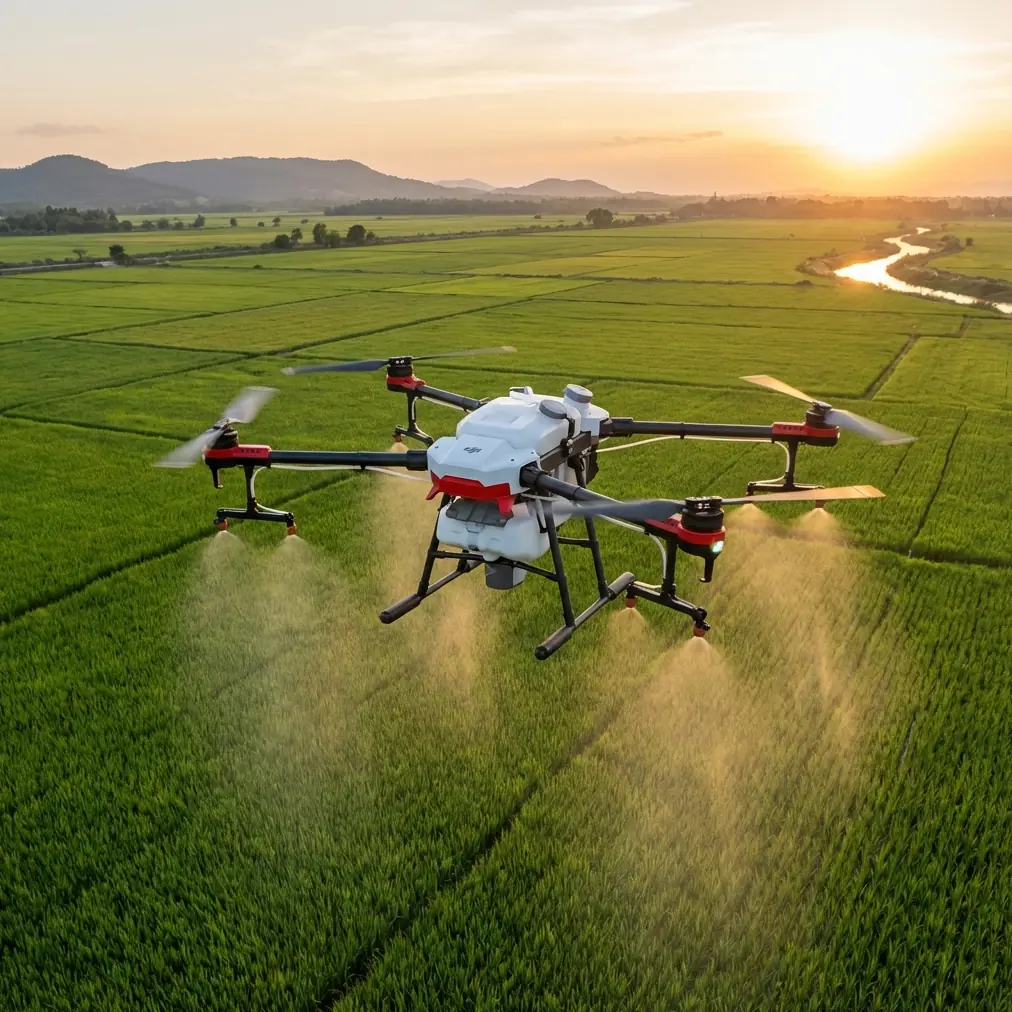
Expert Surveying with Flip: What a Council Drone Story Reveals About Smarter Remote Site Work
META: A practical expert look at how Flip fits remote construction surveying, inspired by North Kesteven Council’s drone use for planning breaches, fly-tipping, and smoke-free zone enforcement.
Remote construction surveying has a deceptively simple brief: get accurate visual evidence from difficult ground, do it quickly, and return with material that stands up to scrutiny. In practice, that means uneven access roads, changing light, gusting wind, patchy terrain, and the constant risk of missing something that matters.
That is why a small news item about a council drone deserves more attention than it might first seem to warrant.
North Kesteven Council is using a drone to identify suspected planning breaches. The same aircraft is also being used to investigate fly-tipping and to help enforce smoke-free zones. At face value, those are municipal tasks. But underneath them sits a more useful story for anyone surveying remote construction sites with Flip: one drone platform, multiple evidence-driven workflows, and a strong emphasis on seeing what is hard to inspect from the ground.
That matters because remote site surveying is rarely just about “flying and filming.” It is about documenting change, verifying compliance, and capturing enough context to support decisions later. The council example is a clean civilian case study in exactly that kind of operational thinking.
The real problem on remote sites is not distance. It is uncertainty.
Surveyors and site teams often assume the biggest challenge is simply reaching a remote location. Sometimes that is true. But once you arrive, the harder issue is uncertainty.
You may need to confirm whether temporary structures match approved boundaries. You may need to check spoil piles, access tracks, drainage routes, fencing, storage areas, or unexpected dumping near the project perimeter. Those needs echo the North Kesteven use case more closely than many people realize.
When a council uses a drone to spot suspected planning breaches, the operational significance is obvious: the aircraft is not there for pretty imagery. It is there to create a reliable visual record of whether real-world conditions align with what is permitted. For remote construction work, Flip serves a similar role. It helps teams compare site reality against plans, contractor claims, progress schedules, and environmental commitments.
The second detail from that council story is just as revealing. The drone is also used to investigate fly-tipping. That translates directly to construction and land development contexts. Remote sites attract unwanted activity: dumped waste, unapproved material storage, encroachment, and off-hours changes that are easy to miss during routine walk-throughs. A drone gives you fast perimeter awareness without sending staff across rough or unsafe ground.
The smoke-free zone enforcement detail points to something else: close-area observation in operational environments. In other words, a drone can be useful not only for broad aerial overviews but also for targeted checks in spaces where policy compliance matters. On a construction site, that same pattern applies to designated storage areas, exclusion zones, haul routes, material laydown areas, and temporary works corridors.
One local authority story, three tasks, one common thread: drones reduce blind spots.
Why Flip suits this kind of work
Flip makes sense in remote surveying because the job often shifts mid-mission. You launch expecting to document excavation progress, then notice drainage ponding on the western edge. Or you set out to record structural steel placement and end up needing to inspect spoil containment after overnight rain.
That is where a flexible aircraft becomes more valuable than a single-purpose flying camera.
Obstacle avoidance matters because remote construction sites are messy in ways maps never fully capture. Temporary cranes, stacked materials, fencing, partially erected frames, utility poles, and uneven terrain create a dynamic environment. A drone that can help manage those risks allows the pilot to focus more attention on framing, coverage, and evidence capture instead of spending the entire flight budget on basic collision anxiety.
ActiveTrack and subject tracking are also more useful in surveying than people sometimes admit. Not because a surveyor wants cinematic flair, but because moving site vehicles, inspection teams, or specific work fronts may need to be followed consistently for progress documentation. If you are recording haul road use, tracking plant movement, or documenting an escorted route into a difficult section of a site, stable tracking reduces workload and improves repeatability.
QuickShots and Hyperlapse are often dismissed as content features. That is too shallow a reading. On remote projects, they can help create repeatable visual summaries of changing conditions over time. A Hyperlapse sequence from the same route each week can quickly show earthworks development, stockpile movement, or access-road deterioration. That is not about style. It is about pattern recognition.
D-Log earns its place for a different reason. Surveying flights do not always happen in kind light. A remote site may have bright reflective surfaces, deep cut shadows, haze, or cloud breaks that shift exposure minute by minute. D-Log gives more room in post to preserve detail across difficult scenes, which is valuable when the point of the footage is interpretation rather than social posting.
Weather is where theory gets tested
The polished version of drone operations always makes flights sound orderly. The reality is that weather changes when you least need it to.
On one remote surveying run, conditions can start calm enough for a standard perimeter pass. Then the wind rotates. Cloud cover thickens. The light flattens across the site. A few minutes later, visibility feels different, and the terrain you were reading clearly from the screen now looks less defined.
This is where Flip stops being a spec sheet and becomes a working tool.
Imagine a remote construction site cut into uneven ground, with stockpiles on one side and partially installed drainage on the other. The flight begins with a straightforward mapping-style sweep to capture the current extent of groundworks. Mid-flight, the weather shifts. A stronger crosswind comes through the open side of the valley, and contrast drops as clouds move in.
Instead of aborting immediately and returning with half a story, a capable drone setup lets the pilot adapt. Obstacle avoidance adds confidence near temporary structures when visibility becomes less comfortable. Stable tracking helps maintain framing on key work zones despite the wind. D-Log helps preserve scene detail when the light loses consistency. And because remote surveying often means limited time on site, that ability to salvage a flight safely and usefully is not a bonus. It is operationally significant.
The weather angle matters for another reason: changing conditions often reveal site problems. Rain and wind expose drainage weaknesses, erosion paths, loose sheeting, or material movement that a calm-weather survey can miss. If the aircraft remains controllable and the imaging remains usable as conditions shift, the survey becomes more honest. You are documenting the site as it behaves, not just as it looks on its best day.
The council case points to a larger truth: drones are evidence tools
The most useful takeaway from the North Kesteven story is not that councils are flying drones. It is how they are using them.
Planning breaches, fly-tipping, and smoke-free zone checks all rely on verifiable observation. These are not abstract inspections. They are practical, site-based questions:
- Is something present that should not be there?
- Has something changed from what was approved?
- Is activity happening where it should not?
Remote construction surveying asks near-identical questions every week.
Has the contractor stayed within the agreed working area?
Has excavated material been stored correctly?
Has a temporary road expanded beyond its intended footprint?
Has waste appeared near the boundary?
Has work progressed in the sequence reported?
A drone supports these questions best when the operator treats each flight as a repeatable evidence-gathering mission. That means consistent altitudes where possible, deliberate angles, documented flight paths, and footage captured with enough context to orient non-pilots later. Flip’s value rises when it is used this way.
A practical problem-solution workflow for Flip on remote sites
Let’s keep this grounded.
Problem: Ground access hides what matters
Remote sites often look manageable from a vehicle route but become fragmented once you try to inspect them on foot. Mud, berms, trenches, standing water, vegetation, and temporary barriers slow everything down.
Solution: Build a layered aerial inspection routine
Start with a high-level orbit or broad pass to establish the full footprint. Then move into targeted checks for boundary lines, material storage, drainage paths, and active work fronts. Finish with low, controlled visual records of areas likely to generate disputes later.
This mirrors the council logic. Spot the suspected issue first, then investigate the detail.
Problem: Mid-project changes are hard to communicate
Site managers, planners, consultants, and clients often interpret conditions differently when relying on partial photos from the ground.
Solution: Capture both overview and directional context
Use wide establishing shots, then narrower passes that show relationships between features: access road to stockpile, stockpile to drainage ditch, ditch to adjacent boundary. If weather shifts mid-flight, adapt the mission rather than forcing the original plan. Keep the essential visual chain intact.
Problem: Some issues are intermittent
Dumped waste appears overnight. Standing water changes by hour. Vehicle tracks reveal unauthorized routes only under certain conditions.
Solution: Repeat flights and use motion intelligently
This is where Hyperlapse and repeatable route capture become unexpectedly useful. A sequence gathered over time can reveal trends much faster than isolated stills. Even on the same day, a timed follow-up pass after weather changes can expose site behavior that a single inspection misses.
Human-readable outputs matter as much as flight skill
A strong drone survey is not just a clean flight. It is a result that another person can understand without the pilot standing beside them.
That is another reason the council example resonates. If a local authority is using drone imagery to support planning and environmental enforcement tasks, the outputs must be legible to decision-makers. The same applies on remote construction projects. Engineers, project managers, landowners, and compliance teams need imagery that answers a question quickly.
So when flying Flip, think beyond “coverage.” Ask:
- Can someone unfamiliar with the site understand where this issue is?
- Does this shot show scale?
- Does this sequence establish before-and-after logic?
- If weather changed during capture, have I noted that and compensated for it in the imagery?
Those habits separate casual drone footage from operationally useful survey content.
Where the civilian drone story becomes most relevant
There is a tendency to compartmentalize drone use by sector. Councils do one thing, construction firms another, utilities something else. In the field, the overlap is larger than the categories suggest.
A drone used by a council to identify planning breaches is essentially performing site verification. A drone used to investigate fly-tipping is conducting remote visual inspection of unauthorized material presence. A drone used around smoke-free zones is assisting compliance checks in defined operational areas.
That same framework applies neatly to remote construction surveying with Flip:
- Site verification
- Material and waste monitoring
- Operational area compliance
- Progress documentation
- Boundary observation
This is why small civic drone stories can be more instructive than flashy product demos. They show what happens when drones become embedded in practical workflows instead of being treated as novelty hardware.
A better standard for remote surveying
If you are surveying remote construction sites, the benchmark should not be whether the drone flew smoothly. It should be whether the mission reduced uncertainty.
Did it help verify conditions against plans?
Did it reveal a problem before it became expensive?
Did it document a site change clearly enough for others to act on it?
Did it capture useful evidence even when weather shifted mid-flight?
Flip is strongest when used in that frame. Not as a flying accessory, but as a disciplined visual inspection platform with enough agility to handle imperfect field conditions.
And if you are building a workflow around remote site surveys, it helps to compare notes with operators who understand both air work and site realities. If that would be useful, you can message the team directly on WhatsApp.
The bigger lesson from North Kesteven is simple. A drone earns its keep when it sees what routine ground processes miss. Planning breaches, dumped waste, restricted-zone activity—these are all visibility problems before they become management problems. Remote construction sites are full of the same pattern.
Use Flip well, and you do more than collect footage. You shorten the distance between uncertainty and proof.
Ready for your own Flip? Contact our team for expert consultation.