
Flip Drone: Tracking Construction Sites Remotely
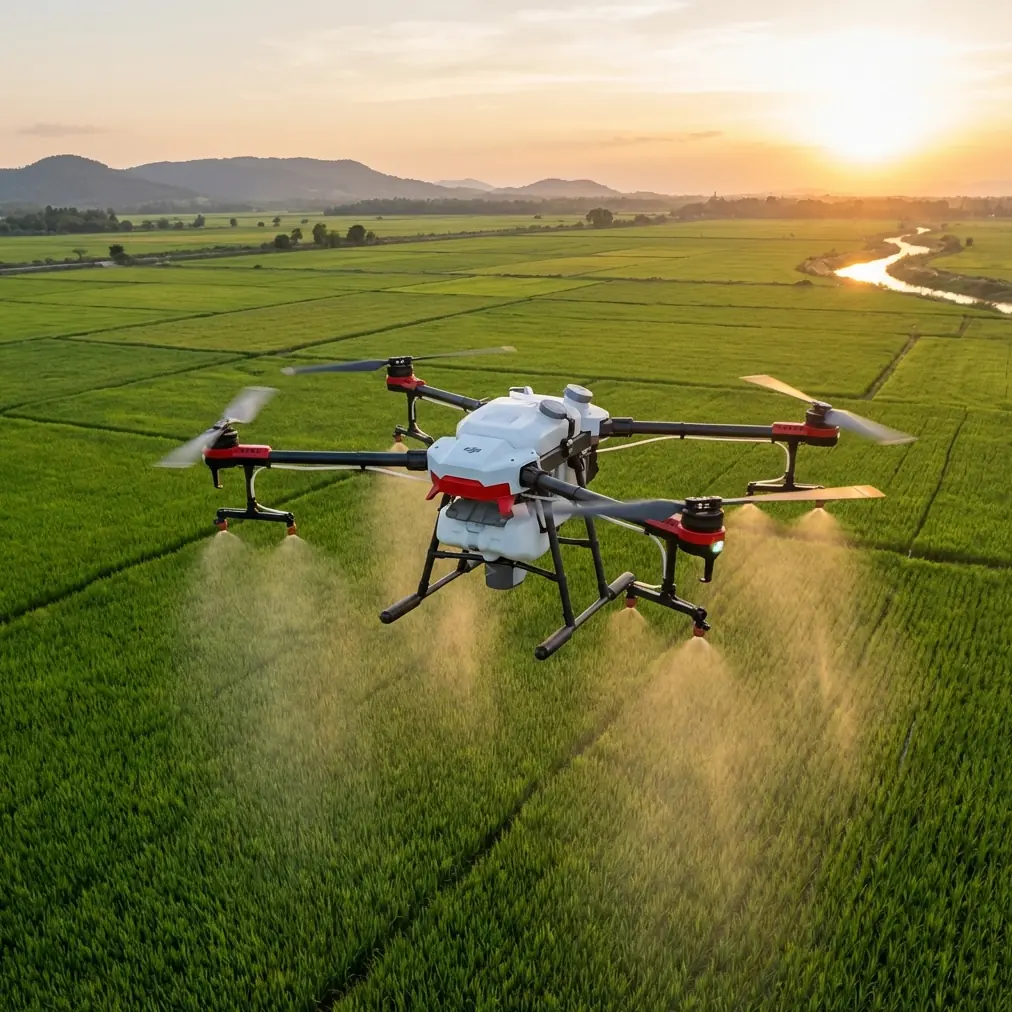
Flip Drone: Tracking Construction Sites Remotely
META: Learn how to track remote construction sites with the Flip drone. Master ActiveTrack, obstacle avoidance, and D-Log for professional aerial monitoring results.
TL;DR
- Pre-flight sensor cleaning is essential before activating obstacle avoidance and ActiveTrack on dusty construction sites
- The Flip drone's Subject tracking and QuickShots modes streamline remote site documentation workflows
- Shooting in D-Log color profile preserves critical shadow and highlight detail across uneven terrain
- Hyperlapse sequences compress weeks of construction progress into compelling visual timelines
Why Remote Construction Tracking Demands a Smarter Drone
Monitoring construction sites in remote areas is one of the most punishing tasks you can throw at a consumer drone. Dust, wind, limited connectivity, and vast terrain make every flight a logistical challenge—and the Flip drone is purpose-built to handle exactly these conditions. This guide walks you through the complete workflow, from pre-flight preparation to final post-processing, so you can deliver professional-grade site tracking without wasted battery cycles or missed data.
As a photographer who has spent the last three years documenting infrastructure projects in locations ranging from desert basins to mountain passes, I can tell you that the difference between useful construction documentation and unusable footage comes down to preparation. The Flip gives you the tools. This article shows you how to use them.
Step 1: The Pre-Flight Cleaning Ritual That Protects Your Safety Features
Here is something most operators learn the hard way: obstacle avoidance sensors fail when they are dirty. On a remote construction site, fine particulate matter—concrete dust, silica, dried mud—accumulates on the Flip's vision sensors within minutes of landing. If you skip cleaning before your next flight, the drone's entire safety net degrades silently.
What to Clean and How
- Forward and downward vision sensors: Use a microfiber cloth dampened with lens cleaning solution. Wipe in a single direction—never circular
- Infrared sensing modules: A dry anti-static brush removes particulate without scratching
- Camera lens and gimbal housing: Use a blower bulb first, then a lens pen for smudges
- Propeller edges and motor vents: Debris here causes vibration that ruins Hyperlapse sequences
- Battery contacts: Dust buildup increases resistance and reduces flight time by up to 12%
Pro Tip: Pack a dedicated pre-flight cleaning kit in a sealed dry bag. On remote sites without shelter, even a few hours of exposure coats gear in enough dust to trigger false obstacle avoidance warnings. I clean sensors before every single flight, not just at the start of the day.
This step takes under three minutes and is the single most impactful habit you can build. ActiveTrack relies on the same vision system as obstacle avoidance. If the sensors are compromised, your subject tracking accuracy drops dramatically—and on an active construction site, that is not just an inconvenience. It is a safety risk.
Step 2: Configure ActiveTrack for Construction Vehicles and Personnel
The Flip's ActiveTrack system is remarkably capable at locking onto moving subjects, but construction sites present unique challenges. Heavy machinery moves at unpredictable speeds. Workers appear and disappear behind structures. Dust clouds obscure line-of-sight.
ActiveTrack Configuration Checklist
- Set tracking mode to Spotlight for stationary equipment documentation (the drone holds the subject centered while you control flight path)
- Switch to Trace mode when following vehicles like excavators or dump trucks along haul roads
- Increase tracking sensitivity to 80-90% to maintain lock through intermittent visual obstruction
- Set a maximum altitude ceiling of 120 meters (check local regulations—remote sites often have different airspace rules)
- Enable Return-to-Home at 30% battery, not the default 20%, to account for headwinds common on exposed sites
Subject Tracking Best Practices for Construction
The key to reliable Subject tracking on a construction site is contrast. A yellow excavator against brown dirt tracks beautifully. A gray concrete truck against gray gravel does not. When possible, coordinate with site managers to place high-visibility markers on key assets you need to track.
I also recommend flying test tracking passes at the start of each session. Spend one battery cycle purely on calibration—confirm that ActiveTrack maintains lock through the specific dust conditions, lighting angles, and movement patterns of that particular site on that particular day.
Step 3: Master QuickShots for Standardized Progress Documentation
Consistency is everything in construction documentation. Clients and project managers need to compare footage from week to week, which means your camera angles, altitudes, and movements must be repeatable. This is where QuickShots becomes indispensable.
Recommended QuickShots Modes for Construction
| QuickShots Mode | Best Use Case | Recommended Altitude | Key Setting |
|---|---|---|---|
| Dronie | Overall site context | 40-60 meters | Wide-angle, auto exposure |
| Circle | Individual structure progress | 20-35 meters | D-Log, manual white balance |
| Helix | Tall structures (cranes, towers) | 50-80 meters | Obstacle avoidance ON |
| Rocket | Foundation and ground-level work | Ground to 90 meters | Subject tracking locked on center point |
| Boomerang | Perimeter documentation | 30-50 meters | GPS waypoint saved for repeatability |
The beauty of QuickShots for construction tracking is automation. Once you identify five to seven key vantage points around a site, you can replicate the exact same shots every visit. Over months, this produces stunning comparative sequences that clearly show project progression.
Expert Insight: Save each QuickShots flight as a named mission in the Flip's companion app. On my current project—a remote communications tower installation—I run the same seven QuickShots sequences every Tuesday. The automated consistency has allowed the engineering team to spot a foundation alignment issue that manual inspection missed entirely.
Step 4: Shoot in D-Log for Maximum Post-Processing Flexibility
Remote construction sites have brutal lighting. You are dealing with high-contrast scenes where sun-blasted open ground sits right next to deep structural shadows. Standard color profiles clip highlights and crush blacks, destroying data you need.
Why D-Log Matters for Construction Documentation
- Preserves approximately 2-3 additional stops of dynamic range compared to standard profiles
- Retains detail in shadowed areas under scaffolding, inside partially completed structures, and beneath heavy machinery
- Allows consistent color grading across footage shot at different times of day
- Makes it possible to extract readable text from signage and safety markings in post
D-Log Camera Settings for the Flip
- ISO: Keep at 100-200 in daylight; push to 400 maximum in overcast conditions
- Shutter speed: Follow the 180-degree rule (double your frame rate)
- White balance: Set manually to 5500K for midday, 6500K for overcast—never auto
- Frame rate: Shoot at 4K/30fps for documentation; switch to 4K/60fps for Hyperlapse source material
- ND filters: Carry a set ranging from ND8 to ND64—remote sites have zero shade, and you will need them
Flat footage looks terrible on the back of the controller screen. Trust the process. The data is there, and a basic LUT application in post-production transforms D-Log footage into rich, detailed imagery that reveals every construction detail.
Step 5: Build Hyperlapse Sequences That Tell the Full Story
A single Hyperlapse sequence can communicate weeks of construction progress in fifteen seconds. For remote site tracking, this is your most powerful deliverable.
Hyperlapse Workflow
- Select your anchor point: Choose a fixed, permanent feature (a survey marker, foundation corner, or access road intersection)
- Lock the Flip's GPS waypoint at your takeoff position
- Set the Hyperlapse interval between 2-5 seconds depending on the speed of activity
- Fly the identical path on each site visit, using saved waypoints
- Compile frames in post, aligning to the anchor point for seamless time compression
The Flip handles Hyperlapse natively, but for construction applications I recommend shooting the raw photo intervals rather than relying on in-camera processing. This gives you frame-by-frame control over alignment—critical when you are comparing structural changes measured in centimeters.
Technical Comparison: Flip Tracking Modes at a Glance
| Feature | ActiveTrack (Trace) | ActiveTrack (Spotlight) | QuickShots | Manual + D-Log |
|---|---|---|---|---|
| Operator Skill Required | Moderate | Low | Low | High |
| Subject Lock Reliability (dusty conditions) | 75-85% | 85-92% | N/A | N/A |
| Obstacle Avoidance Compatibility | Full | Full | Partial (mode-dependent) | Full |
| Best For | Moving vehicles | Stationary structures | Repeatable sequences | Detail inspection |
| Battery Consumption | High | Moderate | Moderate | Variable |
| Post-Processing Flexibility | Standard | Standard | Standard | Maximum |
Common Mistakes to Avoid
Skipping sensor cleaning between flights. This is the number one cause of obstacle avoidance false positives and ActiveTrack drift on construction sites. Three minutes of cleaning prevents thirty minutes of unusable footage.
Relying on auto white balance in D-Log. Auto white balance shifts between frames, creating color inconsistencies that are nearly impossible to fix when compiling Hyperlapse sequences across multiple site visits.
Flying too close to active machinery. Even with obstacle avoidance fully functional, maintain a minimum horizontal distance of 15 meters from operating equipment. Cranes, in particular, move faster at the boom tip than operators expect.
Forgetting to log GPS coordinates for each flight. Remote sites lack obvious landmarks. Without precise coordinates, you cannot replicate shots on return visits—and your entire Hyperlapse continuity breaks.
Draining batteries to zero on-site. Always keep one fully charged battery in reserve. Remote locations mean no charging options. If you discover a critical issue during your final flight and have no backup power, you lose the documentation opportunity entirely.
Using obstacle avoidance as a substitute for situational awareness. The system is a safety net, not a pilot replacement. Dust, cables, and thin structures like rebar can fall below the sensor detection threshold.
Frequently Asked Questions
Can the Flip's ActiveTrack follow multiple construction vehicles simultaneously?
ActiveTrack locks onto a single primary subject at a time. You cannot track two excavators moving in different directions simultaneously. The workaround is to use Spotlight mode with manual flight control, keeping both subjects in frame while the gimbal holds your primary target centered. For multi-vehicle documentation, plan separate tracking passes for each asset.
How does wind affect Hyperlapse quality on exposed remote sites?
Wind introduces micro-vibrations that compound across hundreds of Hyperlapse frames, resulting in jittery final sequences. The Flip's 3-axis gimbal compensates for gusts up to approximately 28 km/h, but beyond that threshold, frame stability degrades noticeably. Schedule Hyperlapse flights for early morning or late afternoon when thermal-driven winds typically subside. If wind is unavoidable, increase your photo interval to 5 seconds and plan to stabilize in post-production software.
Is D-Log necessary for every construction documentation flight?
Not always. If you are capturing quick progress snapshots for internal team updates with no post-processing planned, the Flip's standard or vivid color profiles produce usable results straight out of camera. Reserve D-Log for client deliverables, Hyperlapse compilations, and any footage where shadow detail matters—which, on most construction sites with heavy structural elements, is the majority of professional work.
The Flip drone transforms remote construction site tracking from a logistical headache into a repeatable, professional workflow. From sensor cleaning to D-Log color grading, every step in this guide is designed to help you capture consistent, high-quality documentation that project stakeholders can actually use.
Ready for your own Flip? Contact our team for expert consultation.