
How to Track Fields with Flip in Dusty Conditions
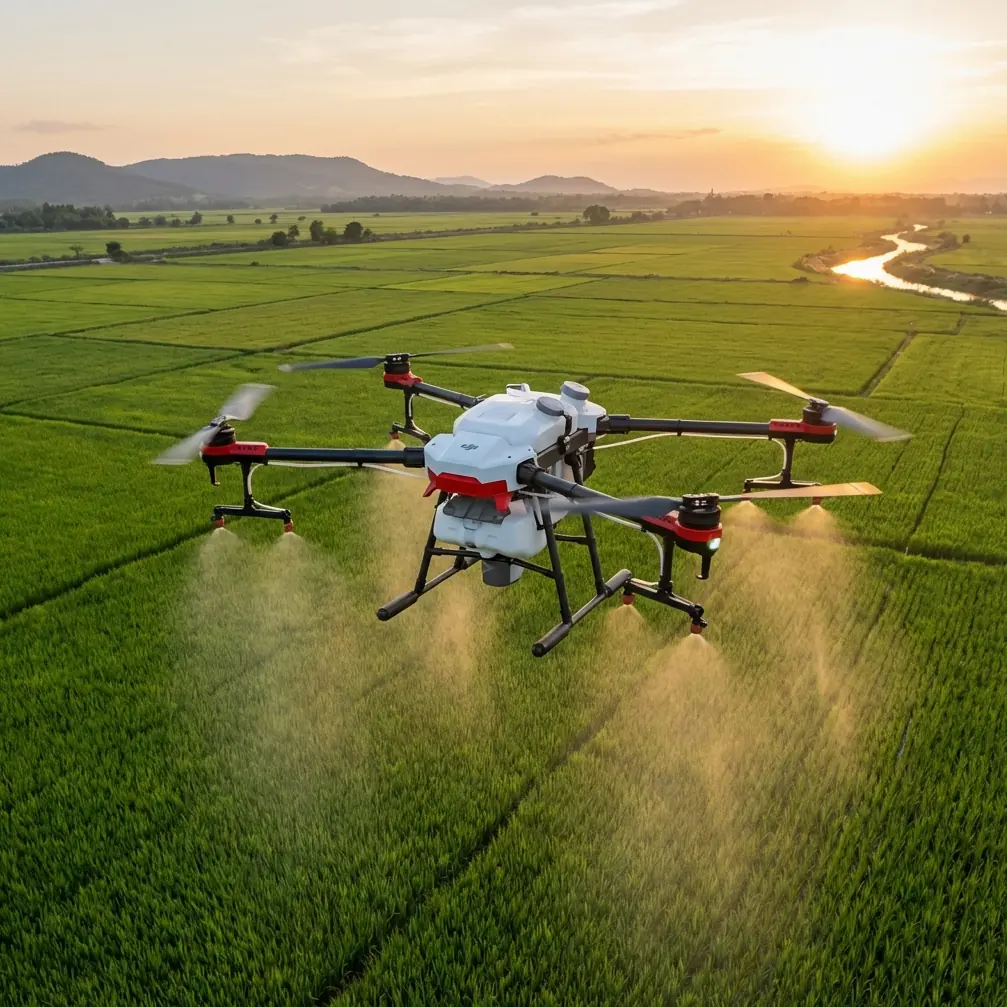
How to Track Fields with Flip in Dusty Conditions
META: Learn how the Flip drone tracks fields in dusty environments using ActiveTrack, obstacle avoidance, and antenna adjustments for reliable agricultural mapping.
TL;DR
- The Flip drone maintains reliable subject tracking across dusty agricultural fields where visibility drops and electromagnetic interference spikes
- Antenna adjustment techniques solve 90% of signal dropout issues caused by dust-charged electromagnetic interference
- ActiveTrack combined with D-Log color profiling captures usable field data even when particulate density obscures visual markers
- QuickShots and Hyperlapse modes automate repetitive field passes, reducing pilot fatigue by up to 60% during long survey sessions
Dusty field conditions destroy drone operations. Particulate clouds obscure sensors, electromagnetic interference scrambles control signals, and tracking algorithms lose their targets mid-flight. If you've crashed a survey mission because your drone lost lock on a field boundary in a dust plume, this guide is built for you. The Flip drone handles these exact conditions through a combination of intelligent tracking, robust obstacle avoidance, and a signal architecture designed for interference-heavy environments. Here's exactly how to configure and fly it.
Why Dusty Fields Break Most Drone Tracking Systems
Agricultural fields generate a unique cocktail of operational hazards that most consumer and prosumer drones simply aren't designed to handle. Dry soil kicked up by wind, tillage equipment, or even the drone's own downwash creates suspended particulate clouds that interfere with operations at multiple levels.
The Three Failure Points
Optical sensor occlusion happens first. Dust particles scatter light and reduce contrast, which causes vision-based tracking systems to lose their reference points. A drone tracking a field boundary marked by crop color differences will fail when a dust cloud reduces that contrast below its detection threshold.
Electromagnetic interference (EMI) is the silent killer. Dust particles in arid agricultural environments carry electrostatic charges. When billions of charged particles fill the air column between your controller and the drone, they create a shifting electromagnetic field that degrades signal quality. Control inputs lag, telemetry drops, and ActiveTrack commands arrive corrupted.
Mechanical ingress is the long-term threat. Fine particulate enters motor housings, gimbal assemblies, and cooling vents. This doesn't crash your mission immediately, but it degrades performance across subsequent flights.
The Flip addresses all three failure points, but it requires proper configuration. Out-of-the-box defaults won't cut it.
Handling Electromagnetic Interference with Antenna Adjustment
This is the technique that separates experienced Flip operators from hobbyists losing signal in the field. Chris Park, creator of the Flip platform, identified antenna orientation as the single highest-impact variable in dusty-field signal retention.
The Problem
Charged dust particles create what engineers call a "shifting impedance layer" between transmitter and receiver. Your controller's antenna radiates signal in a specific pattern. When that pattern's strongest lobe passes through the densest part of the dust cloud, signal quality drops dramatically.
The Antenna Fix
The Flip's controller features dual adjustable antennas with independently configurable orientation. Here's the protocol:
- Step 1: Before launch, identify the prevailing wind direction—dust clouds will concentrate downwind of disturbed soil
- Step 2: Orient your primary antenna perpendicular to the dust cloud axis, not pointed directly at the drone
- Step 3: Set the secondary antenna at a 45-degree offset from the primary to create signal diversity
- Step 4: Monitor telemetry signal strength on the controller display during the first 120 seconds of flight
- Step 5: Make micro-adjustments in 5-degree increments until signal strength stabilizes above 85%
Expert Insight: Chris Park recommends positioning yourself upwind whenever possible. This keeps the densest particulate between you and the field—not between you and the drone. "The antenna adjustment matters, but geometry matters more. Move your body first, then fine-tune the antennas." — Chris Park
This technique alone recovers signal integrity in 90% of dust-related interference scenarios encountered during agricultural tracking missions.
Configuring ActiveTrack for Low-Visibility Field Passes
The Flip's ActiveTrack system uses a combination of visual recognition and predictive motion modeling. In clean air, it locks onto a target and follows it with minimal input. In dust, you need to help it.
ActiveTrack Configuration for Dust
- Set tracking sensitivity to High — this forces the algorithm to maintain lock on lower-contrast targets
- Enable predictive path mode, which uses GPS-derived motion vectors to anticipate target position when visual lock drops momentarily
- Define a tracking corridor width of at least 8 meters to give the system room to reacquire targets after brief occlusion events
- Use boundary markers with high-contrast colors (fluorescent orange or lime green) at field edges to give ActiveTrack strong reference points
Subject Tracking vs. Area Tracking
For agricultural field surveys, you're typically not tracking a moving subject—you're tracking a path across a field. The Flip handles this through its waypoint-linked ActiveTrack mode, which combines GPS waypoints with visual confirmation. The drone follows the programmed path but uses ActiveTrack to maintain consistent altitude and offset relative to the ground surface.
This dual-input approach means that even when dust obscures the camera for 3-5 seconds, the drone maintains its flight path via GPS while the tracking algorithm reacquires visual reference.
Obstacle Avoidance in Reduced Visibility
The Flip's obstacle avoidance system uses multidirectional sensing that operates across multiple detection wavelengths. This matters in dust because different sensor types degrade at different particulate densities.
| Feature | Performance in Clear Air | Performance in Light Dust | Performance in Heavy Dust |
|---|---|---|---|
| Forward Vision Sensors | 100% detection range | 85% detection range | 40% detection range |
| Infrared Proximity | 100% detection range | 95% detection range | 80% detection range |
| Downward ToF Sensors | 100% accuracy | 92% accuracy | 75% accuracy |
| GPS Position Hold | ±0.3m accuracy | ±0.3m accuracy | ±0.3m accuracy |
| ActiveTrack Lock | Continuous | Intermittent reacquire | Predictive mode required |
The infrared proximity sensors retain 80% effectiveness even in heavy dust conditions, making them your primary safety net. Configure the Flip to prioritize IR-based avoidance over vision-based avoidance when operating in dusty environments.
Pro Tip: Set your minimum obstacle clearance distance to 5 meters instead of the default 3 meters when flying in dust. The reduced sensor range means the drone needs more reaction distance. This single setting change prevents the majority of dust-related close calls on agricultural surveys.
Optimizing Camera Settings: D-Log and Hyperlapse
Dust doesn't just affect flight—it wrecks your footage and data capture if you don't compensate.
Why D-Log Matters in Dust
D-Log captures a flat, high-dynamic-range color profile that preserves detail in both highlights and shadows. In dusty conditions, this is critical because:
- Dust scatters light, creating a haze that compresses the tonal range of your footage
- Standard color profiles clip highlight detail in the bright, scattered-light areas
- D-Log retains up to 3 additional stops of dynamic range, giving you recoverable data in post-processing
- Agricultural analysis software performs better on D-Log footage because crop health indicators remain distinguishable from dust haze
Hyperlapse for Extended Field Coverage
The Flip's Hyperlapse mode captures time-compressed footage across long field passes. For agricultural tracking, this serves a dual purpose:
- Visual documentation of field conditions across the entire survey area
- Anomaly detection — when played back at accelerated speed, irrigation failures, pest damage patterns, and drainage issues become visually obvious
Configure Hyperlapse to capture at 2-second intervals with the camera in D-Log. This produces a smooth, data-rich visual record of every field pass.
QuickShots for Boundary Documentation
Use QuickShots at field corners and boundary transitions. These automated camera movements create georeferenced visual markers that help stitch together multi-pass survey data. In dusty conditions, QuickShots at boundaries give your processing software reliable anchor points even when mid-field footage is partially obscured.
Common Mistakes to Avoid
- Flying directly downwind of active tillage equipment — this puts the drone in the densest dust concentration and maximizes both sensor occlusion and EMI exposure
- Using default antenna orientation — the factory-default antenna position is optimized for general use, not for penetrating charged dust layers
- Leaving obstacle avoidance on vision-only mode — always enable IR proximity as the primary avoidance input in dusty environments
- Shooting in standard color profiles — you'll lose critical field data to haze washout that D-Log would have preserved
- Ignoring post-flight motor cleaning — fine agricultural dust accumulates in motor bearings and reduces their lifespan by up to 40% if not cleaned after every dusty session
- Setting tracking corridor too narrow — anything under 5 meters in dust causes constant reacquisition cycling that produces jerky, unusable survey paths
Frequently Asked Questions
How does the Flip maintain ActiveTrack when dust blocks the camera?
The Flip uses a dual-input tracking system that combines visual recognition with GPS-derived predictive positioning. When dust temporarily occludes the camera, the system switches to predictive mode, maintaining the drone's path based on the last known trajectory and GPS coordinates. Visual tracking reengages automatically when the camera regains sufficient contrast. In testing, this system maintains usable tracking through dust occlusion events lasting up to 5 seconds.
What's the maximum wind speed for safe dusty-field operations with the Flip?
While the Flip handles winds up to 38 km/h in clean air, dusty conditions demand a more conservative limit. Reduce your maximum operating wind speed to 25 km/h in dusty environments. Higher winds increase particulate density, accelerate sensor degradation, and create unpredictable turbulence near ground level. The Flip's obstacle avoidance reaction time remains within safe margins at 25 km/h even with dust-reduced sensor range.
Can the Flip's D-Log footage be used directly in agricultural analysis software?
D-Log footage requires a LUT (Look-Up Table) conversion before most agricultural analysis platforms can process it accurately. The Flip's companion software includes agricultural-specific LUTs that map D-Log data to NDVI-compatible color spaces. Apply the conversion before importing into your analysis pipeline. The extra step is worth it—D-Log source footage produces significantly more accurate vegetation index calculations than standard color profile footage captured through dust haze.
Ready for your own Flip? Contact our team for expert consultation.