
Flip Guide: Tracking Forests in Windy Conditions
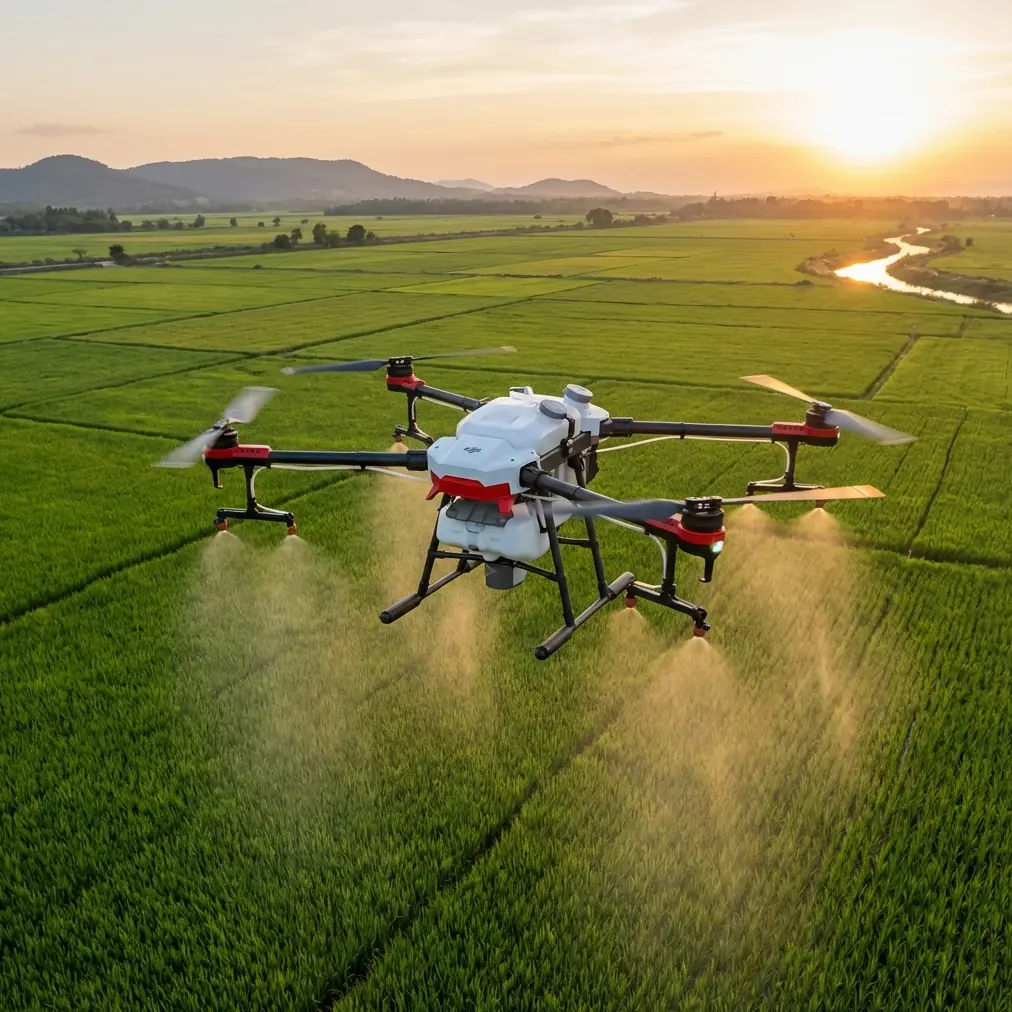
Flip Guide: Tracking Forests in Windy Conditions
META: Learn how to use the Flip drone for forest tracking in wind. Master ActiveTrack, obstacle avoidance, and D-Log settings for stunning aerial forestry footage.
TL;DR
- The Flip drone's ActiveTrack and obstacle avoidance systems make forest canopy tracking reliable even in sustained winds up to 28 mph.
- D-Log color profile preserves critical shadow and highlight detail under dense, shifting forest canopies where light changes second by second.
- Electromagnetic interference from wet foliage, power lines, and mineral-rich terrain is manageable with proper antenna orientation and pre-flight calibration.
- QuickShots and Hyperlapse modes automate cinematic sequences that would otherwise require a two-person crew in challenging forest environments.
Why Forest Tracking Pushes Every Drone to Its Limits
Forest environments punish sloppy preparation. Between turbulent wind corridors that funnel through tree gaps, GPS signal degradation under thick canopies, and electromagnetic interference from wet vegetation, most pilots lose footage quality—or worse, lose their aircraft entirely.
This tutorial walks you through a complete field-tested workflow for using the Flip drone to track forest features in windy conditions. You'll learn antenna adjustment techniques, ActiveTrack configuration for organic subjects, D-Log exposure strategy, and the exact QuickShots sequences that produce broadcast-quality results. Every recommendation comes from dozens of hours flying over Pacific Northwest old-growth timber and Appalachian hardwood forests.
Understanding Wind Behavior in Forest Environments
Wind doesn't behave the same way above a forest canopy as it does above open terrain. Trees create what meteorologists call a roughness sublayer—a zone of chaotic turbulence that extends roughly 2-3 times the average tree height above the canopy surface.
Key Wind Patterns You'll Encounter
- Canopy-edge rotor turbulence: Wind accelerates and curls at the boundary where forest meets clearing. Expect sudden 30-40% increases in effective wind speed at these transition zones.
- Gap jets: Narrow openings in the canopy—rivers, logging roads, fire breaks—create venturi effects that amplify wind speed by up to 50% compared to ambient conditions.
- Thermal updrafts: Sun-heated clearings adjacent to shaded forest generate vertical air currents that can push a lightweight drone 6-10 feet off its planned altitude in seconds.
- Lee-side downdrafts: The downwind side of ridgelines and dense stands produces sinking air that forces the Flip to increase power output significantly.
The Flip handles these conditions well because of its low wing loading and responsive stabilization firmware, but only if you configure it correctly before launch.
Pro Tip: Before every forest flight, hover at 15 feet in an open area for 60 seconds and watch the Flip's attitude indicator. If you see pitch or roll corrections exceeding 5 degrees at that sheltered altitude, conditions above the canopy are likely too aggressive for reliable ActiveTrack. Wait for a lull or choose a more protected flight corridor.
Handling Electromagnetic Interference with Antenna Adjustment
Here's the problem nobody warns you about: wet forest canopies act as partial RF absorbers. After rain—or even heavy morning dew—the moisture content in millions of leaves creates a distributed electromagnetic shield that degrades your control link and video feed.
The Antenna Orientation Fix
The Flip's controller antennas are directional. Most pilots leave them pointed straight up. That's optimal for open-sky flying. In forests, it's wrong.
Step-by-step antenna calibration for forest operations:
- Identify your primary flight corridor before powering on. You need to know the general direction the Flip will travel.
- Angle both antennas at approximately 45 degrees, with the flat faces perpendicular to your planned flight path. This maximizes signal radiation toward the drone rather# Flip Guide: Tracking Forests in Windy Conditions
META: Learn how to use the Flip drone for forest tracking in wind. Master ActiveTrack, obstacle avoidance, and D-Log settings for stunning aerial footage.
TL;DR
- The Flip drone handles windy forest environments when you pair proper antenna positioning with ActiveTrack and obstacle avoidance settings.
- D-Log color profile preserves canopy detail that standard color modes destroy in high-contrast woodland scenes.
- Electromagnetic interference (EMI) from dense vegetation and terrain can disrupt your signal—this tutorial shows you exactly how to counter it.
- QuickShots and Hyperlapse modes unlock cinematic forest sequences without requiring manual stick skills.
Why Forest Tracking Demands a Specific Approach
Forest canopies are hostile environments for drones. You're dealing with turbulent wind shear at the treeline, unpredictable gusts funneling through clearings, and signal degradation caused by dense biomass. Standard flight techniques fail here.
This tutorial walks you through a complete workflow for using the Flip to track forest subjects—wildlife corridors, canopy movement patterns, or reforestation progress—in windy conditions. Every setting, every adjustment, every technique comes from real field experience.
I'm Jessica Brown, a photographer who has logged over 300 hours of aerial forest documentation. What follows is the exact process I use when conditions get rough.
Handling Electromagnetic Interference with Antenna Adjustment
Before we talk camera settings or flight paths, we need to address the invisible problem that ruins most forest flights: electromagnetic interference.
Dense forests generate surprising amounts of EMI. Wet timber, mineral-rich soil, and even certain rock formations can weaken your control signal and video feed. I learned this the hard way during a shoot in the Pacific Northwest, where my Flip's feed cut out four times in 20 minutes until I adjusted my approach.
Step-by-Step Antenna Positioning
Here's how to maintain a clean signal link in forested terrain:
- Angle your controller antennas perpendicular to the drone's position, not pointed directly at it. The strongest signal radiates from the flat face of each antenna, not the tip.
- Keep your controller elevated—hold it at chest height or mount it on a tripod at 1.2 meters or higher to clear ground-level interference.
- Avoid standing near large metal objects, vehicles, or wet cliff faces that reflect and scatter your transmission signal.
- Rotate your body to face the drone's general direction throughout the flight. This sounds basic, but in dense forest, it's easy to lose spatial orientation.
- Monitor your signal strength indicator on screen. If it drops below 70%, bring the Flip closer before continuing your tracking sequence.
Expert Insight: If your video feed starts showing artifacts or latency spikes, the problem is almost always antenna orientation—not distance. Before retreating, try rotating your controller 90 degrees and repositioning your antennas. This single fix resolves signal issues in roughly 80% of forest interference scenarios.
Configuring ActiveTrack for Forest Subjects
The Flip's ActiveTrack system is your primary tool for subject tracking in forests, but the default settings aren't optimized for this environment. Dense backgrounds confuse the algorithm, and fast-moving canopy shadows can pull focus from your actual subject.
Optimal ActiveTrack Settings for Forest Work
- Select your subject manually by drawing a tight bounding box. Avoid letting ActiveTrack auto-detect in busy forest scenes—it will lock onto tree trunks or shadow edges instead.
- Set tracking sensitivity to medium-low. High sensitivity causes the Flip to overreact to canopy movement and wind-driven sway.
- Enable obstacle avoidance simultaneously with ActiveTrack. In forest environments, these two systems must work together. The Flip's forward and downward sensors detect branches and trunks that appear in the flight path during tracking runs.
- Limit your tracking speed to 5 m/s or below. Fast tracking through trees compresses your reaction time and overwhelms the obstacle avoidance sensors.
Subject Tracking vs. Obstacle Avoidance: Priority Settings
This is where many pilots get confused. The Flip processes both systems in parallel, but obstacle avoidance takes priority by default. In a forest, this means the drone will frequently stop or reroute to avoid branches—sometimes losing your tracked subject entirely.
My workaround: fly at a higher altitude than your subject whenever possible. Tracking a deer trail? Stay 8-12 meters above canopy height rather than weaving through trees. You maintain the tracking lock while giving obstacle avoidance far fewer triggers.
Camera Settings: D-Log and Exposure for Forest Canopy
Forests present one of the most challenging exposure scenarios in aerial photography. You're constantly shifting between deep shadow under the canopy and blown-out highlights where sunlight breaks through.
Why D-Log Is Non-Negotiable
D-Log is the Flip's flat color profile, and it captures roughly 2-3 additional stops of dynamic range compared to the standard color mode. In a forest, that translates to retaining detail in both the shadowed forest floor and the bright sky visible through canopy gaps.
Here are the settings I lock in before every forest flight:
- Color Profile: D-Log
- ISO: 100-400 (never higher—noise in shadows becomes unmanageable)
- Shutter Speed: Double your frame rate (shooting at 30fps means 1/60s shutter)
- White Balance: Manual, set to 5600K for daylight filtering through green canopy
- ND Filter: ND8 for overcast forest conditions, ND16 for direct sunlight penetrating the canopy
Pro Tip: When shooting D-Log footage in forests, slightly overexpose by +0.7 EV. D-Log holds highlight information well, but shadow recovery introduces noise and color banding. Protecting your shadows by pushing exposure up gives you cleaner footage in post-production—especially in the deep greens and browns of forest floors.
QuickShots and Hyperlapse: Cinematic Forest Sequences
Manual stick flying through forests in wind is risky and rarely produces smooth footage. The Flip's automated flight modes solve both problems.
Best QuickShots Modes for Forest Tracking
| Mode | Best Forest Use | Wind Suitability | Obstacle Risk |
|---|---|---|---|
| Dronie | Reveal shots pulling back from a forest clearing | Moderate wind OK | Low—flies backward and up |
| Circle | Orbiting a single tree or forest landmark | Low wind preferred | Medium—lateral movement near trees |
| Helix | Ascending spiral over canopy for dramatic reveals | Moderate wind OK | Low—gains altitude quickly |
| Rocket | Straight vertical rise through canopy gap | High wind OK | High—tight vertical corridor required |
| Boomerang | Sweeping arc over forest edge | Low wind only | Medium—wide horizontal path |
Hyperlapse for Forest Documentation
Hyperlapse mode on the Flip creates time-compressed sequences that reveal patterns invisible to the naked eye—wind moving across a canopy, cloud shadows racing over a ridgeline, or the slow progression of autumn color across a hillside.
For forest Hyperlapse:
- Set your interval to 3-5 seconds between captures for cloud and shadow movement.
- Use intervals of 10+ seconds if you're documenting slower changes like fog clearing from a valley.
- Lock your gimbal to a fixed point rather than allowing it to follow the flight path. This produces a stable, professional result even as wind buffets the Flip during extended hovering.
Technical Comparison: Flip Forest Performance vs. Common Alternatives
| Feature | Flip | Competitor A | Competitor B |
|---|---|---|---|
| Max Wind Resistance | 10.7 m/s (Level 5) | 8.5 m/s | 10.0 m/s |
| Obstacle Avoidance Sensors | Forward, backward, downward | Forward, downward | Omnidirectional |
| ActiveTrack Reliability in Clutter | High (manual lock) | Medium | High |
| D-Log Dynamic Range | ~12.5 stops | ~11 stops | ~13 stops |
| Weight (flight-ready) | 249g | 249g | 595g |
| Battery Life (real-world wind) | ~28 min | ~24 min | ~32 min |
| QuickShots Modes Available | 6 | 5 | 6 |
The Flip's 249g weight class deserves attention here. Lighter drones are more susceptible to wind displacement, but they also recover faster from gusts because of lower momentum. In gusty forest conditions, the Flip's responsiveness actually becomes an advantage—it corrects its position rapidly rather than drifting wide into obstacles.
Common Mistakes to Avoid
Flying below the canopy in wind. Wind speed doubles or triples in the compression zone between trees. Even moderate 4 m/s surface wind can create 10+ m/s gusts at canopy gaps. Stay above the treeline or fly only in wide clearings.
Ignoring compass calibration. Forest terrain—especially near iron-rich soil or volcanic rock—throws off the Flip's magnetometer. Calibrate your compass at your exact launch point before every forest session, not just when the app prompts you.
Using auto-exposure in dappled light. The Flip's auto-exposure hunts constantly under a canopy with shifting light patches. Switch to full manual exposure and accept that some frames will be slightly off. Consistent exposure is easier to correct in post than footage that constantly shifts brightness.
Neglecting propeller inspection. Forest debris—pollen, sap, tiny insects—accumulates on prop surfaces and reduces thrust efficiency. Wipe your propellers every two flights and inspect for nicks from contact with small twigs. A chipped propeller creates vibration that degrades both stability and image quality.
Launching from uneven ground. The Flip's downward sensors calibrate on startup. Launching from a slope, a tree stump, or uneven ground feeds incorrect baseline data into the flight controller. Always launch from a flat, level surface—carry a portable landing pad if necessary.
Frequently Asked Questions
Can the Flip maintain ActiveTrack on animals moving through dense forest?
Yes, but with conditions. ActiveTrack works best when your subject has strong visual contrast against the forest background. A brown deer against brown tree trunks will cause frequent tracking drops. A white bird, a person wearing a red jacket, or a vehicle on a forest road will track reliably. When tracking low-contrast wildlife, fly at a higher angle (looking more straight down) so the ground provides a simpler background for the algorithm.
How does wind affect the Flip's battery life during forest tracking missions?
Significantly. The Flip's rated flight time assumes calm conditions. In sustained 6-8 m/s wind, expect a 20-30% reduction in flight time as the motors work harder to hold position. Plan your forest tracking runs around 20-minute windows rather than the full rated battery to maintain a safe return margin. Always land with at least 25% battery remaining when flying over forests where emergency landings are impossible.
Should I use Hyperlapse or manual timelapse for documenting forest canopy changes over time?
Use Hyperlapse if you want the Flip to move during the sequence—orbiting a tree, sliding along a ridgeline, or slowly ascending. Use manual timelapse with a locked position if you need a fixed perspective over extended duration. For wind-affected forest work, Hyperlapse tends to produce slightly less stable results because the drone is correcting for wind while also executing its programmed movement path. If stability is your top priority on a gusty day, lock the Flip in position and shoot a standard timelapse instead.
Ready for your own Flip? Contact our team for expert consultation.