
Flip in the Thin Air: A Field Report on Tracking Solar
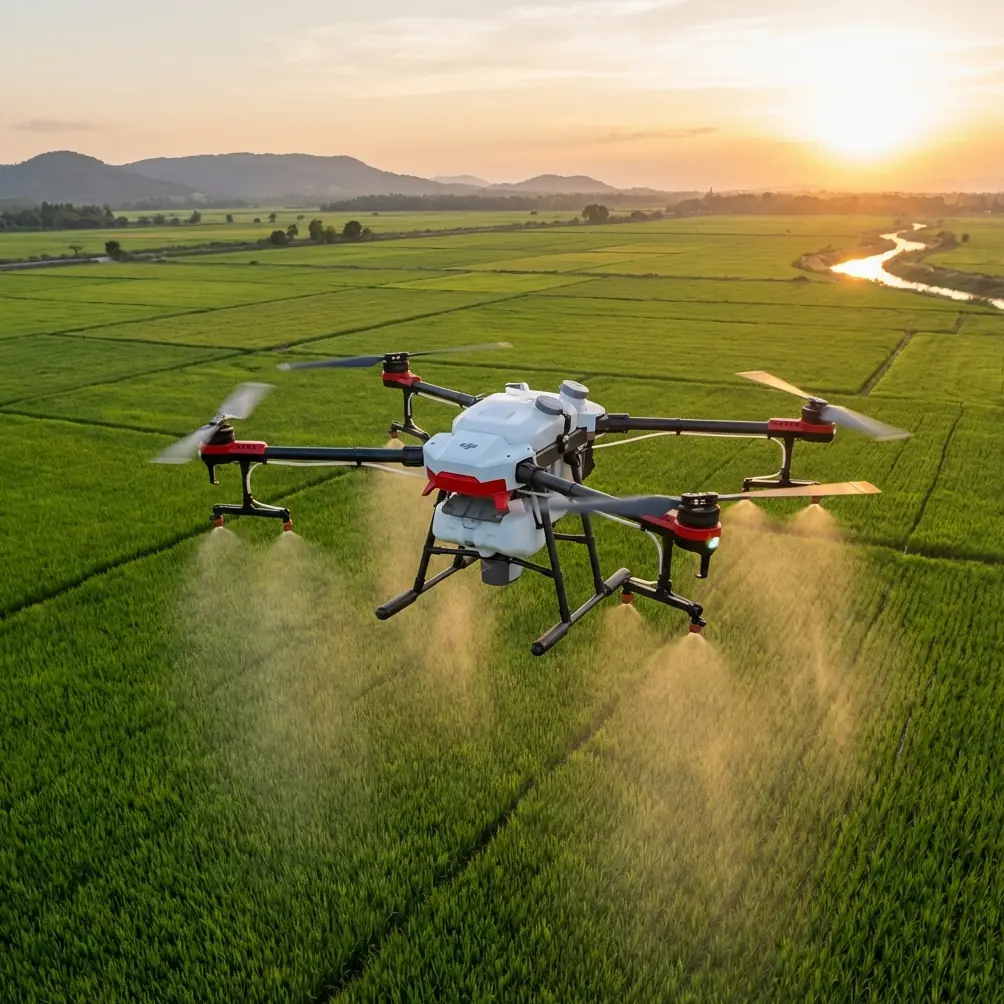
Flip in the Thin Air: A Field Report on Tracking Solar Farms at Altitude
META: A field-tested look at how DJI Flip handles high-altitude solar farm tracking with ActiveTrack, obstacle avoidance, D-Log, Hyperlapse, and practical workflow insights.
High-altitude solar sites expose every weakness in a small drone.
Wind arrives early. Light bounces off panel glass in hard, uneven flashes. Terrain shifts fast, especially when arrays step down a slope or spread across ridgelines. For a photographer, that means unstable framing and blown highlights. For an inspection or operations team, it means missed visual context at exactly the moment a site needs clean, repeatable coverage.
That is why Flip is more interesting than it first appears.
I approached it from the perspective of a field shooter, not a spec-sheet collector. My brief was simple: document and track movement across a solar farm in elevated terrain, while keeping the workflow light enough for a single operator. The obvious temptation is to treat a drone like this as a casual camera platform. In practice, the better question is whether it can hold up when the site itself becomes the real challenge.
For this kind of work, tracking matters more than most buyers realize.
One recent drone-related news item, despite centering on public-sector adoption, highlighted a core operational truth: organizations bring drone fleets in-house when they need persistent aerial support rather than occasional outsourced flying. The cited use case was tracking. Strip away the sensitive context and the lesson is still relevant for commercial operators: once a drone becomes part of routine field coverage, tracking is no longer a novelty feature. It becomes a workflow tool.
That is the frame through which Flip makes sense for solar work.
Why tracking matters on a solar farm
A solar farm is not a static subject, even when the infrastructure is.
You may be following a maintenance vehicle moving between inverter stations, documenting technician progress across rows, or building visual updates around a cleaning crew working through multiple blocks. At altitude, the site often has long visual corridors interrupted by cable runs, junction structures, fencing, and elevation changes. A drone that can keep a subject centered without forcing constant manual correction saves more than time. It preserves continuity.
This is where ActiveTrack earns its place.
On paper, subject tracking can sound like a consumer convenience. In the field, it becomes a stabilizer for decision-making. Instead of burning attention on micro-adjustments, the pilot can think about route safety, panel glare, wind drift, and shot intent. That mental bandwidth matters. It is the difference between merely following a subject and actually building usable site documentation.
Flip’s value in this scenario is not that it invented tracking. Competitors offer tracking too. The difference is how accessible the feature feels when conditions are less forgiving. A solar site at elevation is not a clean city park with wide open margins. There is visual repetition everywhere: row after row of reflective modules, narrow service roads, periodic structures, and changing contrast as clouds move in. A tracking system that hesitates or loses confidence turns every pass into rework.
The overlooked role of obstacle awareness
Solar farms do not present obstacles in the same way forests or urban sites do, but they absolutely present obstacles.
The danger is often low-profile infrastructure rather than dramatic vertical objects. Fencing, poles, uneven terrain edges, and isolated service equipment can creep into the flight path during lateral tracking runs. Add wind and a pilot can quickly find that “open site” does not mean “simple site.”
That is why obstacle avoidance deserves more attention in this category.
With Flip, obstacle awareness is operationally significant because it supports repeatability. You are not just trying to avoid contact once. You are trying to run the same type of movement across several site sections without introducing inconsistency or unnecessary caution into every pass. If the aircraft gives you confidence around route management, you can maintain cleaner line work and more natural pacing in your footage.
This also helps when working with non-pilot stakeholders. Site managers usually care less about cinematic theory than about whether the drone team can capture the required visuals efficiently and without disrupting operations. A platform that reduces pilot workload around obstacles supports that expectation directly.
High altitude exposes image discipline
The phrase “tracking solar farms in high altitude” can suggest the flight challenge is mostly aerodynamic. That is only half true.
The other half is visual control.
Panel surfaces produce intense specular reflections, especially when the sun is high and the array angle aligns unfavorably with the aircraft. Exposure can swing abruptly during a single move. Standard-looking footage often falls apart in post because the highlights clip early or the color becomes brittle around metal, dust, and sky transitions.
That is why D-Log matters here.
If you are building progress reports, promotional reels, or repeat site updates across different days and seasons, a flatter recording profile gives you room to normalize the footage. That flexibility is not just for editors chasing a “cinematic” look. It is practical insurance against the harsh contrast that elevated solar fields create.
I found this especially useful when a tracking run crossed from a darker service road into a bright panel corridor. In a normal baked-in profile, the scene looked fine until I tried matching it against a second pass shot later in the day. In D-Log, there was enough latitude to recover a more consistent sequence. For operators producing recurring visual records, that consistency is often more valuable than raw punch straight out of camera.
Flip versus the usual alternatives
A lot of drones can capture a solar site. Fewer feel efficient on one.
That distinction is where Flip stands out against common alternatives in its class. Some competing models are perfectly capable in calm, straightforward environments, but they become fussy when the assignment mixes tracking, glare management, terrain variation, and quick repositioning between sections of a large property. You can get the shot, but the process becomes fragmented.
Flip feels better suited to the stop-start rhythm of real field work.
You launch, capture a tracking pass on a vehicle or technician, shift to an overhead context shot, then grab a short Hyperlapse of shadows moving across a block before the weather changes. That sequence is common on a working site. The aircraft needs to adapt without making every mode transition feel like a separate production.
This is also where QuickShots, often dismissed as lightweight tools, can become unexpectedly useful. On a solar farm, stakeholders frequently want simple visual summaries that can be shared internally without a full edit cycle. A clean automated reveal, orbit, or pullback can create that summary fast. Used intelligently, QuickShots are not gimmicks. They are shortcuts to consistent visual communication.
The key is restraint. Automated moves should support a site story, not overpower it.
A field workflow that actually fits one operator
The best drone for remote infrastructure work is usually not the one with the longest feature list. It is the one that lets one person keep moving.
At a high-altitude solar farm, setup time matters. Weather windows can close quickly. Wind often builds through the late morning. Ground teams may only be available for a limited period if you need them in frame for scale or process documentation. A compact aircraft with dependable subject tracking has a real advantage because it lowers the friction between spotting a useful moment and capturing it.
That was one of the strongest impressions Flip left on me.
I did not need to overbuild the session. I could move from a wide establishing shot to a tracked maintenance route without turning the flight into a technical puzzle. That simplicity is not trivial. On commercial sites, simple usually means more usable output by the end of the day.
For teams trying to standardize visual reporting across multiple sites, that matters even more. A complicated platform can produce great imagery in expert hands, but a simpler workflow scales better. If your organization is thinking about building its own drone capability, that same industry lesson from recent fleet-adoption news applies here as well: bringing aircraft into routine use only works when the platform supports repeatable operations. Tracking, in that context, is part of a larger efficiency equation.
Hyperlapse on solar sites: more useful than expected
I was skeptical about Hyperlapse for this assignment.
Then the weather changed.
At altitude, cloud movement transforms a solar farm visually. Rows that look flat and clinical at noon can become textured and dimensional as shadows roll over them. Hyperlapse can turn that change into a concise operational visual, especially for presentations or progress narratives where you need to show site scale without making people sit through a long clip.
Flip handles this especially well when used as a contextual layer rather than the main event. Track the active work first. Then use Hyperlapse to show the site breathing around it. That combination gives viewers both the operational detail and the broader environmental setting.
For energy clients, that pairing is powerful. It shows not just infrastructure, but activity, scale, and terrain in one coherent package.
Where the model excels
If I had to isolate one area where Flip clearly beats many expected alternatives, it would be usability under mixed demands.
Not maximum speed. Not headline specs in isolation. Usability.
A site like this asks a lot from a small drone. It needs to track reliably, navigate around infrastructure, handle ugly reflections, and produce footage flexible enough for editing. It also needs to do all of that without slowing the operator down. Flip’s strongest quality is that these demands feel connected rather than conflicting.
That becomes obvious during repeated flights. On the first pass, any drone can feel impressive. By the fourth or fifth relocation across a sprawling site, small inefficiencies start to dominate the experience. Tracking gets dropped because setup feels tedious. Creative modes go unused because the pilot is focused on keeping things manageable. Color flexibility is ignored because turnaround is tight. Flip reduces that friction.
That is what excellence looks like in commercial field use. Not drama. Reliability.
Practical advice for solar operators considering Flip
If your main scenario is tracking activity on elevated solar sites, focus on these points:
First, use ActiveTrack for operational continuity, not entertainment. Follow vehicles, technicians, or inspection movement in ways that create useful visual records.
Second, treat obstacle avoidance as a repeatability tool. It helps maintain cleaner flight paths across rows, service roads, and scattered equipment.
Third, shoot in D-Log when the footage needs to match across multiple site visits or harsh lighting periods. High-altitude glare is rarely forgiving.
Fourth, keep QuickShots and Hyperlapse in the toolkit for stakeholder communication. They can compress a large site into digestible visuals with minimal extra effort.
Finally, plan flights around wind and reflection, not just battery and distance. On solar farms, the light can be as much of an obstacle as the terrain.
If you are mapping out a real deployment strategy and want a practical discussion around setup for this kind of site work, this direct WhatsApp channel is an easy place to continue the conversation.
Final field take
Flip makes sense for solar work because it handles the small but consequential tasks well.
That includes tracking. And tracking, despite often being marketed as a flashy feature, is one of the most commercially relevant capabilities a drone can offer when the job involves documenting moving people, vehicles, or workflows across a large site. Recent industry news about organizations building their own drone fleets underlines the same operational idea: drones become truly valuable when they support ongoing field activity, not one-off flights. In that environment, tracking is infrastructure.
For high-altitude solar farms, Flip turns that infrastructure into a practical field tool. ActiveTrack helps preserve continuity. Obstacle avoidance reduces workload. D-Log protects footage in punishing light. Hyperlapse and QuickShots add fast context when stakeholders need more than raw coverage. Put together, those elements make the aircraft more than a compact camera in the sky.
They make it useful.
Ready for your own Flip? Contact our team for expert consultation.