
Flip Tracking Tips for High-Altitude Solar Farms When
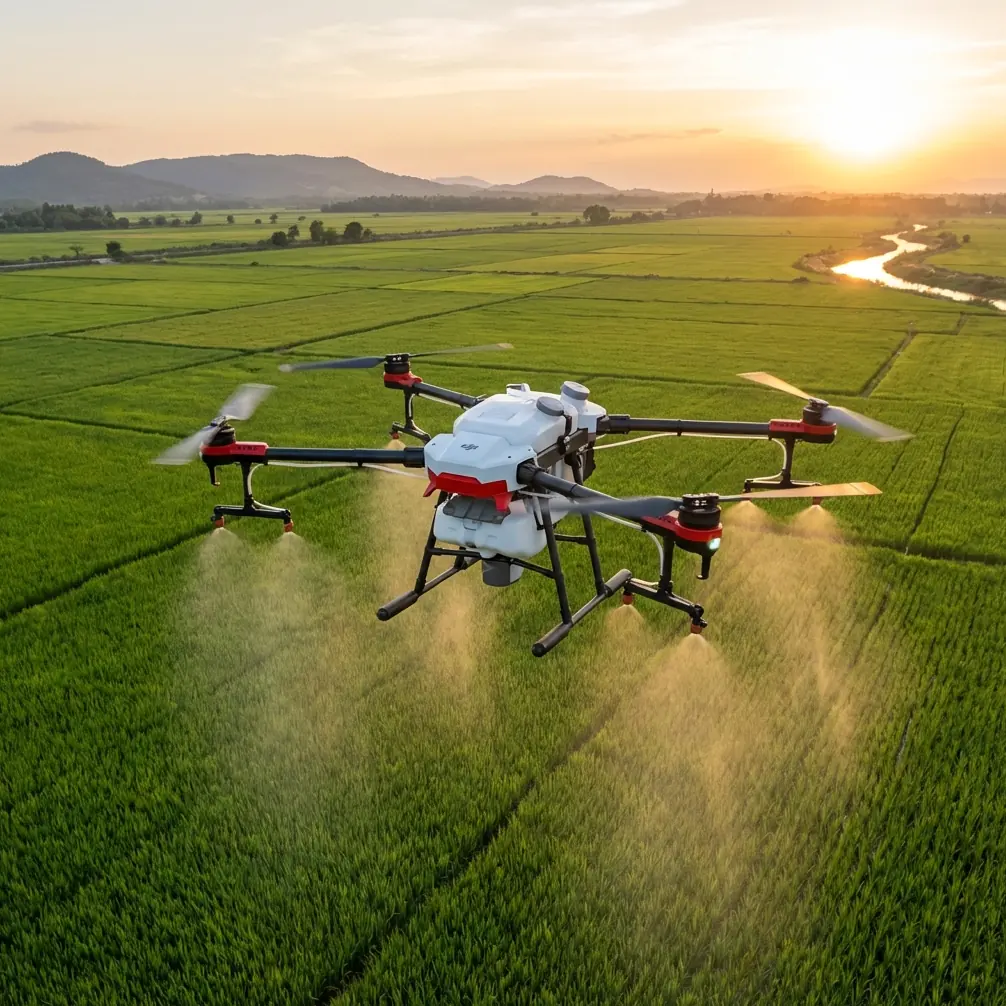
Flip Tracking Tips for High-Altitude Solar Farms When the Weather Turns
META: A practical expert look at how Flip can support high-altitude solar farm tracking by combining stabilized imaging, autonomous route control, rugged airframe design, and better post-flight mapping workflows.
High-altitude solar farms create a strange kind of inspection problem. On paper, they are orderly. Neat rows. Repeatable geometry. Large access corridors. In the field, they are rarely that simple.
Wind shifts faster on exposed ridgelines. Light changes by the minute as cloud cover rolls through. Dust gets everywhere. A pilot may need to track long panel strings, inspect combiner routes, follow drainage lines, and capture mapping data that still needs to align cleanly back at the desk. That is where Flip becomes interesting—not as a generic camera drone, but as a platform that makes tracking and survey work hold together when conditions stop cooperating.
I want to frame this around a real operational issue: weather changing mid-flight over a high-altitude solar site.
At launch, the air looks manageable. The morning is cool. The first pass over the array is smooth. Then a crosswind arrives over the upper edge of the site. The aircraft attitude starts working harder than it was ten minutes earlier. If your drone can stay in the air but your footage becomes unstable, your tracking mission is already degrading. If route accuracy slips, repeatability suffers. If trigger timing gets messy, the stitching workload after the flight gets heavier. Those are not separate problems. They stack.
The source material behind this discussion points to a system architecture that matters for exactly this scenario. One detail stands out immediately: support for a three-axis stabilized camera gimbal. That sounds basic until you consider what it does on a windy solar farm. The referenced system notes that in stabilized mode, the line of sight stays locked in direction, and the camera image remains stable even as the aircraft attitude changes. Operationally, that is a big deal.
When gusts hit near the edge of an elevated array field, the aircraft may roll or pitch to maintain position and heading. Without strong stabilization, your visual reference drifts, panel lines wobble, and defect review becomes less reliable. With three-axis stabilization, the aircraft is free to do the small correction work required by the air mass while the camera remains steady enough to preserve inspection value. For solar tracking, that means cleaner visual continuity across rows, better asset identification, and less ambiguity when you compare one pass to the next.
That same source also references an extended Kalman filter running in attitude mode so the flight control board can independently provide real-time attitude control. In practical civilian operations, that translates to a steadier platform under changing conditions. On a high-altitude solar site, you often do not need drama-proof specs. You need confidence that the drone can keep its motion model coherent while the environment shifts around it. Stable attitude estimation is what allows route tracking, gimbal stabilization, and payload timing to remain useful rather than theoretical.
And that’s where Flip’s value becomes more than image capture. It becomes workflow protection.
A lot of operators focus on the visible side of drone performance: obstacle avoidance, subject tracking, QuickShots, Hyperlapse, D-Log, ActiveTrack. Those can all be useful in the right context. But for solar farm tracking, especially at altitude, the less glamorous layers usually matter more. Sensor fusion. Flight control quality. Mechanical stiffness. Payload trigger discipline. These are the things that determine whether your data survives a rough patch of weather.
The reference data includes another detail with direct relevance here: automatic generation of area scan routes for remote sensing and mapping, along with automatic payload triggering at specified intervals and detailed recording of trigger events to support post-flight image stitching and editing. That is not a flashy feature. It is the kind of capability that saves entire inspection days.
Think about what happens when weather changes during a mapping mission. If a pilot is manually improvising, spacing between image captures may become inconsistent as groundspeed and aircraft behavior fluctuate. That introduces variation into overlap quality and can make downstream mosaics more difficult. By contrast, if the route is generated systematically and payload tasks are triggered at defined intervals, the flight can absorb moderate environmental variation while preserving a more consistent acquisition logic. The recorded trigger events then become a clean reference during post-processing, especially when building stitched imagery of large solar sections.
For solar asset managers, that matters because they are rarely asking for “nice drone footage.” They want a reliable visual record of rows, access roads, drainage boundaries, cable corridors, fence lines, and recurring defect areas. They want comparisons over time. They want to know whether the flight from this week can be meaningfully matched against the flight from last month. Autonomous scan planning and recorded trigger events are what help create that continuity.
The airframe side deserves equal attention. The source describes a composite honeycomb body structure built with a pattern similar to continuously arranged I-beams, giving it strong compression and bending resistance. It also notes advantages in strength-to-weight ratio and stiffness-to-weight ratio compared with traditional solid composites, plus resistance to cracking, vibration damping, sound insulation, and thermal insulation. For a high-altitude solar farm, this is not abstract materials science. It directly affects mission durability.
Solar sites are punishing on hardware. There is dust from access roads, uneven launch areas, midday heat off reflective surfaces, and constant transport between inspection zones. A frame that is both lighter and stiffer has a real operational advantage. Lower structural weight can support more efficient flight behavior, while higher rigidity helps preserve camera stability and control precision. Better vibration damping can also help imaging consistency, particularly on long row-following passes where micro-jitter becomes visible in the footage even if the aircraft never appears unstable to the naked eye.
The source also mentions a fully enclosed design with dust and water resistance, plus a streamlined shape that improves wind resistance. If you have flown around mountain or plateau solar installations, you know why this matters. The weather there often changes sideways. Dust is lifted before rain arrives. Fine particles get driven into equipment. Then moisture follows. A more sealed and wind-tolerant design gives the operator a larger safety margin for commercial work—not permission to fly recklessly, but a better chance of completing the task cleanly before conditions cross the line.
I have seen this play out in a way that will be familiar to many site teams. You launch for a tracking pass over the upper blocks to document panel alignment and vegetation encroachment along the perimeter drainage cut. The first leg is easy. On the second leg, wind begins to shear across the site, and cloud cover reduces contrast. The drone starts making more noticeable attitude corrections, but the gimbal keeps the image usable. Because the route was planned in advance and the payload events are tied to interval logic, capture consistency stays intact. Back at the workstation, the trigger log helps verify image sequence integrity for stitching. What could have become a “good enough” flight remains an inspection-grade dataset.
That is the difference between a drone that flies and a drone that supports asset management.
There is another reference detail worth unpacking: multiple output ports for special customer applications. For a solar operator, that signals flexibility. Not every site tracks the same things in the same way. One team may prioritize visual progression of installation phases. Another may be focused on repeat mapping of cable trench restoration. A third may need custom integration for site-specific payload or telemetry workflows. Extra output capacity suggests the platform can adapt to those operational quirks instead of forcing a one-size-fits-all method.
This becomes especially relevant when a solar farm is spread across difficult terrain. High-altitude sites are often built where the land is available, not where it is easy. That means slopes, stepped elevations, narrow service roads, and changing line-of-sight conditions. A drone that can support special application requirements has more room to fit into an established field process, whether the mission is regular progress tracking, vegetation monitoring, or broad area mapping for maintenance planning.
The source text also mentions remote control range reaching up to 60 kilometers when paired with an external wireless data transmission device. For most solar inspections, operators should always work within applicable local regulations and safe visual operational practices. Still, the significance of that number is not about stretching missions irresponsibly. It indicates a communications architecture designed for robust long-distance links in large-area operations. On expansive energy sites, stronger transmission capability can support more stable command and data behavior across complex layouts, which is reassuring when the farm spans multiple ridges or segmented blocks.
Now, where do Flip-specific expectations fit into this?
Readers looking at Flip often care about practical tracking features such as obstacle avoidance and ActiveTrack, and those absolutely have a place in civilian site work. Around solar farms, obstacle avoidance can help near fencing, utility structures, and service buildings. Intelligent tracking modes can simplify repeatable visual documentation when following maintenance vehicles or monitoring crew movement in permitted, non-sensitive use cases. D-Log can preserve more grading latitude when harsh high-altitude light creates contrast issues between panel surfaces and surrounding terrain. Hyperlapse and QuickShots are less central to technical inspection, but they can be useful for project updates and stakeholder reporting.
Still, if you are evaluating Flip for high-altitude solar tracking, I would prioritize four questions over any feature checklist:
- Can it maintain stable imagery when the aircraft attitude starts working harder?
- Can it execute repeatable route logic for large-area scan work?
- Can its body and sealing tolerate dusty, exposed sites?
- Can its captured data be processed cleanly afterward without heroic manual correction?
The reference material gives strong reasons to answer those questions through the lens of stabilization, control architecture, structural design, and acquisition discipline. That combination is what makes a drone useful when the weather changes in the middle of a real job.
If you are planning a solar tracking workflow and want a second opinion on route design, payload timing, or how to adapt the setup for exposed high-altitude conditions, you can reach out here for a field-focused conversation: https://wa.me/85255379740
One final point. The best solar farm drone operations are usually boring in the best possible way. The aircraft launches cleanly. The route behaves as expected. Wind arrives, but the system absorbs it. The footage stays stable. The triggers are logged. The images stitch. The report gets built. No heroics. No guessing.
That is the standard worth aiming for with Flip in demanding solar environments. Not spectacle. Repeatability.
And when altitude, wind, dust, and shifting light all show up on the same day, the details from this source—three-axis stabilization, extended Kalman filter-based attitude control, honeycomb composite structure, enclosed body design, interval payload triggering, and recorded event logs—stop being technical bullet points. They become the reason the mission remains usable after the weather changes its mind.
Ready for your own Flip? Contact our team for expert consultation.